
Integrated electronics
Align sensors, controls, speaker, power, charging and programmed behavior with the intended learning interaction.
Coordinate child-friendly hardware, firmware, audio, print and packaging through one production-ready OEM or ODM workflow.
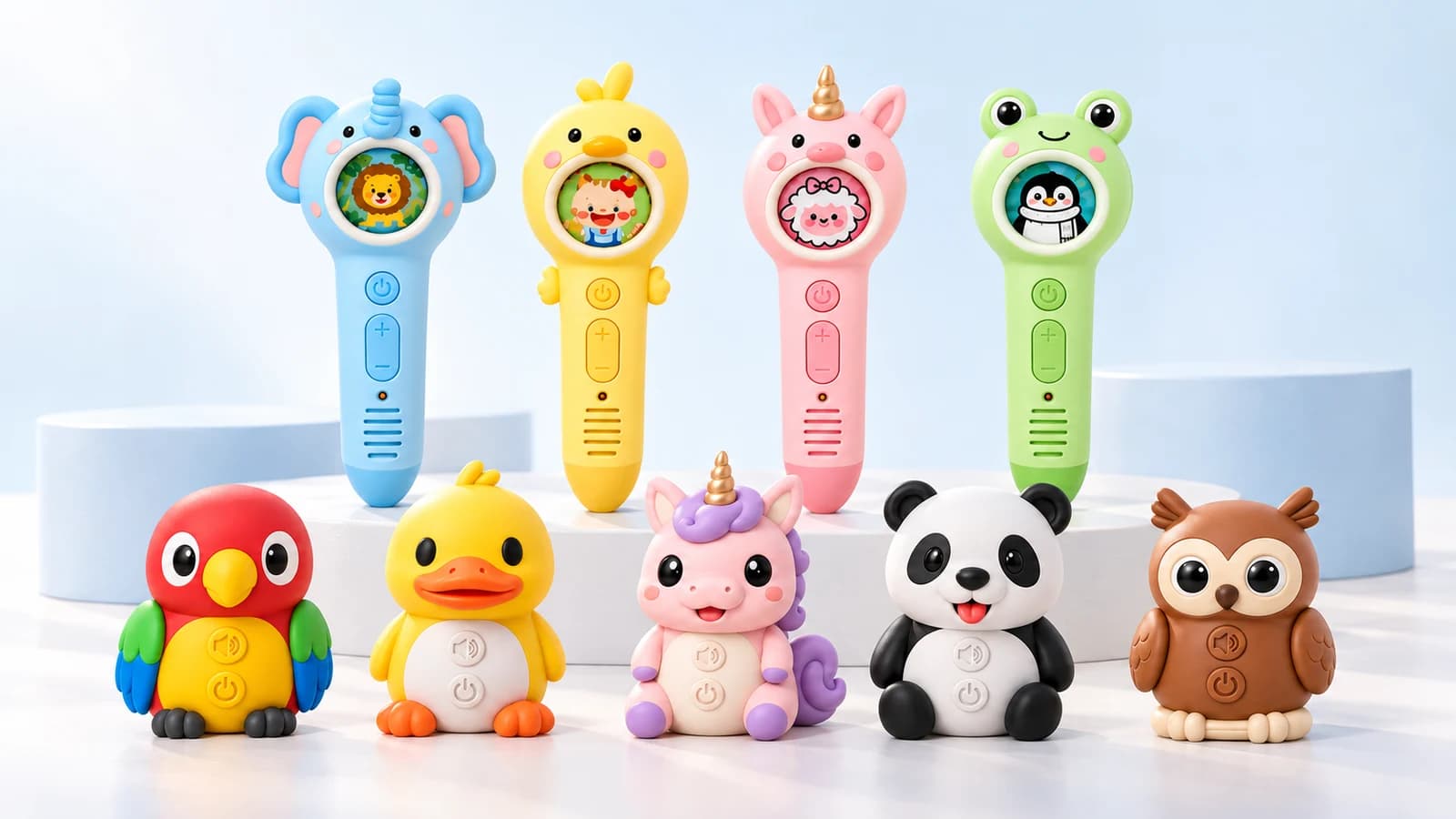
Align sensors, controls, speaker, power, charging and programmed behavior with the intended learning interaction.
Connect audio, firmware, OID print, cards or books through controlled file and mapping releases.
Translate the approved sample into production tests for function, audio, charging and complete set contents.
Plan labels, packaging, inspection and market-specific evidence around the final configuration.
Electronic learning products succeed when hardware, content and production controls are approved together rather than purchased as disconnected parts.
Toy brands, publishers, importers and educational suppliers building screen-free electronic products.
Begin with an existing architecture for speed or define deeper ODM work when the commercial difference justifies development.
Tooling, electronics, firmware, memory, content volume, print, testing, packaging and order quantity.
A production-intent sample with identified components, file versions, accessories and package set.
Our review starts with the learner action and converts it into an inspectable product architecture, content package and production test plan.
Review your requirements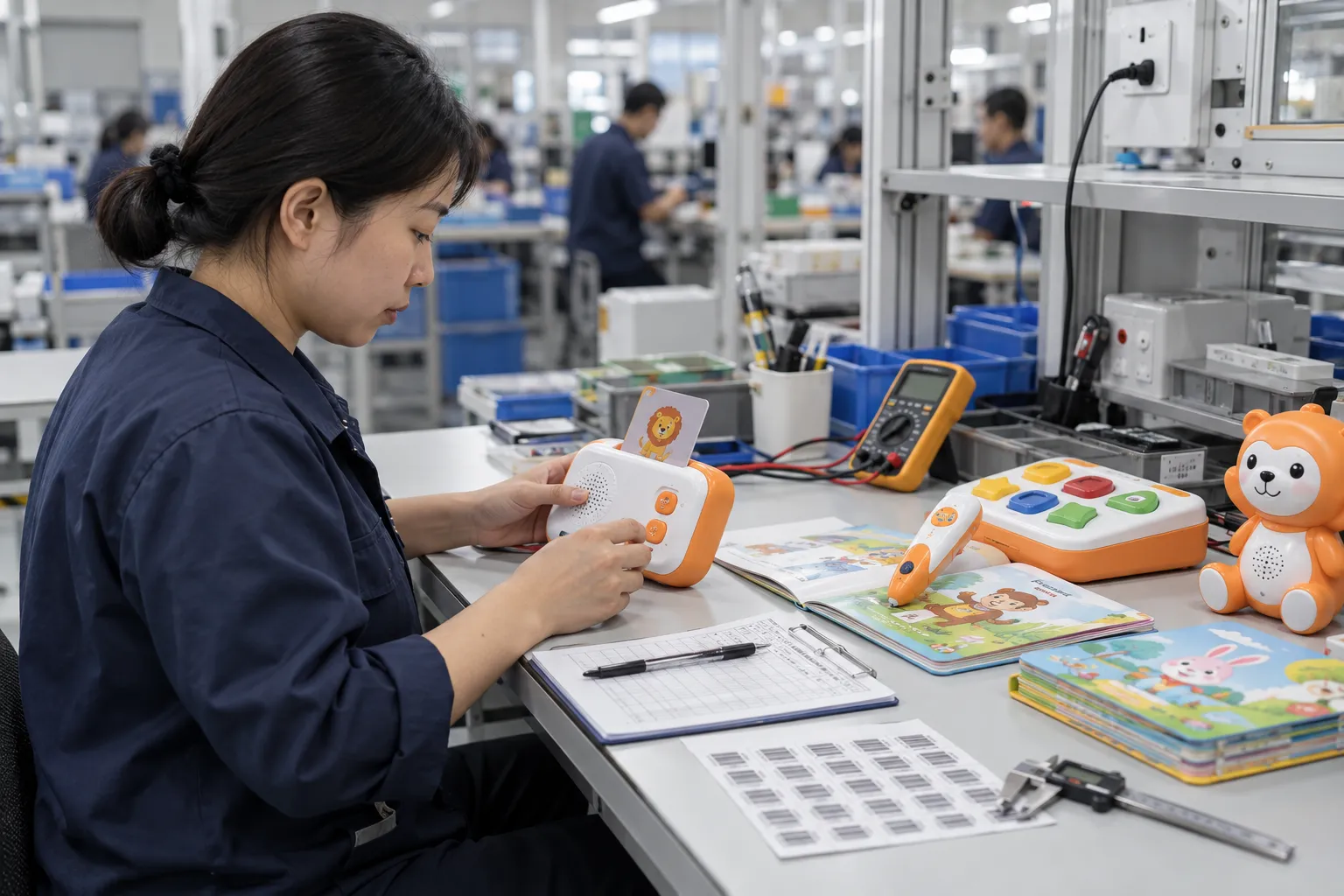
Define what the child touches, inserts, presses or solves and what response follows.
Specify housing, electronics, sensors, speaker, battery, charging and controls.
Release behavior, language files, prompts, modes and version identity.
Coordinate books, cards, stickers, instructions and coded artwork where required.
Use approved samples, test media, packing standards and shipment inspection records.
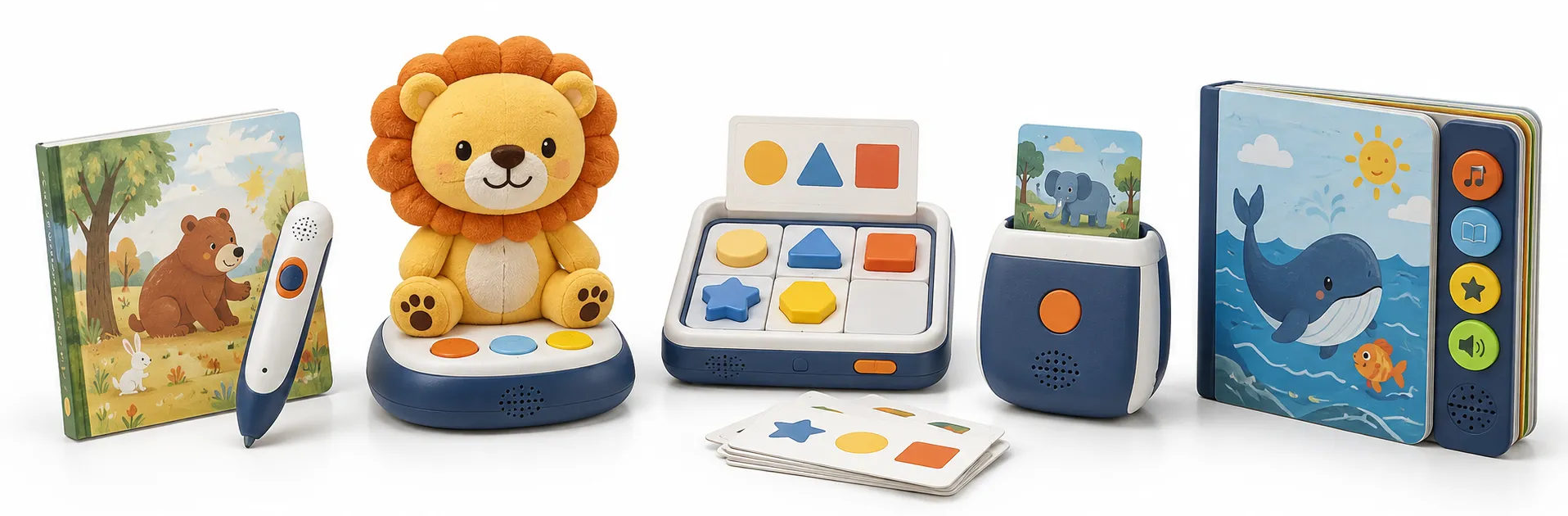
Select the platform that fits the content model, learner behavior and repeat-order plan rather than adding features without a use case.
Detailed books and touchpoints for vocabulary, stories and curriculum content.
Branded animal forms that connect the device identity with coded learning materials.
Simple one-card-at-a-time vocabulary, recognition and repetition practice.
Physical question-and-answer activities with programmed audio or visual feedback.
These decisions expose the technical and commercial scope before a sample fee or production deposit is committed.
Request a scope review| Decision | What we confirm | Why it changes the quotation |
|---|---|---|
| Architecture | Existing platform, modified platform or new product | Changes engineering, tooling, validation and schedule. |
| Content ownership | Buyer and supplier responsibilities for scripts, audio, firmware and artwork | Changes one-time work, approvals and intellectual-property handoff. |
| Market scope | Age grade, destination, product claims, labels and test responsibility | Changes construction, documentation and compliance preparation. |
| Sellable set | Device, content, cable, accessories, instructions and packaging | Defines the real unit and inspection scope. |
| Order plan | Quantity tiers, launch date, reorder forecast and delivery basis | Changes material commitments, capacity and price comparison. |
Each stage has a tangible output so product, content and commercial decisions stay connected.
Confirm the user, interaction, product configuration, content ownership, target market and commercial assumptions.
Build a representative product with controlled hardware, programmed behavior, content and packaging references.
Close sample issues and verify factory tests, work instructions, pack-out and released files before volume production.
Control the approved configuration through assembly, functional inspection, packing and shipment review.
Product and production evidence

Product, content and commercial requirements are reviewed against the same project brief.
Factory testing links the approved sample with repeatable production checkpoints.
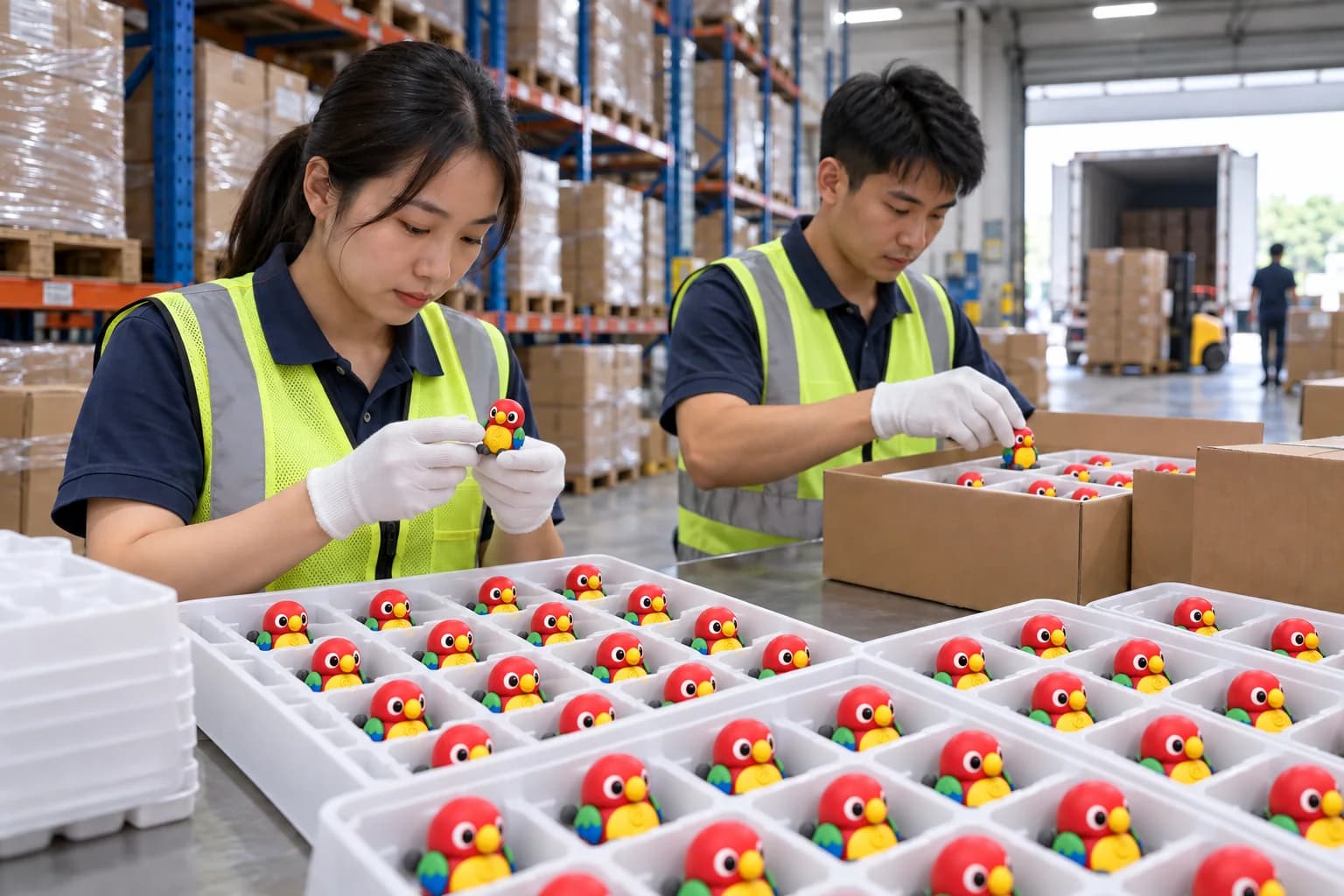
Finished products, accessories, labels and cartons are checked before release.
A concise brief lets the factory separate available platform choices from custom engineering and identify the evidence needed for quotation.
Practical answers for an initial project review. Final commercial and technical terms belong in the written quotation and approved specification.
Relevant platforms include OID reading pens, character talking readers, flash-card machines, logic-learning devices and sound-book systems. Final feasibility depends on the required interaction and configuration.
An ODM project can be reviewed from a brief, reference sample or industrial-design direction. The scope should separate reusable technology from new tooling, electronics, firmware and validation.
Yes. Audio, firmware, coded print, cards, books and package contents should be mapped to the selected hardware and approved on an integrated sample.
The responsible parties should define the destination, age grade, construction and applicable requirements before testing. Generic certificates do not replace a configuration-specific review.
The inspection plan can cover product identity, function, audio mapping, charging, appearance, accessories, printed content, labels, package integrity and carton configuration.
Send the intended interaction, content status, target market and quantity for a focused platform and manufacturing review.