
Product-platform fit
Match the learning interaction to an OID pen, talking reader, card machine, logic device or sound book.
Develop the device, learning content, audio, printed materials and retail set through one documented OEM or ODM workflow.
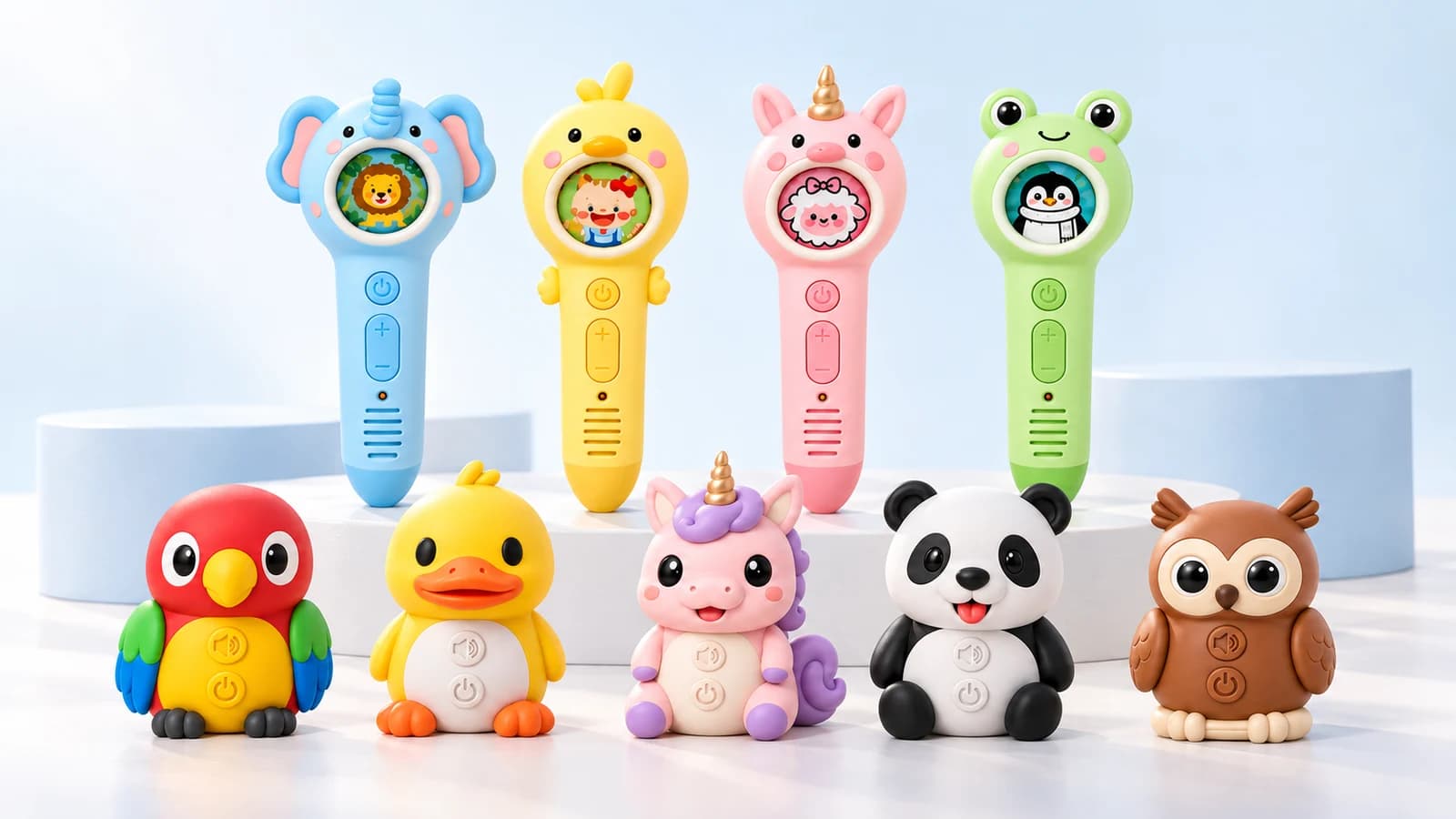
Match the learning interaction to an OID pen, talking reader, card machine, logic device or sound book.
Coordinate electronics, firmware, audio, print, accessories and retail packaging as one released set.
Use approved samples, controlled files and functional checkpoints from pilot build through pack-out.
Review finished function, content version, accessories, labels and carton configuration before dispatch.
Use this route when your project combines electronics with learning content, audio or printed materials and the factory must coordinate the handoffs.
Publisher, education brand, importer or school supplier sourcing an electronic learning product.
Use an established platform when speed and lower development risk matter; use deeper ODM only when differentiation justifies tooling and validation.
Hardware changes, tooling, memory, content volume, print, packaging, testing scope and order quantity.
A production-intent integrated sample that identifies hardware, firmware, audio, print and approved differences.
Interactive learning products combine electronics, content and print. Our project review converts customer requirements into one controlled configuration so technical, commercial and quality decisions refer to the same product.
Review your requirements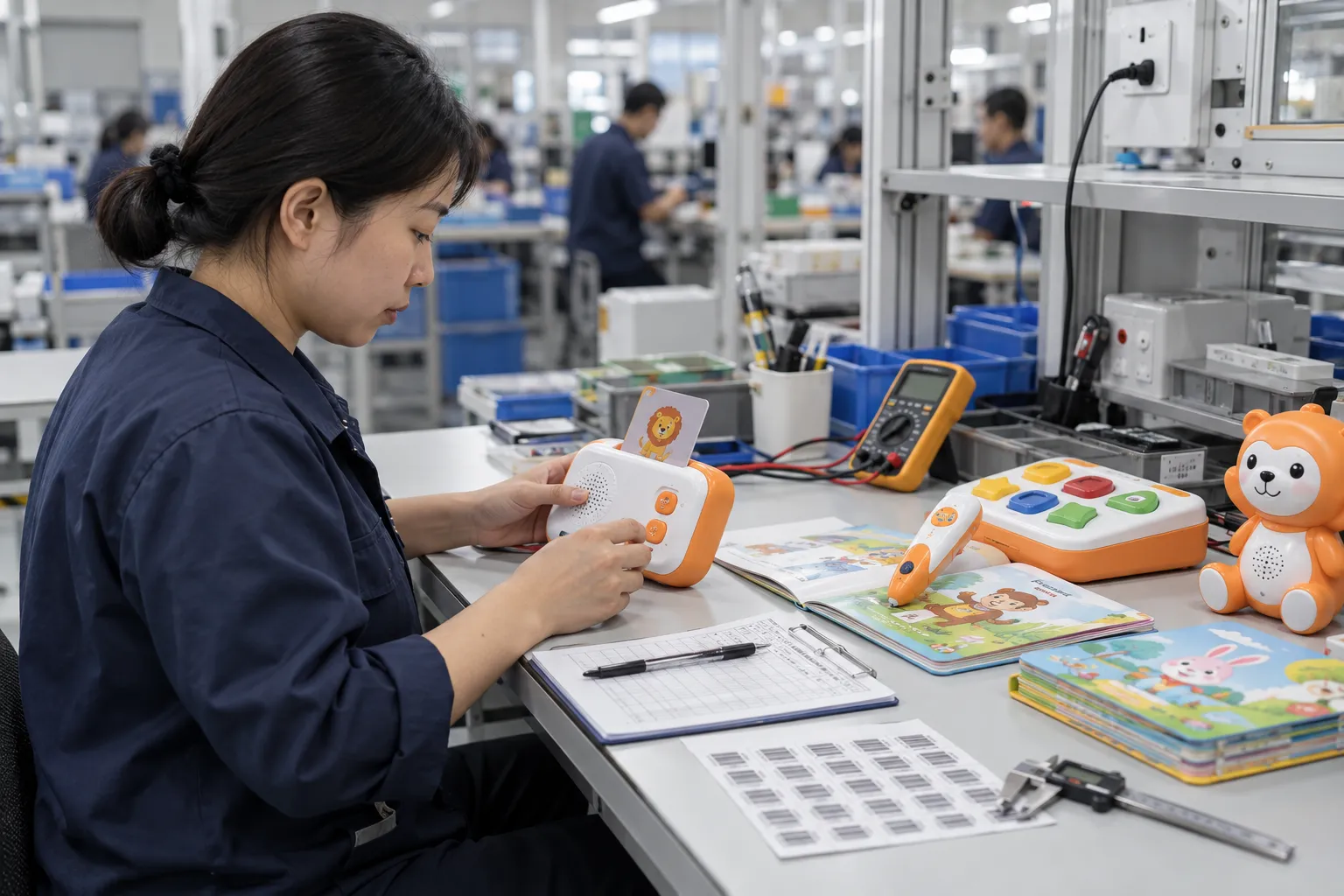
Target learner, interaction, languages, market, channel and required set contents.
Housing, electronics, controls, firmware, charging and audio-output requirements.
Scripts, recordings, OID maps, books, cards and language-version control.
Integrated sample, open-issue list, specification and approved deviations.
Inspection points, packing identity, traceability and shipment review.
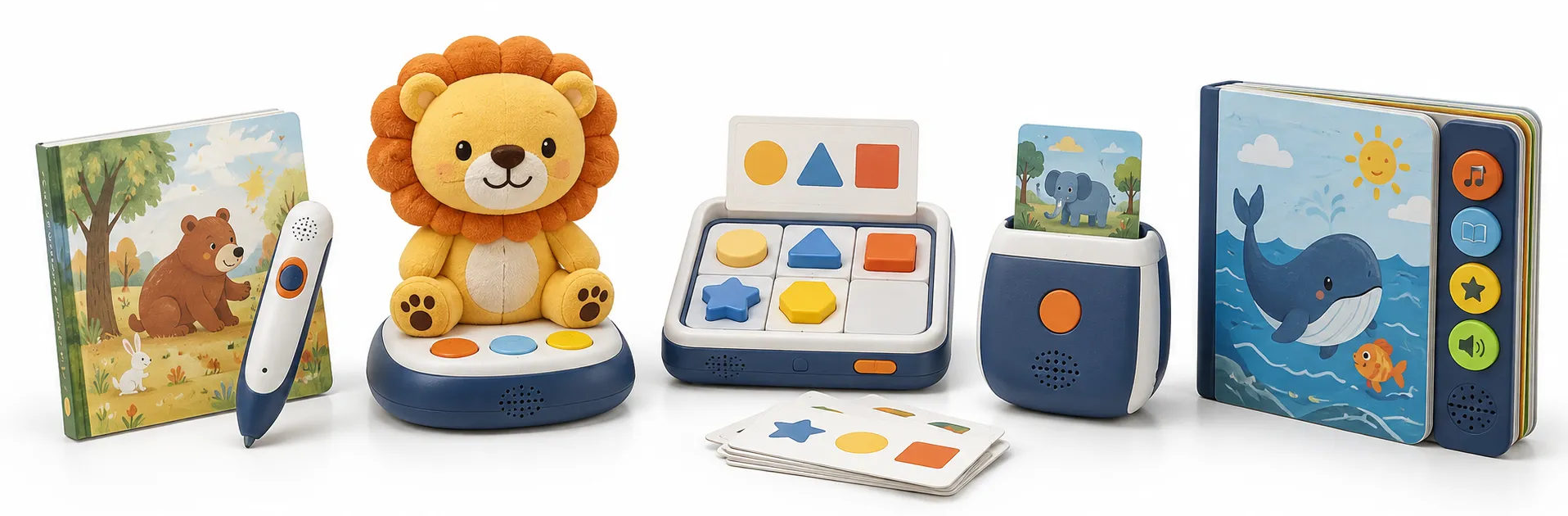
The right factory starting point depends on what the learner should touch, insert, press, hear or solve—and what your organization already owns.
Add audio interaction to owned books, cards and language-learning content.
Build a branded learning set around defined outcomes and repeatable activities.
Select established platforms, market-ready packaging and controlled SKU variants.
Plan durable, simple interactions and replenishable content for classroom use.
These five decisions make quotations more comparable and expose exclusions before sampling or deposit.
Request a scope review| Decision | What we confirm | Why it changes the quotation |
|---|---|---|
| Product platform | Existing model, modified platform or new tooling | Changes engineering work, validation depth, MOQ and schedule. |
| Content responsibility | Who supplies scripts, translation, audio, artwork and rights | Changes workload, approval ownership and one-time costs. |
| Market requirements | Destination, age grade, labels and compliance responsibilities | Changes materials, documents, test plan and packaging. |
| Order configuration | SKU count, languages, accessories and retail set contents | Changes material planning, pack-out controls and inspection. |
| Delivery basis | Quantity tier, target date, Incoterm and shipment inspection | Changes commercial comparison and final landed scope. |
Each stage has a tangible output so product, content and commercial decisions stay connected.
Confirm product, content, market, quantity, packaging and compliance responsibilities.
Combine production-intent hardware, programmed behavior and representative content.
Close sample differences and verify the production process against the release.
Build, inspect and pack the agreed configuration with order-specific controls.
Product and production evidence
Functional checks against the approved product configuration.

Cross-functional review of hardware, content and project files.
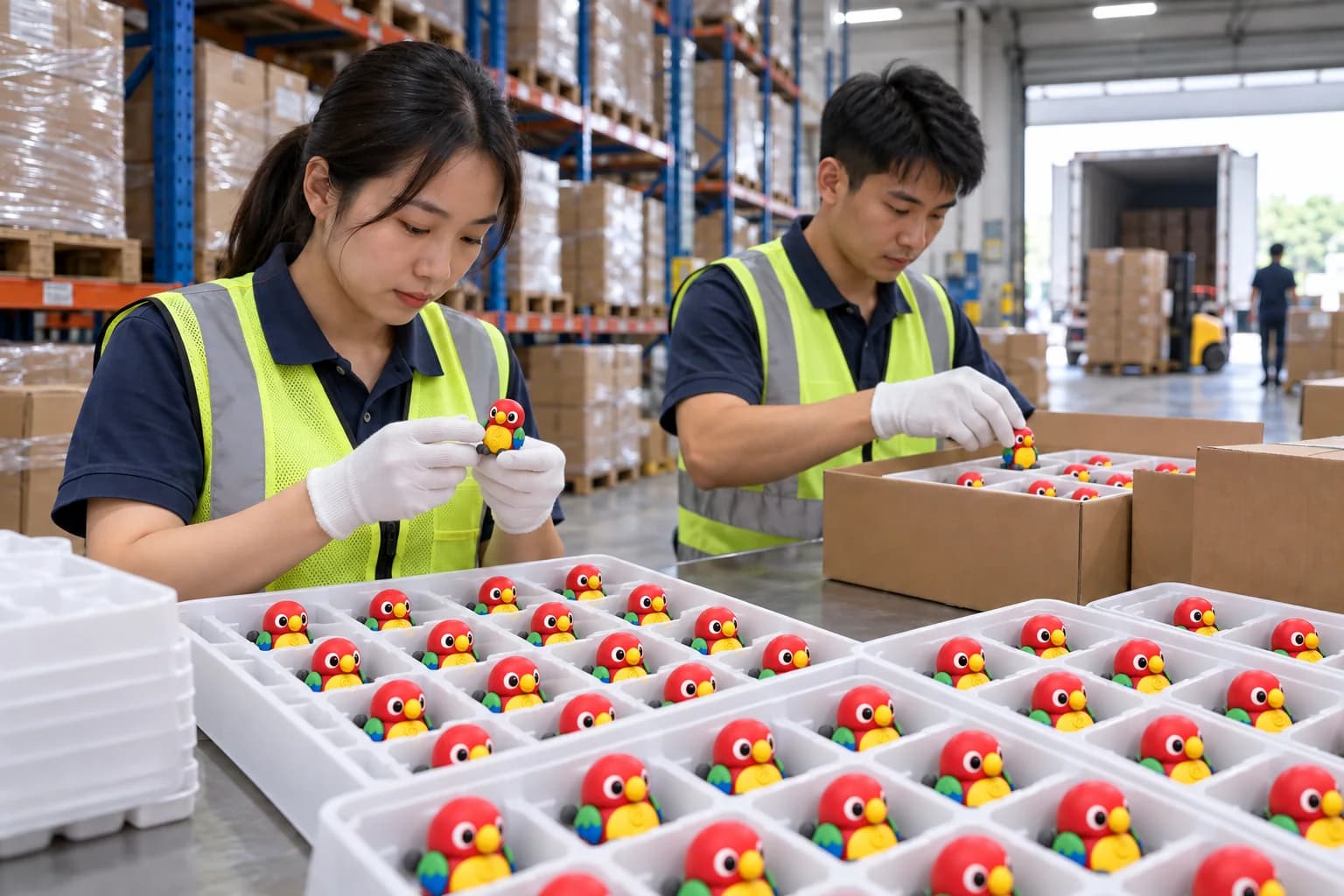
Shipment inspection and carton verification before dispatch.
You do not need every file finished. A clear summary of the known requirements lets us separate an existing-platform project from deeper custom development.
Practical answers for an initial project review. Final commercial and technical terms belong in the written quotation and approved specification.
GlobalSmartToy presents its manufacturing and product-integration capabilities directly. For a project review, we identify the proposed platform, production scope and any critical subcontracted operations so responsibilities are clear.
Yes, subject to a technical and rights review. We first compare the design with available platforms, electronics and tooling, then define which parts can be reused and which require new development.
Projects can coordinate compatible books, cards, stickers and packaging with the device. Artwork, OID mapping, audio and production print should be approved together on an integrated sample.
MOQ depends on the platform, electronics, color and logo process, printed-content quantity, packaging, components and testing scope. The quotation should state the main MOQ drivers rather than only one unexplained number.
Check the released model, firmware and audio version, critical functions, appearance, charging, accessories, printed content, labels, quantity, packaging and carton identity against the approved specification.
Send your target product, market and quantity. We will reply with the most relevant platform direction and the next inputs needed for quotation and sampling.