
Educational Toy Factory Audit Checklist: What B2B Buyers Should Verify
A product-specific factory review for talking pens, sound books, talking toys, card machines and logic learning products.
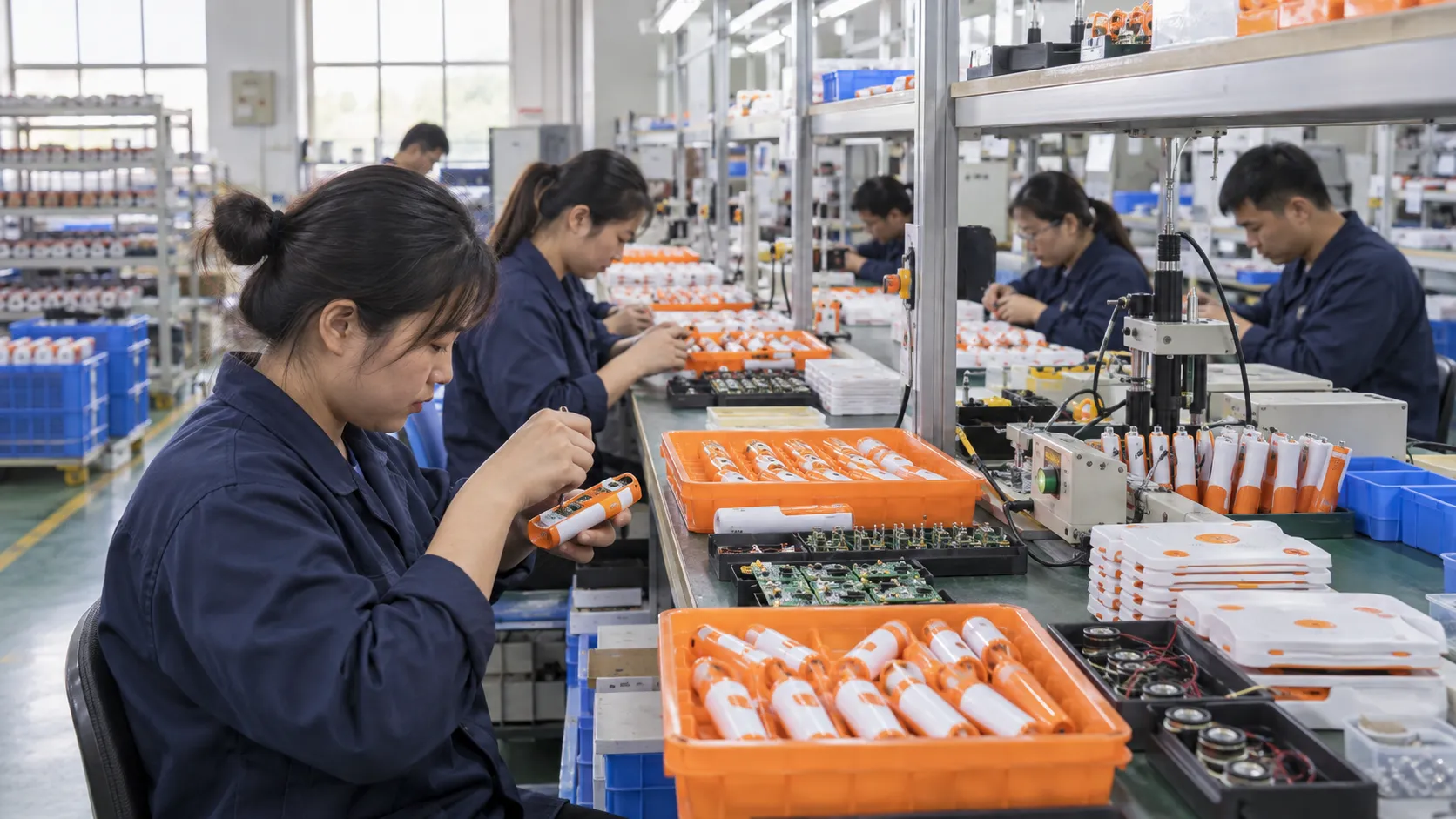
An educational toy factory audit should determine whether the supplier can control the product you intend to buy. A clean meeting room, certificates on a wall and polished samples do not show how the factory manages current drawings, audio packages, coded print, component changes, failed tests or mixed language versions.
The review should follow the product. Select one model or pilot order and trace requirements, bill of materials, incoming parts, work instructions, programming files, assembly, functional tests, nonconforming material, packing and shipment release. Ask operators and inspectors to demonstrate records rather than accepting general statements.
This checklist is not a certification audit and does not replace product testing or shipment inspection. It helps a buyer evaluate capability, identify gaps and create follow-up actions before commercial exposure increases.
What should an educational toy factory audit verify?
An educational toy factory audit should verify legal and manufacturing identity, relevant experience, capacity, approved-supplier and material controls, version-controlled product and content files, assembly instructions, functional testing, calibration, defect handling, traceability, packaging control, compliance support, change management and shipment release for the buyer's actual product category.
Begin with scope and evidence. A factory that assembles standard sound modules may not manage OID-coded books or custom firmware. Ask for examples relevant to the proposed interaction, materials and market, while respecting other customers' confidentiality.
Distinguish system existence from system use. A written procedure can look complete while operators follow informal instructions. Pull recent records, observe the line and ask how workers know the current version. Consistent answers across departments are stronger evidence than a prepared presentation.
Rate findings by risk and required action. A missing signature and uncontrolled firmware master do not carry the same consequence. Agree on corrective evidence and due dates. Some gaps can be closed before production; others may make the supplier unsuitable for the current project.
1. Confirm who will manufacture the product
Verify the business identity, site address, product scope and key subcontractors. Clarify which operations occur on site: engineering, molding, PCB assembly, final assembly, printing, audio programming, testing and packaging. Outsourcing is not automatically a problem, but responsibility and control must be visible.
Review organization and project ownership. Identify contacts for commercial decisions, engineering, content, quality and production. For complex multilingual projects, ask who releases audio and artwork versions and who can stop production when files conflict.
Check experience against the proposed product. Review representative work instructions, fixtures and defect categories for optical pens, card readers, sound books or talking toys as applicable. Do not rely only on visually similar samples.
2. Evaluate capacity and production planning realistically
Ask for current line loading, planned shifts, key equipment, labor model and seasonal constraints. Compare stated capacity with observed stations, cycle time and recent records. A large monthly number without product mix and working days is not useful.
Identify bottlenecks specific to the order: molding, programming, functional test, book printing, hand assembly or packaging. A factory may have ample assembly labor but limited validated test fixtures. Confirm whether subcontractor capacity is reserved and how delays are communicated.
Review the production plan and material lead times. Ask how the factory manages engineering changes after components are ordered. Capacity is the ability to deliver the approved configuration with controls, not merely to place more workers at a line.
3. Trace approved materials from supplier to line
Review approved suppliers, purchasing specifications, incoming inspection and identification. Select key components such as optical modules, speakers, batteries, plastics, coatings and printed materials. Compare labels and records with the current bill of materials.
Inspect storage and segregation. Good, rejected, returned, obsolete and uninspected materials should be distinguishable. Check protection for moisture-, damage- or shelf-life-sensitive items. For language versions, review separation of cards, manuals, labels and boxes.
Ask how substitutions are approved. A component that appears equivalent can affect audio, runtime, chemical evidence or report applicability. The change process should include technical, quality and customer review proportional to impact.
4. Audit drawings, firmware, audio and artwork control
Educational products depend on digital masters. Review how drawings, BOMs, firmware, audio packages, maps, artwork and packaging revisions are released. Obsolete files should be removed or clearly blocked from production access.
Trace one finished SKU to the firmware and content version installed. Ask how programming stations obtain files, how operators select the model and how installation is verified. Similar language versions are a particular mix-up risk.
Confirm backup, access and confidentiality practices at a practical level. Project files should be limited to authorized roles and changes should leave a trace. Buyers should also use commercial agreements appropriate to their content and tooling ownership.
5. Observe assembly, testing and defect control
Walk the actual or representative process. Look for current work instructions, approved samples, component identification, defined settings and first-article approval. Ask operators how they respond when a part does not fit or a unit fails. Informal rework at the station can hide recurring defects.
Review functional test coverage. Power-on alone is not enough for a learning device. The process may need recognition, buttons, sensors, speaker, audio, language, charging and content-version checks. Identify which tests are performed on every unit and which are sampled.
Inspect nonconforming-product controls. Failed units should be segregated, recorded, repaired under instruction and fully retested. Review defect trends and corrective actions. A factory that reports no defects may be failing to record them.
6. Review measurement, traceability and quality records
Check calibration or verification status for relevant tools and fixtures. The control should match how the equipment affects acceptance. A decorative sticker on a test fixture is not enough; ask what reference is used and what happens when a check fails.
Trace a finished carton backward to line, date, key materials, firmware or content and inspection records where the system allows. Then trace a component lot forward to affected production. The level of traceability should be agreed for the product and risk.
Review final inspection and release authority. The record should reference the current specification and package requirements. Shipment should not be released only because the schedule or payment milestone has arrived.
| Audit evidence | Question answered | Warning sign |
|---|---|---|
| Current line instruction | Are operators building the released version? | Uncontrolled printouts or verbal changes |
| Programming log | Which content package is installed? | Shared folders with obsolete files |
| Defect and rework record | Are failures contained and corrected? | No trace after informal repair |
| Lot trace | Can affected units be identified? | Only a broad production month is known |
7. Turn audit findings into sourcing decisions
Summarize strengths, gaps, evidence and product impact. Separate immediate blockers from improvements. A missing controlled content-release process may block multilingual production, while a documentation-format improvement might be closed before the pilot.
Request corrective action with cause, action, owner, due date and verification. Photos of new labels may close a simple segregation finding; a revised process needs records showing it works. Avoid closing systemic issues on promises alone.
Use the audit alongside samples, laboratory evidence and shipment inspections. A strong quality system does not prove one product complies, and a passing test report does not prove the factory will reproduce the tested configuration. The combined evidence supports a more balanced supplier decision.
Turn an audit visit into evidence for a sourcing decision
Trace one recent product from order to shipment
Instead of reviewing procedures only in a meeting room, select a recent product similar to the proposed scope and trace its purchase requirements, drawings, incoming materials, production traveler, firmware or content version, in-process checks, final inspection and shipment release. Confidential customer data can be masked. The objective is to see whether records connect and whether shop-floor practice matches the described system.
Ask operators how they identify the correct language, audio package, component revision and work instruction. Observe whether rejected material is segregated and whether rework is authorized and reinspected. For printed learning products, include artwork and print version control. A certificate on a wall does not answer these product-specific questions.
Test capacity claims with concrete numbers
Ask for current loading, relevant line count, working calendar, typical changeover, daily output assumptions and known bottlenecks. Compare stated capacity with the required process steps—not only final assembly headcount. Recording, OID prepress, printing, molding, programming and inspection may occur at different sites or subcontractors and need separate confirmation.
Discuss the proposed order timing and what other commitments share the period. Capacity should be supported by a preliminary line plan and material lead times. If overtime or a new subcontractor is required, understand supervision and validation. The useful audit conclusion is not a generic maximum number but whether the supplier can control this product in the requested window.
Close findings through risk-based corrective action
Classify findings by potential effect on safety, legality, function, identity, schedule and general system discipline. A missing calibration record on a critical tester is different from an untidy non-production office. Request root cause, correction, prevention, owner and due date for material findings, with objective evidence before closure.
An audit is one input, not a lifetime approval. Define ongoing controls such as sample validation, product testing, first-order in-process review, shipment inspection and periodic reassessment. Performance data from actual orders should update the supplier risk rating. A strong initial audit cannot compensate for uncontrolled changes later.
Summarize the audit in a sourcing memo that distinguishes verified facts, open evidence and buyer assumptions. Include the proposed product scope, audited site, outsourced processes and conditions of approval. This prevents a favorable score for one facility from being reused automatically for another factory, product family or process that the visit did not cover.
Frequently asked questions
Is a factory audit the same as product inspection?
No. An audit evaluates the supplier's systems and capability. Product inspection evaluates a production lot, while laboratory testing evaluates samples against applicable requirements.
Should buyers announce a factory audit?
Most commercial audits are scheduled so relevant processes and records are available. The audit plan should still allow independent selection of records and samples within the agreed scope.
What if printing or molding is subcontracted?
Review how the factory qualifies, specifies, receives and controls the subcontracted work. Critical subcontractors may require direct evidence or a separate review.
Does ISO 9001 prove toy compliance?
No. A quality-management certification may support confidence in systems but does not prove that a specific toy meets applicable safety or market requirements.
How often should a toy factory be audited?
Frequency depends on risk, performance, changes and buyer policy. New suppliers, major product changes or repeated quality issues may justify additional review.
Can a remote factory audit replace an on-site visit?
Remote review can verify selected documents and video evidence, but it may not provide the same ability to observe material flow, select records and speak with operators. Choose based on risk.
Conclusion
A useful educational toy factory audit follows the proposed product through materials, files, assembly, test, packing and release. It looks for evidence that the factory uses its procedures and can preserve the approved configuration at production speed.
Combine audit findings with representative samples, configuration-specific testing and shipment inspection. No single document proves supplier suitability, but connected evidence makes risk visible before tooling, deposits and deadlines reduce the buyer's options.
Authoritative references
Requirements change and differ by product. Use the current official source and qualified professional advice for the final project.