
Market definition
Identify where the finished product will be sold and by whom.
Define the market, age grade, product configuration and compliance responsibilities before samples are submitted or packaging is released.

Identify where the finished product will be sold and by whom.
Test the product, accessories, content and packaging that will actually ship.
Coordinate specifications, labels, bills of materials and sample identity.
Translate released requirements into material, function and pack-out controls.
Applicable obligations depend on product design, age grading, materials, electronics, batteries, accessories, market and commercial roles.
Define model, variants, accessories and the configuration represented by each sample.
Confirm destination and intended user before selecting a test or document route.
State which party handles laboratory work, declarations, records and market obligations.
Review whether material, component, firmware or packaging changes affect released evidence.
Reports and documents are useful only when model identity, materials, construction, labels and production configuration remain aligned.
Review your requirements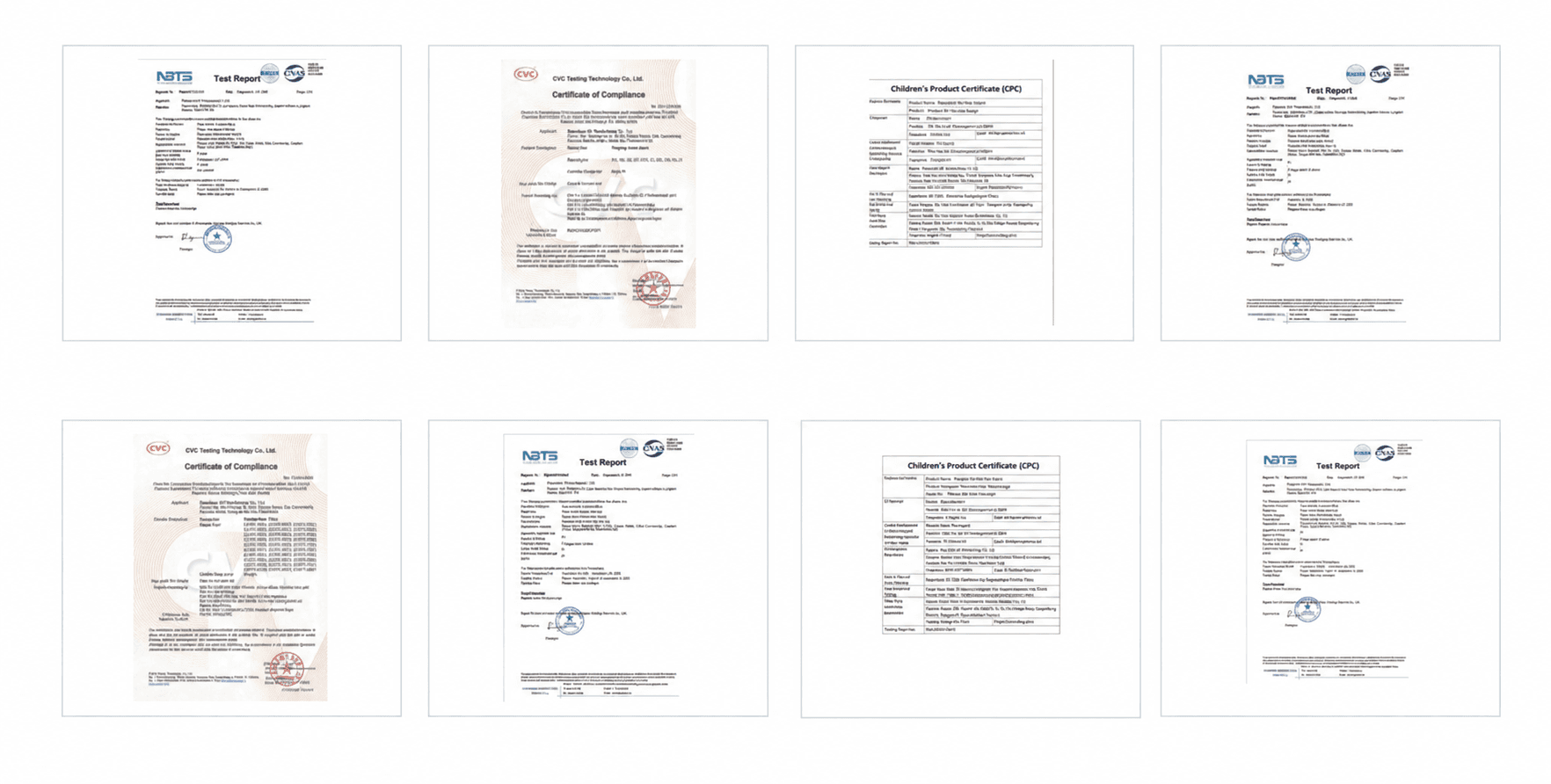
Model, materials, dimensions, electrical format, functions and accessories.
Destination, age grade, sales channel and importer or brand responsibilities.
Photographs, labels, components and configuration submitted for evaluation.
BOM, drawings, manuals, labels, reports and controlled revision status.
Incoming materials, assembly, function, traceability and shipment pack-out.
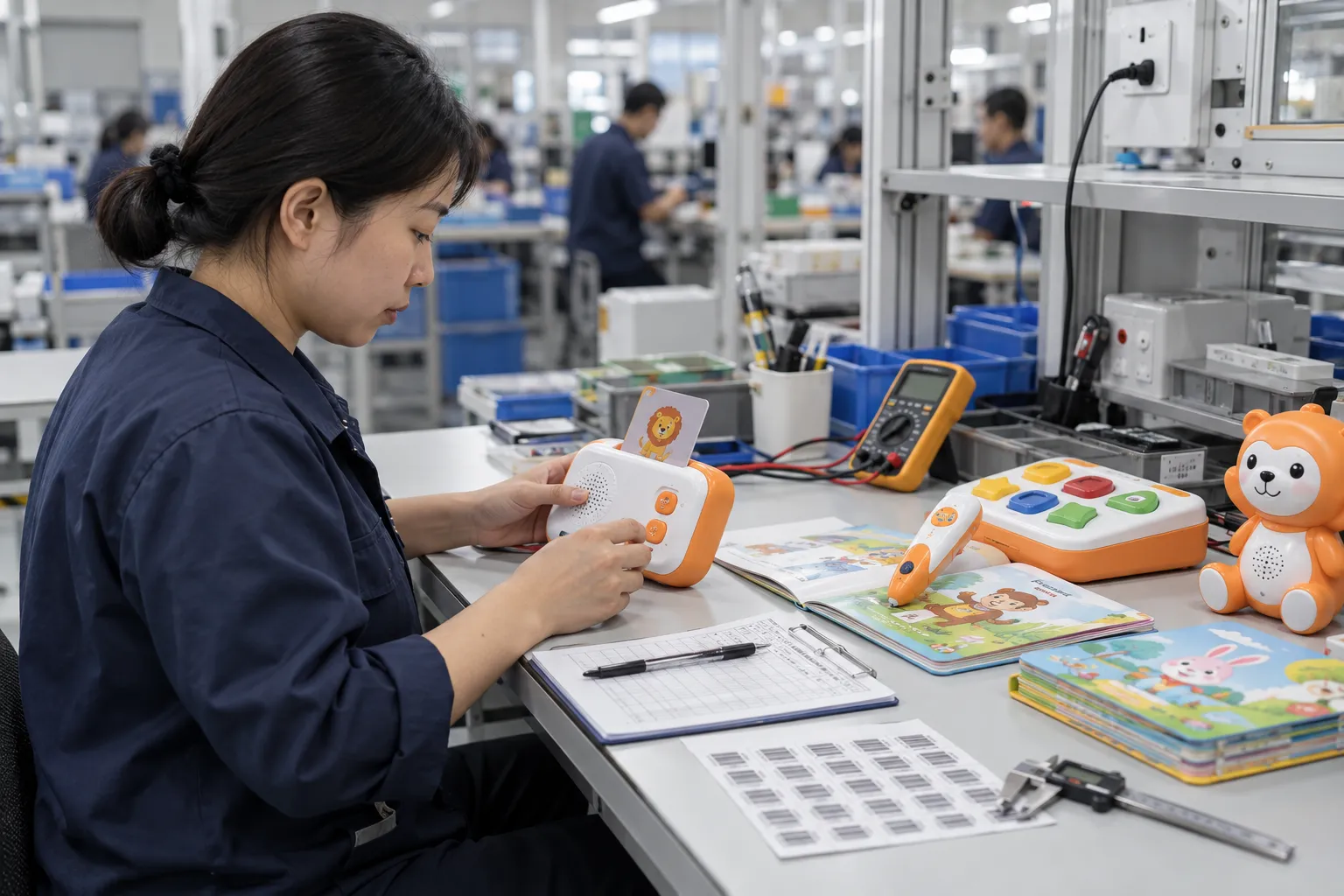
An OID pen, sound book and logic machine share some requirements but differ in batteries, small parts, print, controls and user interaction.
Review housing, battery, charging, printed accessories and complete set.
Control character housing, speaker, buttons, battery and coded content accessories.
Coordinate board construction, sound module, battery compartment and buttons.
Review loose pieces, cards, controls, feedback behavior and package contents.
The written scope should avoid vague promises and identify what evidence, testing coordination and documents are actually included.
Request a scope review| Decision | What we confirm | Why it changes the quotation |
|---|---|---|
| Destination market | Countries and sales channels | Determines the applicable review route. |
| Product configuration | Model, variants, battery and accessories | Determines sample and document identity. |
| Testing responsibility | Brand, importer, factory or nominated laboratory | Determines fees, communication and deliverables. |
| Labeling scope | Product, package, manual and traceability | Changes artwork and approval steps. |
| Change process | How substitutions and revisions are reviewed | Protects the relationship between evidence and production. |
Each stage has a tangible output so product, content and commercial decisions stay connected.
Confirm market, age grade, product configuration and commercial roles.
Identify missing specifications, labels, samples and technical records.
Build and identify representative samples for the agreed evaluation route.
Carry released materials, labels and checkpoints into order control.
Product and production evidence
Document and product identity review before submission or release.
Production checks tied to the approved product configuration.

Labels, accessories and carton configuration verified before dispatch.
A focused first brief helps identify what must be confirmed by the responsible parties and qualified laboratory.
Practical answers for an initial project review. Final commercial and technical terms belong in the written quotation and approved specification.
No responsible supplier should guarantee an unknown configuration. Preparation reduces avoidable gaps, while applicable testing and legal determinations belong to the responsible parties and qualified laboratories.
Coverage depends on the relationship between models, materials, electronics and applicable requirements. Variants should be reviewed rather than assumed covered.
Begin before tooling, materials, packaging and labels are finalized so market requirements can influence the production specification.
Existing evidence can be reviewed for product identity, scope, dates and relevance, but reuse must be determined against the final product and market requirements.
The change should be documented and reviewed for technical, quality and compliance impact before substitution in production.
Share the product, destination market and available evidence for a focused preparation review without unsupported certification claims.