
Brief clarification
Separate essential functions from optional ideas before sample work begins.
Review the product idea, interaction, content and target market before committing to tooling or mass-production assumptions.
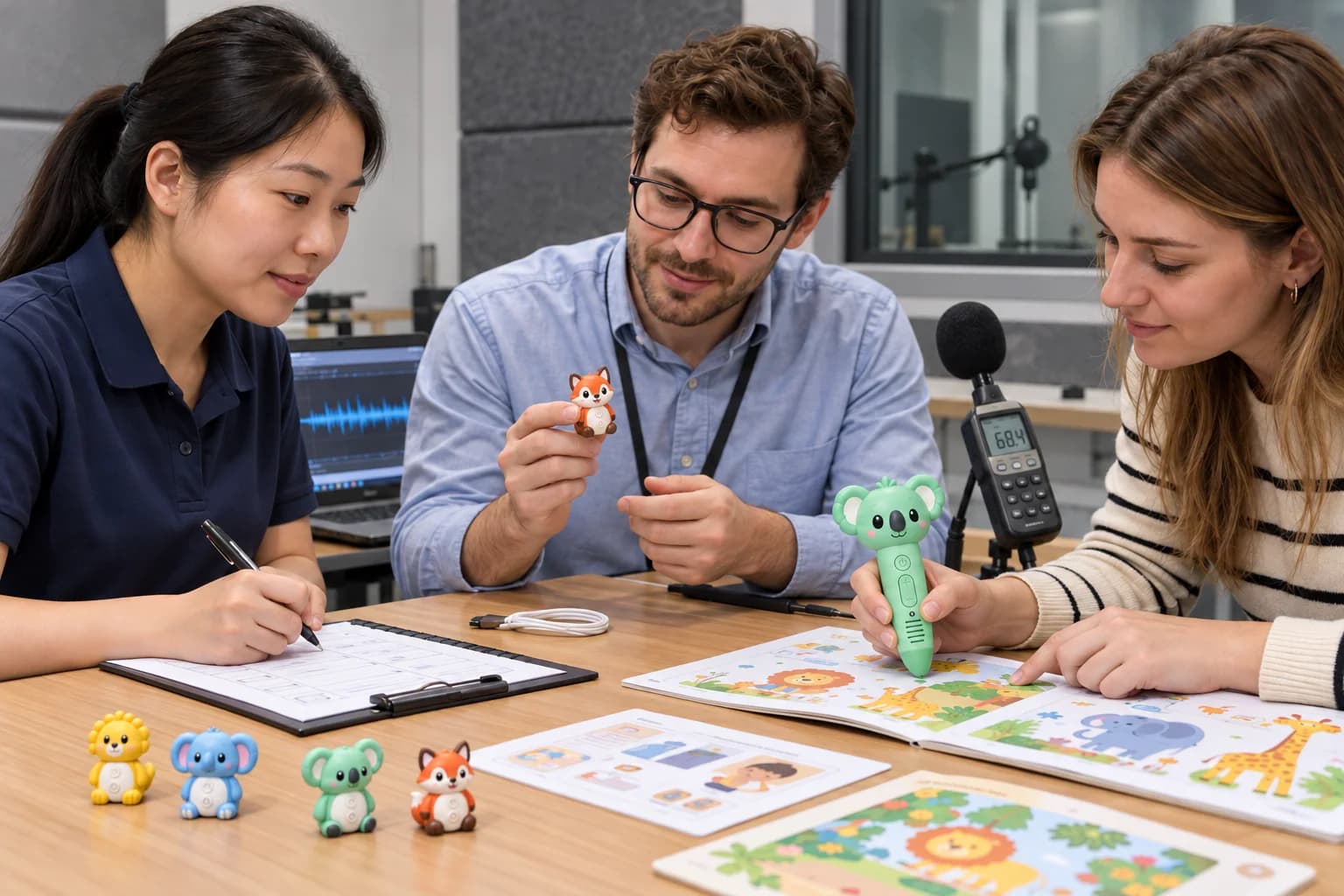
Separate essential functions from optional ideas before sample work begins.
Define whether the sample is for appearance, function, content integration or production approval.
Record differences, open questions and revision decisions against one reviewed sample.
Convert the approved direction into controlled files, specifications and inspection points.
A visual mock-up, functional engineering sample and production-intent sample answer different questions and should not be treated as interchangeable.
Use when the learning goal, interaction or product format still needs feasibility discussion.
Use to review scale, color direction, branding and overall product presentation.
Use to verify controls, audio, firmware, recognition, charging and content behavior.
Use as the reference for released files, approved differences and mass-production checks.
The sample plan connects product structure, electronics, content, artwork and commercial requirements so each review produces a clear decision rather than another vague revision round.
Review your requirements
Target user, learning objective, interaction, market and must-have functions.
Sketches, photos, samples, artwork, scripts and known technical requirements.
Appearance, functional, integrated or production-intent output and its acceptance criteria.
Observed issue, owner, required action, evidence and approval status.
Approved sample, files, specification, deviations and inspection checkpoints.

Different interactive products fail at different handoff points. The first sample should focus on the uncertainty most likely to affect tooling, content or user experience.
Verify touch recognition, code mapping, firmware and physical printed proofs.
Confirm housing, controls, voice direction, speaker output and programmed behavior.
Check card recognition, insertion, database mapping and complete card-set handling.
Align page or task structure with electronics, feedback and finished assembly.
Prototype quotations become more useful when both sides agree on the deliverable, supplied inputs and number of expected review cycles.
Request a scope review| Decision | What we confirm | Why it changes the quotation |
|---|---|---|
| Starting material | Concept, sketch, reference sample or released design | Changes design work and feasibility review. |
| Sample objective | Appearance, function, integration or production approval | Changes materials, tooling and test depth. |
| Content status | Scripts, audio, artwork and code maps available | Changes preparation work and revision risk. |
| Review rounds | Known decision makers and expected feedback cycle | Changes schedule and sample quantity. |
| Next production step | Pilot order, tooling release or final quotation | Changes the documentation required from the sample. |
Each stage has a tangible output so product, content and commercial decisions stay connected.
Confirm the product objective, supplied references and biggest open risks.
Define the sample type, included functions, materials and acceptance questions.
Assemble the sample and record results against the agreed review points.
Close documented issues and prepare the approved direction for the next stage.
Product and production evidence
Functional sample review against customer requirements.
Cross-functional review of product, content and project files.
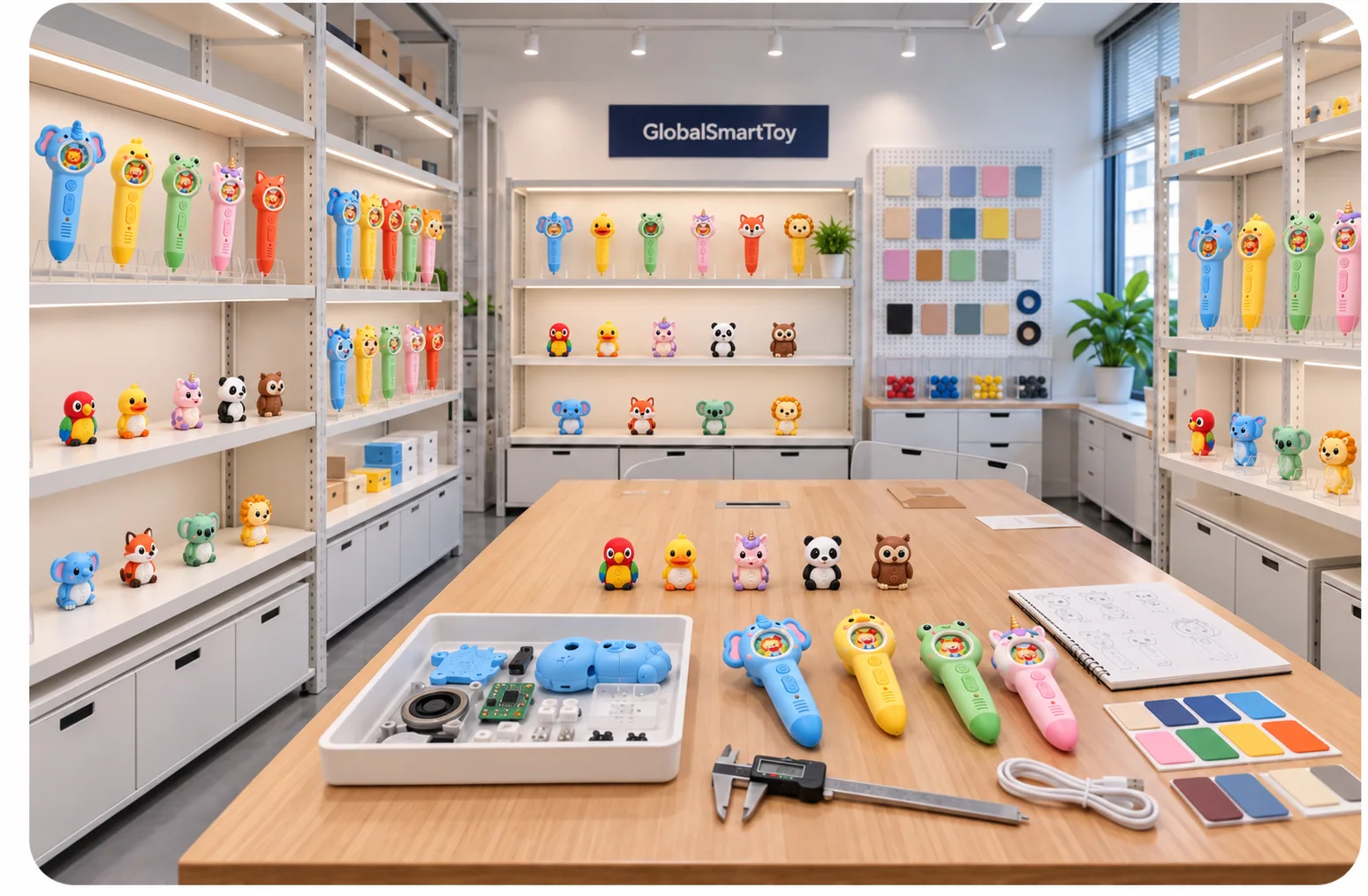
Physical references used to compare platforms and customization scope.
An unfinished idea can still be reviewed if the target user, intended behavior and commercial boundary are clear.
Practical answers for an initial project review. Final commercial and technical terms belong in the written quotation and approved specification.
Yes. A reference sample can help explain scale, interaction and expected quality, but required changes and intellectual-property responsibilities must be stated clearly.
A functional sample proves selected behavior and may use temporary parts. A production-intent sample should represent the released configuration, materials, files and known deviations used for production control.
Not always. Representative artwork can be enough for early engineering, but final print, audio and content approval requires controlled production files.
No. The sample reduces uncertainty, but final MOQ, price and schedule depend on released specifications, quantity, tooling, components, print, packaging and compliance responsibilities.
Approve the physical sample, functions, firmware, audio, print, accessories, package contents, specification, open deviations and order-specific inspection plan.
Send your current concept or reference and tell us which technical or commercial decision the prototype needs to support.