
Character platform
Start from an established animal direction or evaluate a custom industrial-design and tooling program.
Combine a compact animal character with custom audio, simple controls and compatible books, cards or stickers.
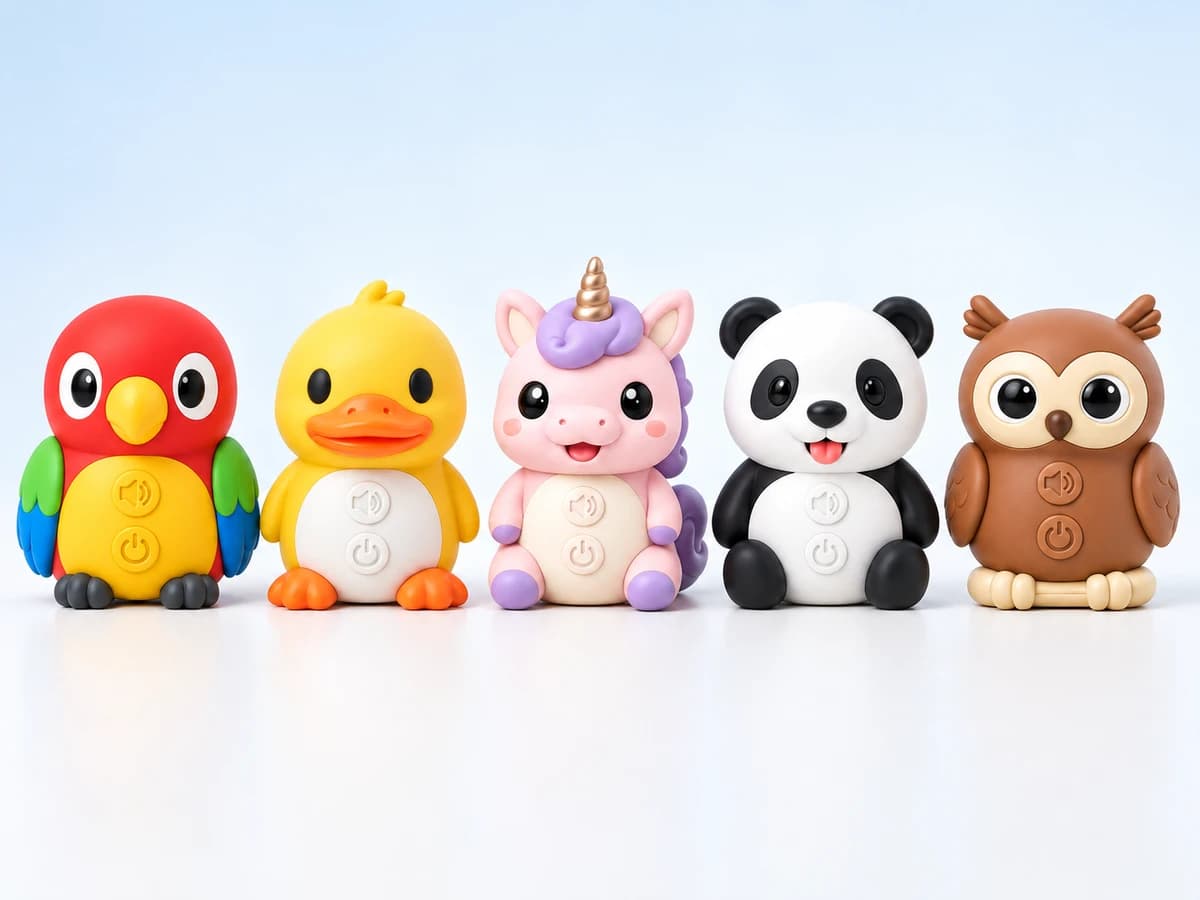
Start from an established animal direction or evaluate a custom industrial-design and tooling program.
Control voice, pronunciation, music, prompts and language versions through approved masters.
Connect the figurine with compatible books, cards or stickers when the product uses coded print.
Test controls, recognition, audio, charging, appearance and complete pack-out against the approved sample.
A visually attractive figurine still needs a defined user action, audio behavior, content system and test method before tooling or packaging can be approved.
Adapt a parrot, duck, panda, unicorn, owl, dinosaur, koala or bear reader for faster sampling.
Develop new industrial design and tooling when brand ownership and expected volume justify it.
Choose standalone button audio or a coded book, card and sticker ecosystem.
Approve a production-intent figurine with final controls, audio, printed content, accessories and package.
The product release connects industrial design with electronics, firmware, content mapping and visual quality standards.
Review your requirements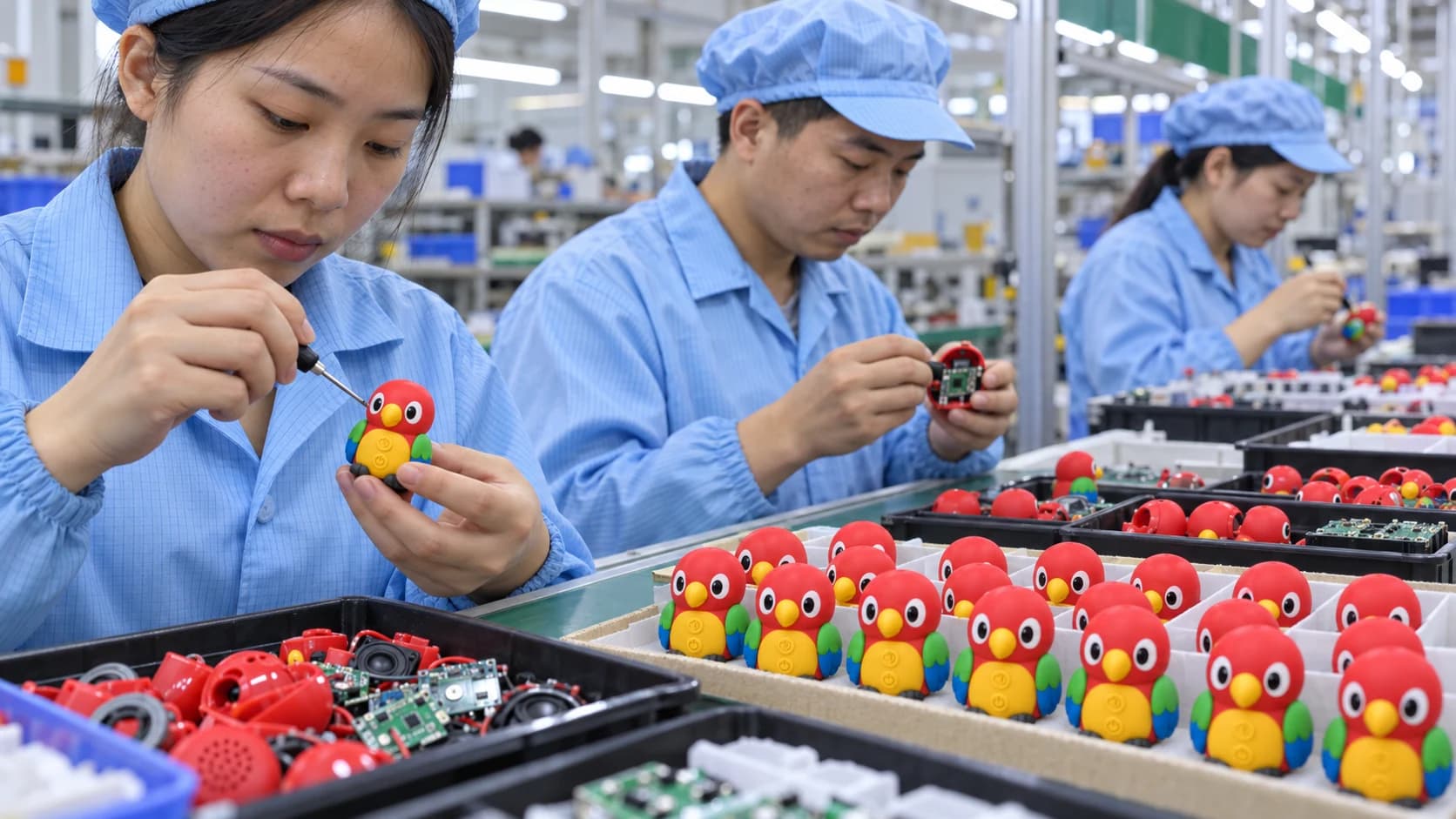
Form, proportions, material, color, decoration, speaker and button positions.
Controls, sensor, speaker, battery, charging and programmed board.
Startup, volume, repeat, voice, language, music and prompts.
Books, cards, stickers, code map and approved audio library.
Color references, decoration limits, assembly gaps and protected surfaces.
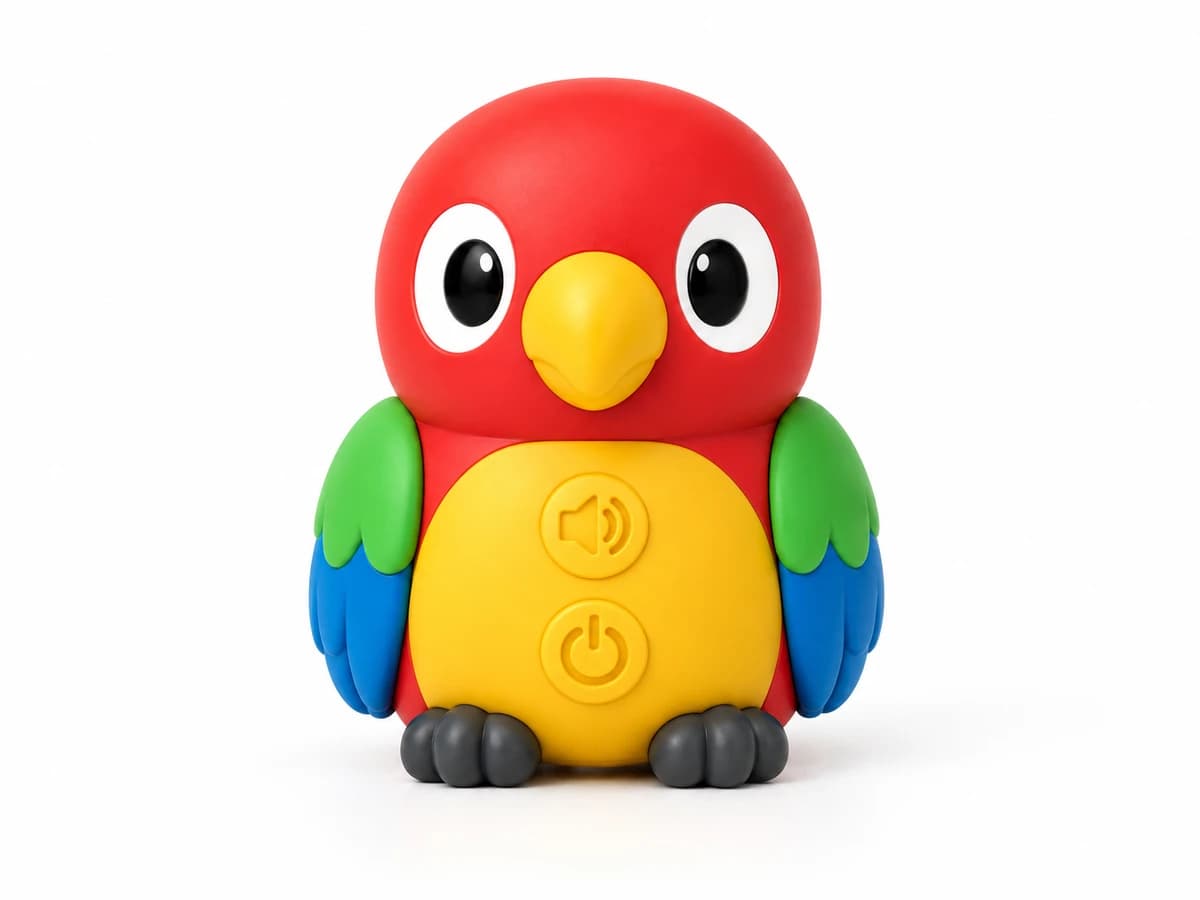
Use the figurine itself as the recognizable guide while printed content provides depth and expansion.
Pair pictures and coded cards with words, phrases and pronunciation.
Use a defined voice, songs and short narratives to reinforce the character identity.
Create controlled audio and printed-content versions for different markets.
Add book titles, card decks or sticker packs around the released hardware.
Character tooling, audio work and printed content have different cost drivers and approval evidence.
Request a scope review| Decision | What we confirm | Why it changes the quotation |
|---|---|---|
| Character route | Existing housing, modified appearance or new tooling | Changes development, exclusivity, MOQ and schedule. |
| Electronic behavior | Controls, sensor, audio, charging and firmware | Changes components, programming and functional tests. |
| Content | Standalone tracks or coded books, cards and stickers | Changes mapping, print, proofing and memory. |
| Decoration | Colors, graphics, logo and appearance tolerances | Changes samples, process controls and reject criteria. |
| Retail set | Accessories, printed content, inserts and packaging | Defines unit cost and shipment inspection. |
Each stage has a tangible output so product, content and commercial decisions stay connected.
Confirm the user, interaction, product configuration, content ownership, target market and commercial assumptions.
Build a representative product with controlled hardware, programmed behavior, content and packaging references.
Close sample issues and verify factory tests, work instructions, pack-out and released files before volume production.
Control the approved configuration through assembly, functional inspection, packing and shipment review.
Product and production evidence
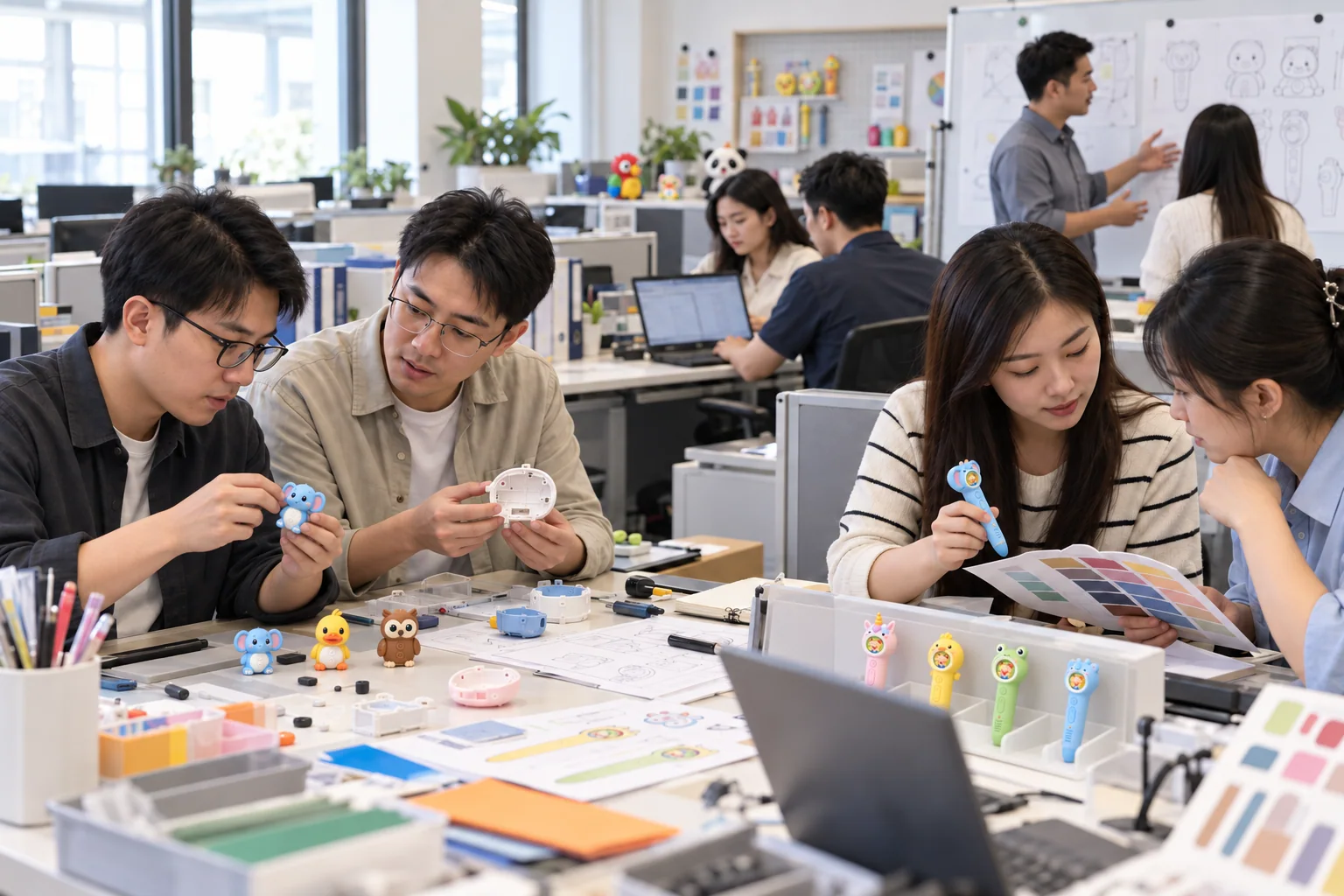
Product, content and commercial requirements are reviewed against the same project brief.
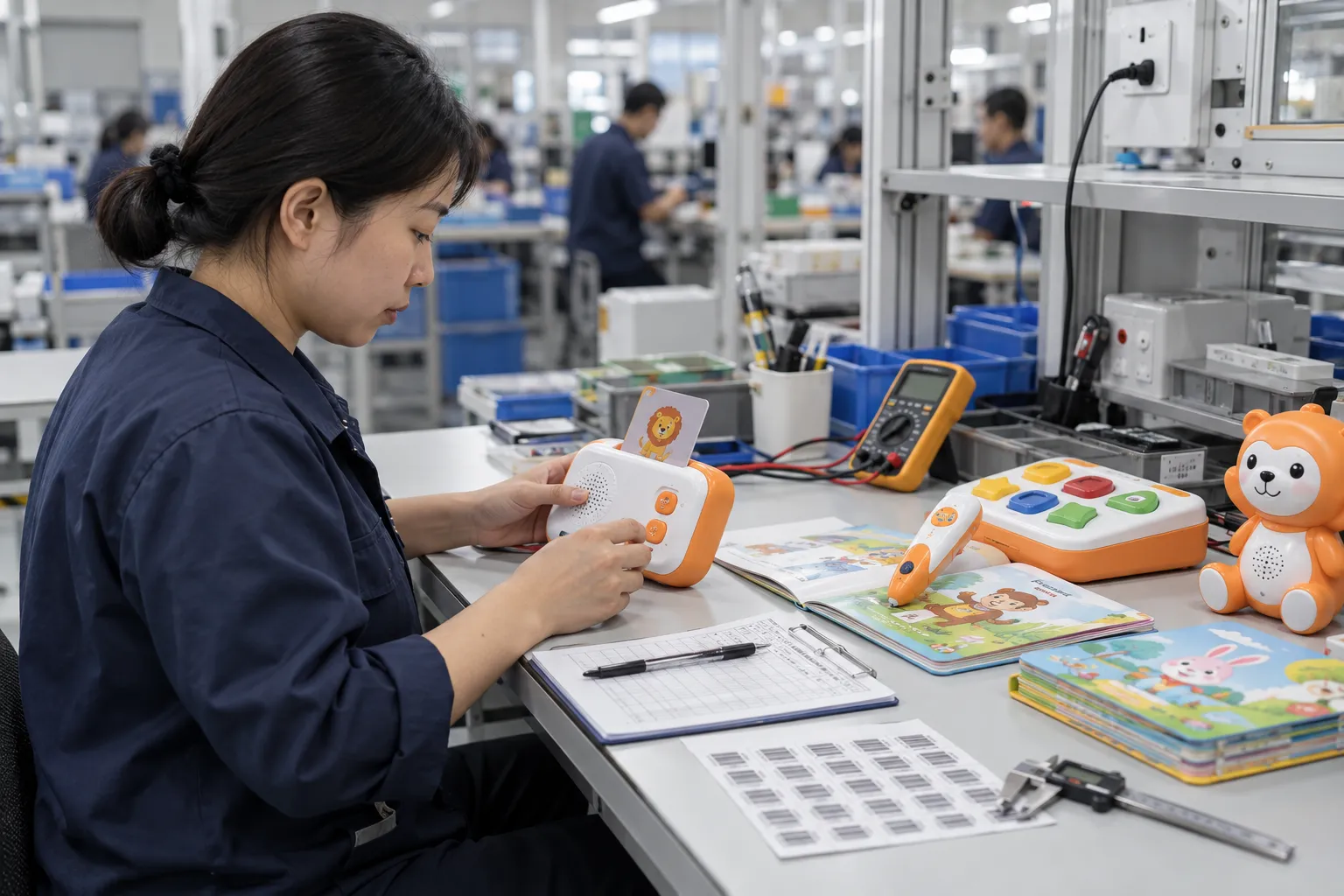
Factory testing links the approved sample with repeatable production checkpoints.
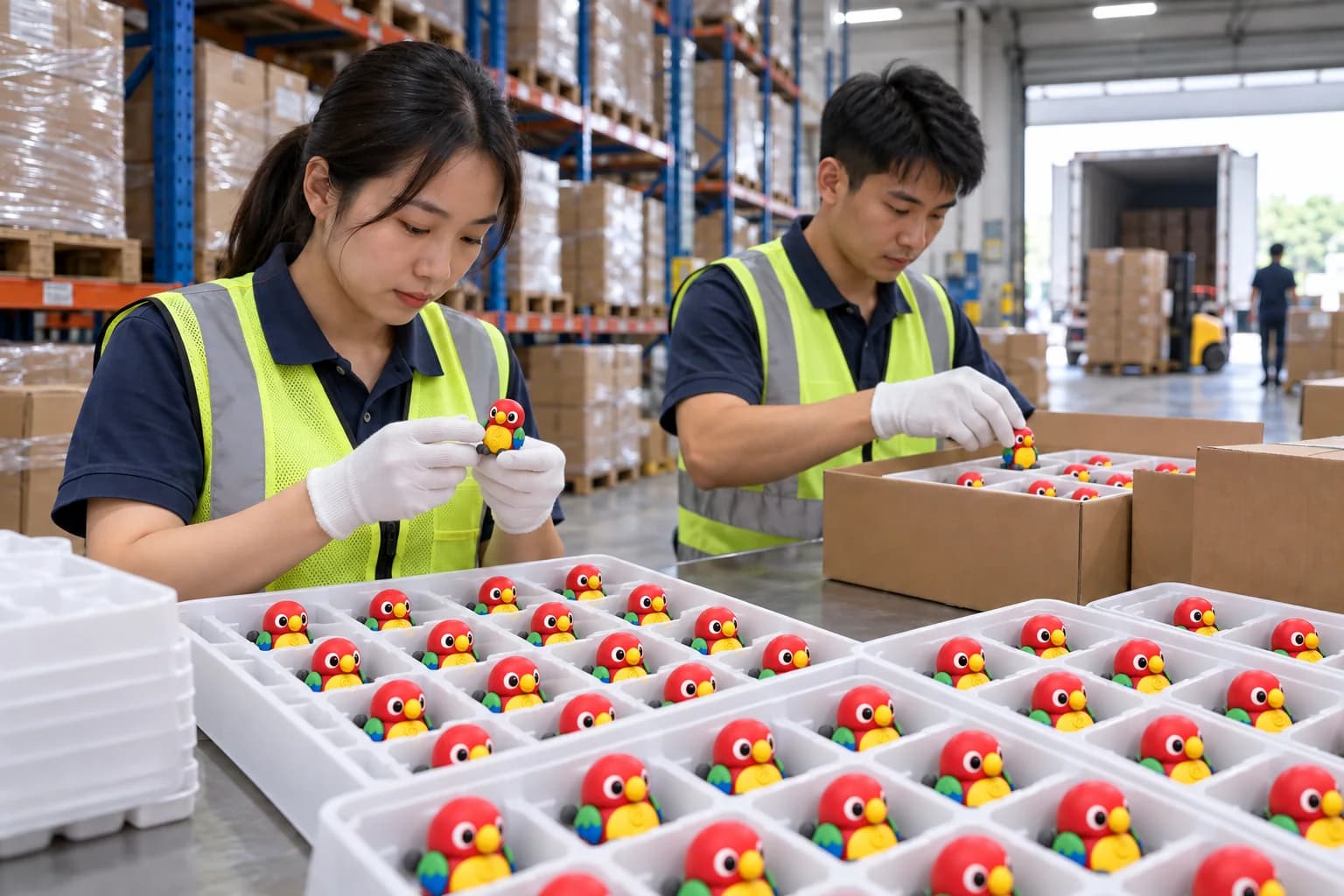
Finished products, accessories, labels and cartons are checked before release.
A useful brief explains both how the product should look and what the child should do with it.
Practical answers for an initial project review. Final commercial and technical terms belong in the written quotation and approved specification.
A proprietary character can be evaluated for new industrial design and tooling. The scope should confirm rights, geometry, electronics, decoration and validation before tooling release.
Current character-reader directions include parrot, duck, panda, unicorn, owl, dinosaur, koala and bear. Exact availability is confirmed against the project.
Yes. Approved voice, narration, music, pronunciation and sound effects can be programmed according to the selected hardware and content map.
Compatible coded books, cards and stickers can be planned when the recognition method, print mapping, firmware and audio library are developed as one system.
Inspection can cover function, recognition, audio, buttons, charging, assembly, color and decoration, accessories, printed content and complete packaging.
Send the character direction, interaction and content plan for an existing-platform or custom-tooling recommendation.