
Talking Figurine Product Development: From Character Art to Production Toy
A step-by-step framework for converting a licensed or original character into a child-friendly interactive audio product.
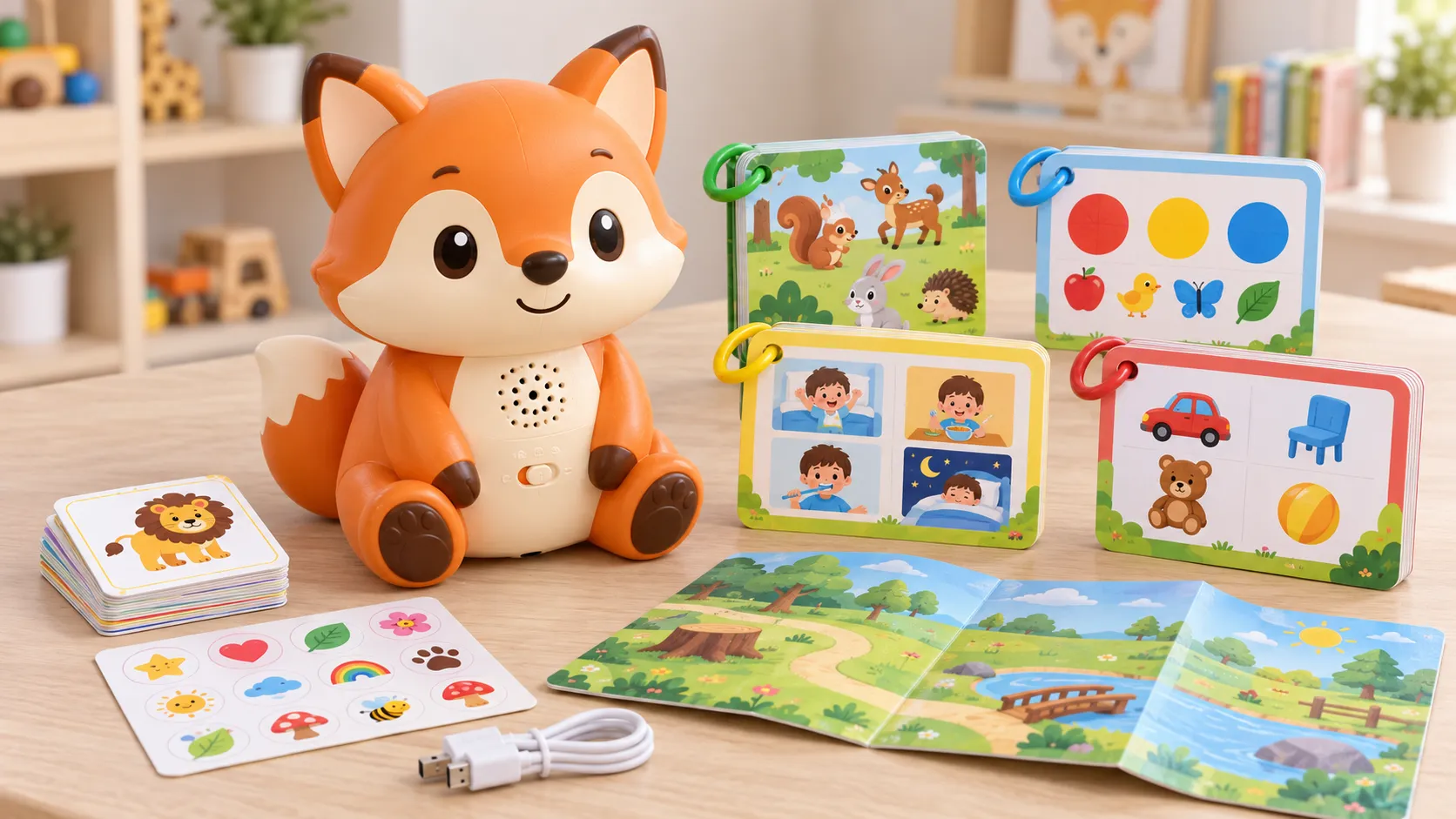
A character that works in a book or screen does not automatically become a stable physical toy. Proportions must support standing or sitting, internal components need space, buttons must be discoverable and the voice must match the brand. Small decorative details may become fragile, difficult to mold or unsuitable for the intended age.
Interactive character products add electronics and content to industrial design. The team must decide where the child presses or touches, how modes work, what the character says, how it powers and how accessories extend play. These choices shape tooling, firmware, memory, speaker and packaging.
This guide focuses on an original or properly licensed character. Buyers should confirm intellectual-property rights and use qualified engineering and compliance support for the intended market.
How is a talking figurine developed for mass production?
Talking figurine development converts approved character art into a stable industrial design, validates grip and controls, fits electronics and power, defines voice and firmware, engineers moldable parts, creates tooling, tests production-intent samples, reviews market requirements and proves assembly, functional testing and packaging through a pilot batch before mass production.
Preserve the character's identifying features while allowing engineering changes. Define which proportions, colors, marks and expressions are essential and which details may adapt for moldability, durability or safety. A licensor approval process should have clear stages and turnaround expectations.
Start with the play pattern. The figurine may tell stories, teach vocabulary, sing, ask questions or work with cards and boards. The interaction determines controls, content and accessories; the shell should support that experience rather than simply containing a sound module.
Create one configuration baseline joining character approval and product approval. A beautiful sculpt with the wrong voice or confusing controls is not complete, and a working electronic sample with an off-model face may fail brand review.
1. Build a character and product design brief
Provide front, side and back views, expressions, color standards, logos and protected details. State target size, posture, material direction, age, play pattern, cost direction and packaging. Identify whether the character must resemble an existing asset exactly or can be stylized for the product line.
List user actions and content modes. Decide whether controls are visible buttons, body touchpoints, motion, accessories or combinations. Define startup, volume, repeat, language and sleep behavior. Limit early features to those that support the character and customer value.
Document rights and approval owners. The factory should receive authorized assets and use them only for the project. Licensor, brand, educational and safety reviews may have different requirements; combine feedback through one controlled owner.
2. Adapt the character for ergonomics, stability and molding
Explore silhouettes that preserve identity while creating a stable center of gravity and suitable grip. Ears, tails, horns and accessories may need thicker sections, flexible material or integration into the main body. Avoid details that become sharp, weak or separate unexpectedly.
Place seams, screws, battery access, speaker vents, LEDs and buttons where they support both appearance and service. Character features can disguise functional openings, but the user should still understand controls. Test hand reach and button force with the intended age profile.
Use models and prototypes for sculpt approval, size and interaction. Mark which finishes are simulated. A painted resin model may not represent final texture, joint gaps or color across molded materials.
3. Fit electronics without compromising the character
Plan PCB, speaker, battery, controls, sensors and wiring during the sculpt. Speaker cavity and vents affect sound; battery and PCB affect weight; sensor position affects touch or motion. Late component insertion often distorts the approved form or creates fragile assembly.
Select memory and firmware from content needs. Story length, languages, music and future updates influence capacity. Define buttons, modes, interruptions, low-power prompts and errors. Test representative audio through the final enclosure.
Review power and access for the intended age and market. Fasteners, charging connectors, cables and battery compartments require product-specific safety evaluation. Consider caregiver operation without making restricted parts easy for children to access.
4. Create a consistent character voice and content system
Write a voice guide covering personality, vocabulary, pace, pronunciation, energy and phrases to avoid. Test auditions on the device. A highly stylized voice may be recognizable but difficult to understand through a small speaker or across languages.
Organize scripts by mode and content ID. Keep rewards, instructions, stories and errors consistent with the character. For multilingual versions, adapt personality rather than copying sentence structure literally, and use native reviewers.
Define voice rights and future pickups. Preserve edited masters and mapping data. Character products often expand into new stories or accessories, so continuity matters beyond the first production order.
5. Design books, cards and boards as part of the play system
Accessories should extend the character's learning role. A figurine may guide vocabulary cards, story books, maps or activity boards. Define whether the toy recognizes accessories or simply provides audio modes. Avoid promising interaction the hardware does not actually support.
Coordinate visual branding, content IDs, audio and physical storage. Accessories can increase package size and component mix, so inspect complete counts and language versions. Durable rounded forms and age-appropriate materials require review.
Plan expansion compatibility. Reserve identifiers and document which toy versions support each pack. Make consumer instructions clear and avoid mixing visually similar but incompatible accessories.
6. Approve tooling samples and complete-product validation
Review mold trials for character fidelity, dimensions, fit, seams, surface, color and assembly. Assemble production-intent electronics and test stability, controls, audio and power. Approval should include views defined in the character standard, not only the most flattering angle.
Evaluate appropriate mechanical, electrical, chemical and foreseeable-use risks with qualified parties. New paints, soft materials, attachments, batteries and accessories can change the compliance scope. Existing electronic-platform reports should be checked against the custom configuration.
Approve packaging with the final figure. Inserts should protect protruding features and avoid pressing buttons. Instructions and demonstrations should reflect actual functions and responsible market information.
| Approval owner | Main focus | Evidence |
|---|---|---|
| Brand or licensor | Character form, color and voice | Approved views, color and audio references |
| Engineering | Fit, controls, electronics and assembly | Drawings, BOM and functional sample |
| Quality | Repeatable appearance and function | Golden sample, tests and work instructions |
| Compliance | Market-specific product risk | Configuration review and applicable reports |
7. Control character consistency in mass production
Use approved color and appearance references at incoming and line inspection. Character faces and symmetrical features are sensitive to printing, pad alignment and assembly variation. Define acceptable placement and reject limits using real samples.
Functional tests should cover controls, sensor interaction, audio, language, speaker, power and installed content. Record model and version. Reworked units need full retest and cosmetic review because opening the housing can affect both.
Shipment inspection should sample complete packed sets for character appearance, function, content, accessories, labels and package protection. If licensed approval requires production samples, schedule them before the shipping deadline rather than after cartons are sealed.
Protect character consistency through engineering and production changes
Define character-critical features
Create annotated views that identify the silhouette, facial proportions, expression, color boundaries, texture and marks that carry identity. Give measurable references where possible and visual limit samples where measurement is impractical. Also identify engineering-flexible zones so the supplier can solve seams, gates, vents and fasteners without repeatedly reopening every artistic decision.
For licensed projects, align approval gates with the development sequence: concept, sculpt, color, tooling sample, voice, package and production reference. State who can approve and how long review normally takes. A factory schedule cannot absorb an undefined licensor loop, and production should not begin on a conditional character approval.
Control voice and physical interaction as brand elements
A character voice guide should cover pronunciation, pace, energy, emotional range and phrases that do not fit. Test it through the final figurine speaker. Map touchpoints or buttons to content so the character responds predictably. Decorative areas should not look interactive if they do nothing, and active areas should remain discoverable without visually damaging the character.
Review how the character behaves during errors, low battery, inactivity and mode changes. Those utility prompts are still part of the brand experience. For multilingual products, decide whether one actor style is reproduced across markets or adapted locally, and obtain rights that cover the intended products, regions and duration.
Use production limits and retained references
At mold trials and pilot production, inspect front, side and back views under controlled lighting. Check part fit, seam gaps, decoration registration, color, gloss and stability along with electronic function. Evaluate samples across cavities and time; one carefully selected figure cannot establish the normal process range.
Approve golden samples and limit samples for subtle features such as eye printing, blush, surface texture and joint gaps. Link them to drawings, color standards, firmware and audio release. Define how damaged or rejected branded parts are controlled. For reorders, compare against both retained references and current approved data before restarting production.
Monitor early production yield by defect family rather than hiding cosmetic rework inside total output. Repeated eye-print alignment, paint masking or standing-stability failures can signal that the approved appearance is near the edge of process capability. Correct the fixture or tolerance before volume and schedule pressure normalize the defect.
Provide the shipment inspector with approved viewing conditions and character-critical checkpoints. A generic toy checklist may verify power and packaging while missing a reversed mark, wrong expression or off-model color boundary that matters to the licensor and retail customer.
Archive approved turnaround photographs with the physical reference because color and facial placement are easier to compare when the viewing angle and lighting are controlled consistently.
Frequently asked questions
Can an existing character illustration be made into a talking toy?
Often yes, with appropriate rights and industrial-design adaptation. The character must be engineered for stability, moldability, electronics, controls, durability and the intended age.
How do brands approve a character sculpt?
Use agreed front, side, back and detail views, dimensions, color references and staged prototypes. Record approved revisions and open production differences.
Can one talking figurine support several languages?
Yes if memory, firmware and language selection are planned. Each locale needs approved script, voice, mapping, print, packaging and production identification.
What accessories work with a talking figurine?
Books, cards, boards, stickers or props can extend play. Define whether they trigger electronic responses and test storage, durability and complete pack-out.
Who owns the character design and mold?
Ownership and permitted use depend on rights and written agreements. Identify buyer assets, supplier background designs, custom outputs and the specific tools involved.
What is checked before shipment?
Inspect character appearance, print alignment, controls, audio, sensors, power, content version, accessories, labels, package and carton protection against approved references.
Conclusion
Talking figurine development succeeds when brand identity and product engineering advance together. Character form, controls, voice, electronics, accessories and packaging should support one understandable play and learning experience.
Use staged approvals and complete production references to protect both appearance and function. That gives licensors and buyers visible control while helping the factory reproduce the character consistently at scale.
Authoritative references
Requirements change and differ by product. Use the current official source and qualified professional advice for the final project.