
Panda character housing
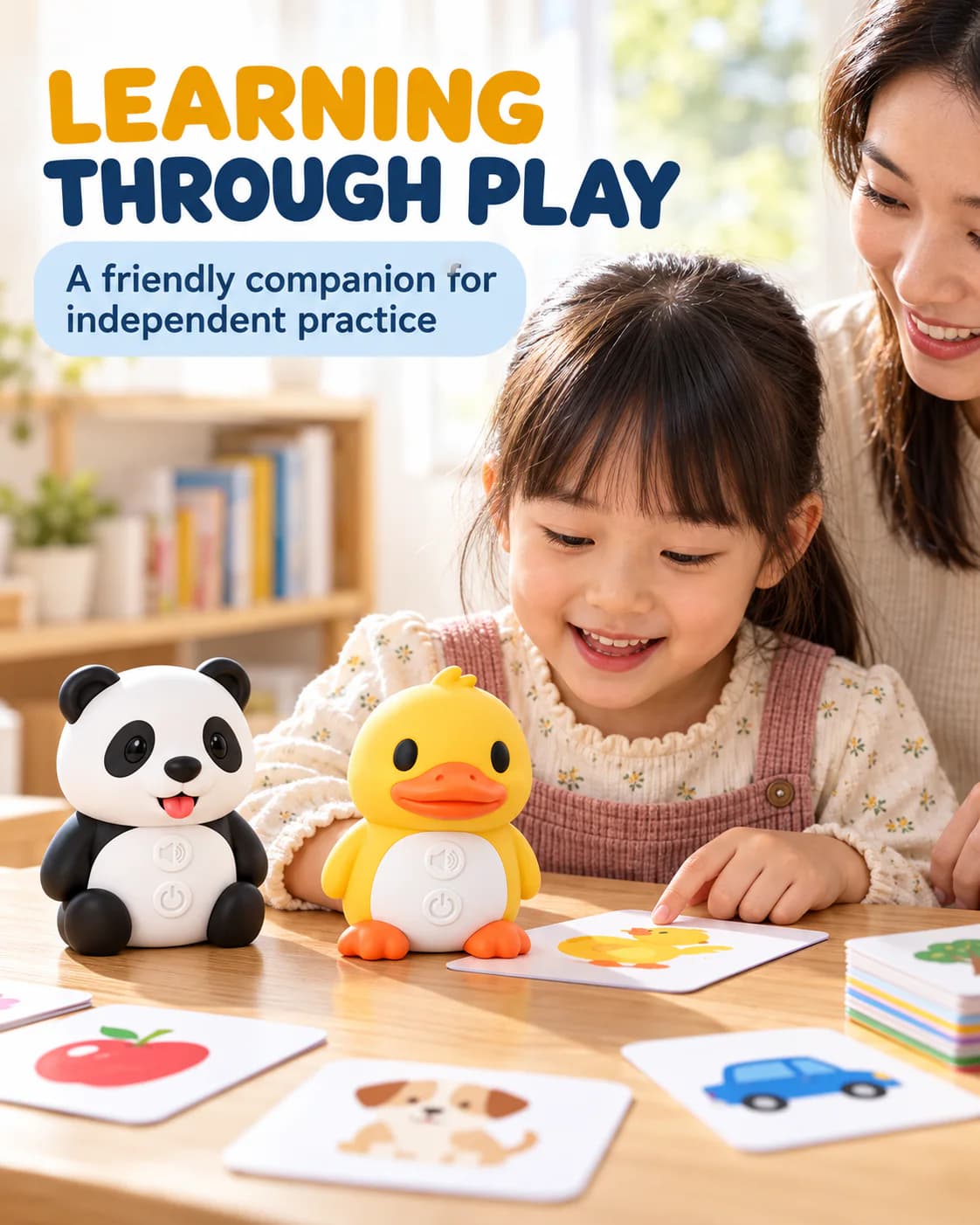
A recognizable panda form creates a clear visual theme for preschool, language and gift-set programs.
08 · Product model
Use the panda character housing as the starting point for a screen-light vocabulary, story or early-learning set built around your own content.
Quick buyer answer
The panda talking reader is an OEM audio-learning platform for compatible coded books, cards and stickers. Buyers can customize the housing colors, branding, multilingual recordings, firmware behavior, printed content and retail set. Integrated samples are checked for recognition, audio mapping, controls, charging and pack-out before production release.
Discuss Your OEM ProjectReference specifications
Reference platform data is shown for initial sourcing review. Final dimensions, runtime, content quantity, accessories and electrical values must be confirmed against the approved sample and written order specification.
Product description
The panda talking reader combines a friendly freestanding character with simple front controls, a rear speaker and optical recognition for compatible printed content. Children can touch coded books, 3D recognition cards or stickers to hear the assigned word, phrase, story segment, song or sound effect.
For an OEM or ODM project, the device, code map, audio library and printed materials are developed as one system. Engineering samples are checked against the approved files before production, while finished units can be function-tested for recognition, buttons, audio output, charging and correct accessory pack-out.
A recognizable panda form creates a clear visual theme for preschool, language and gift-set programs.
Compatible touchpoints can trigger pronunciation, narration, songs, questions, prompts and sound effects.
Books, recognition cards and stickers can be organized into one mapped audio library.
Recognition, audio mapping, controls, charging and pack contents can be checked against the approved sample.
Customization scope
Final options are confirmed against your content, intended user, order plan and target-market requirements before sampling.
Character housing, approved color direction, surface branding and button icons
Vocabulary, narration, pronunciation, music, sound effects and multilingual files
Power, repeat, volume, mode switching and content-response logic
OID-coded books, recognition cards, stickers and artwork-to-audio mapping
Card quantity, books, cable, inserts, color box and export-carton preparation
Prepare your brief
Early clarity reduces back-and-forth and helps us recommend a realistic product starting point.
Send Your RequirementsBuyer FAQ
These answers cover the questions buyers usually need to resolve before sample development. Final specifications are confirmed in the approved sample and written order documents.
Ask a Project QuestionThe platform can work with compatible coded books, recognition cards and touch-reading stickers. Each mapped area can trigger a word, phrase, story segment, song, question, prompt or sound effect.
Yes. Typical OEM options include the panda housing colors, logo treatment, button icons, firmware behavior, audio library, printed learning materials, accessories and retail packaging.
Multilingual programs are possible when language switching, memory capacity, voice requirements and the content map are defined during development. Each language version is verified with its matching printed materials.
Useful inputs include your logo, color direction, target market, scripts, language list, book or card artwork, interaction requirements, estimated quantity and package concept. Draft materials can be reviewed before final production files are released.
Sample and shipment checks can cover coded-content recognition, correct audio response, buttons, speaker output, charging, appearance and accessory pack-out against the approved sample and written order specification.
Project planning paths
Use these focused buyer guides to compare platforms, define the development scope and prepare a more useful quotation request.
Project evidence & catalog
Review anonymized project references or download the English catalog before preparing your product brief.
Related platforms
Different content and interaction goals may point to a simpler card system, a character product or an integrated printed format.
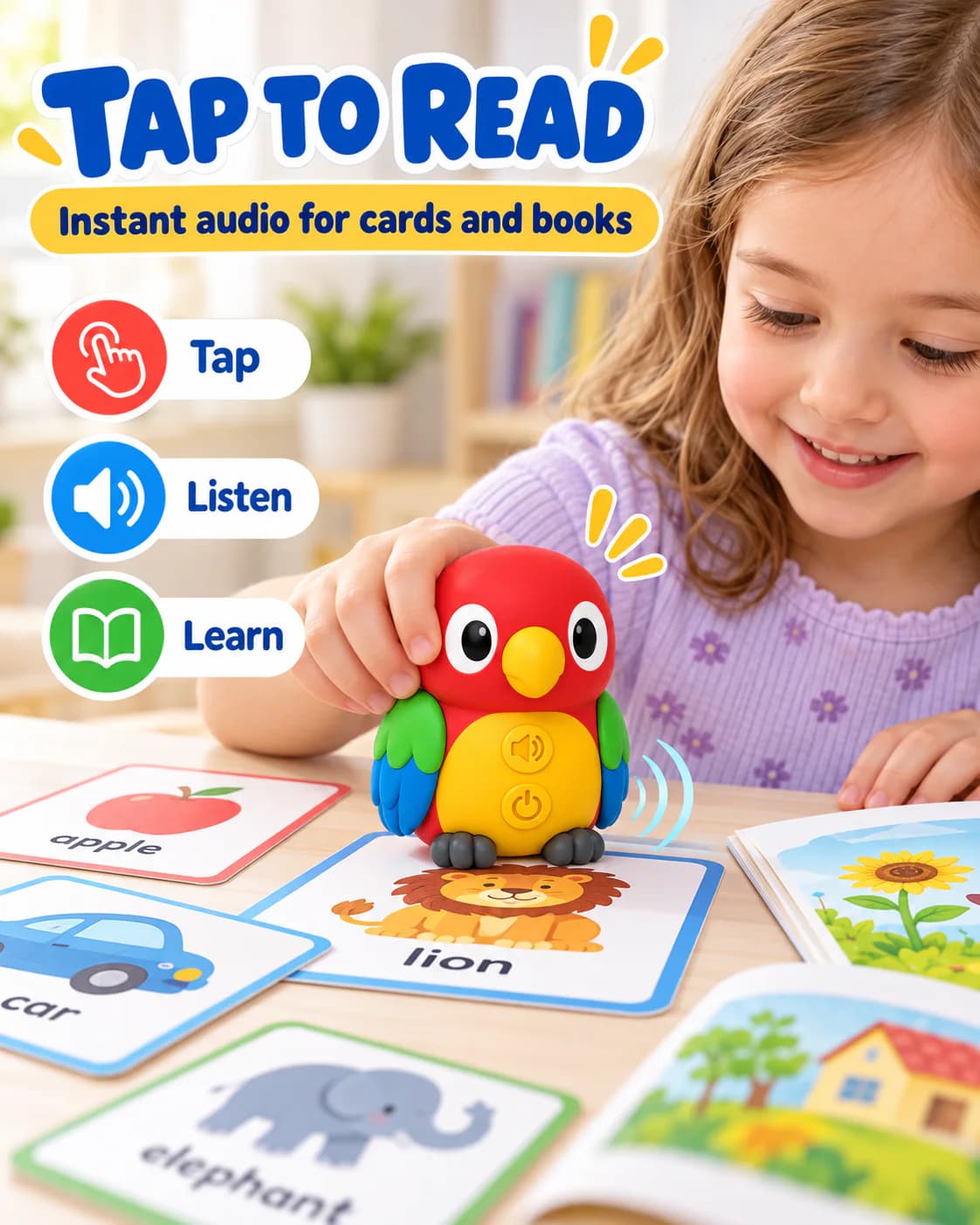
Parrot character talking reader for coded books, recognition cards, stickers and multilingual preschool audio programs.
View product details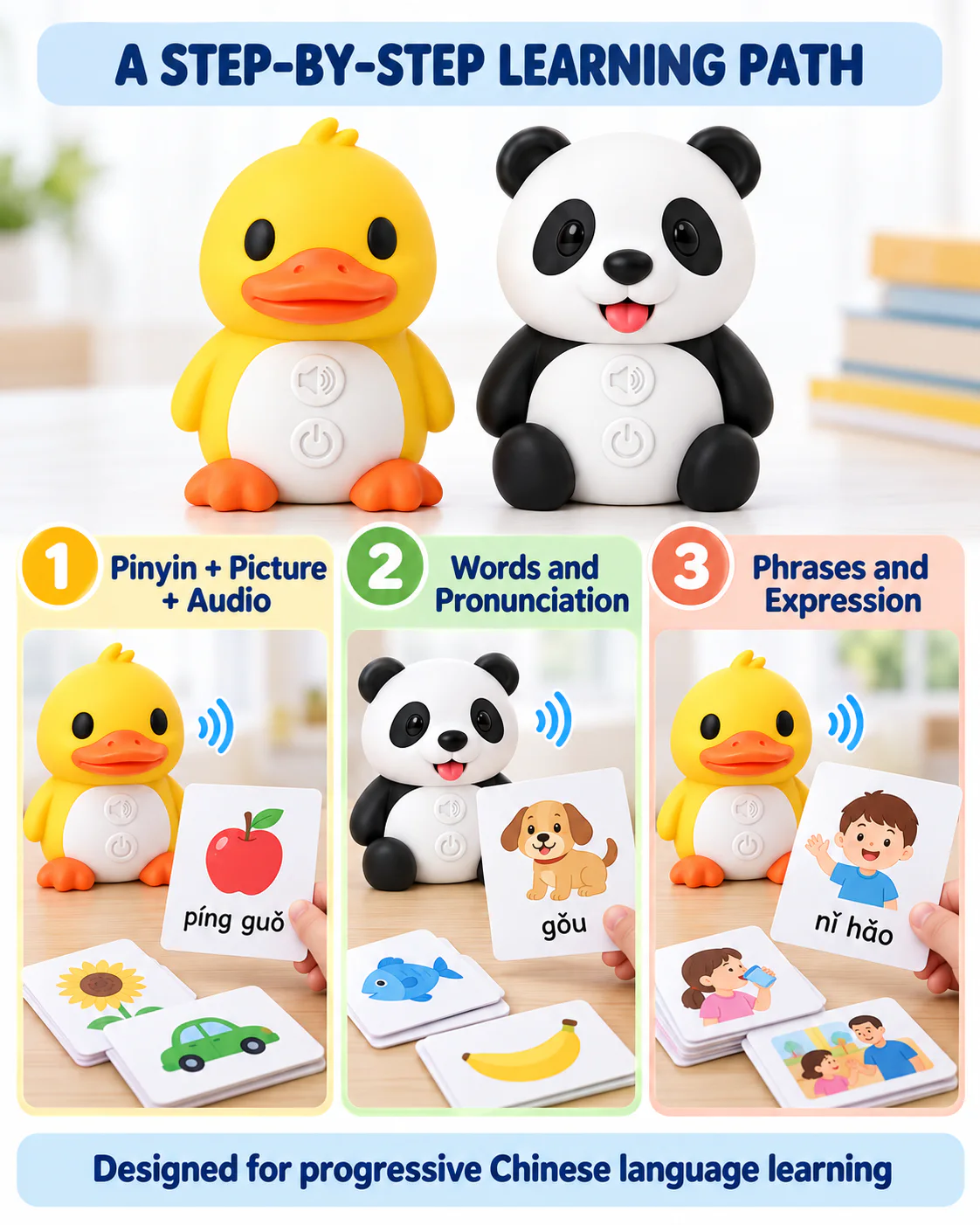
Duck character talking reader for coded books, recognition cards, stickers and multilingual preschool audio programs.
View product details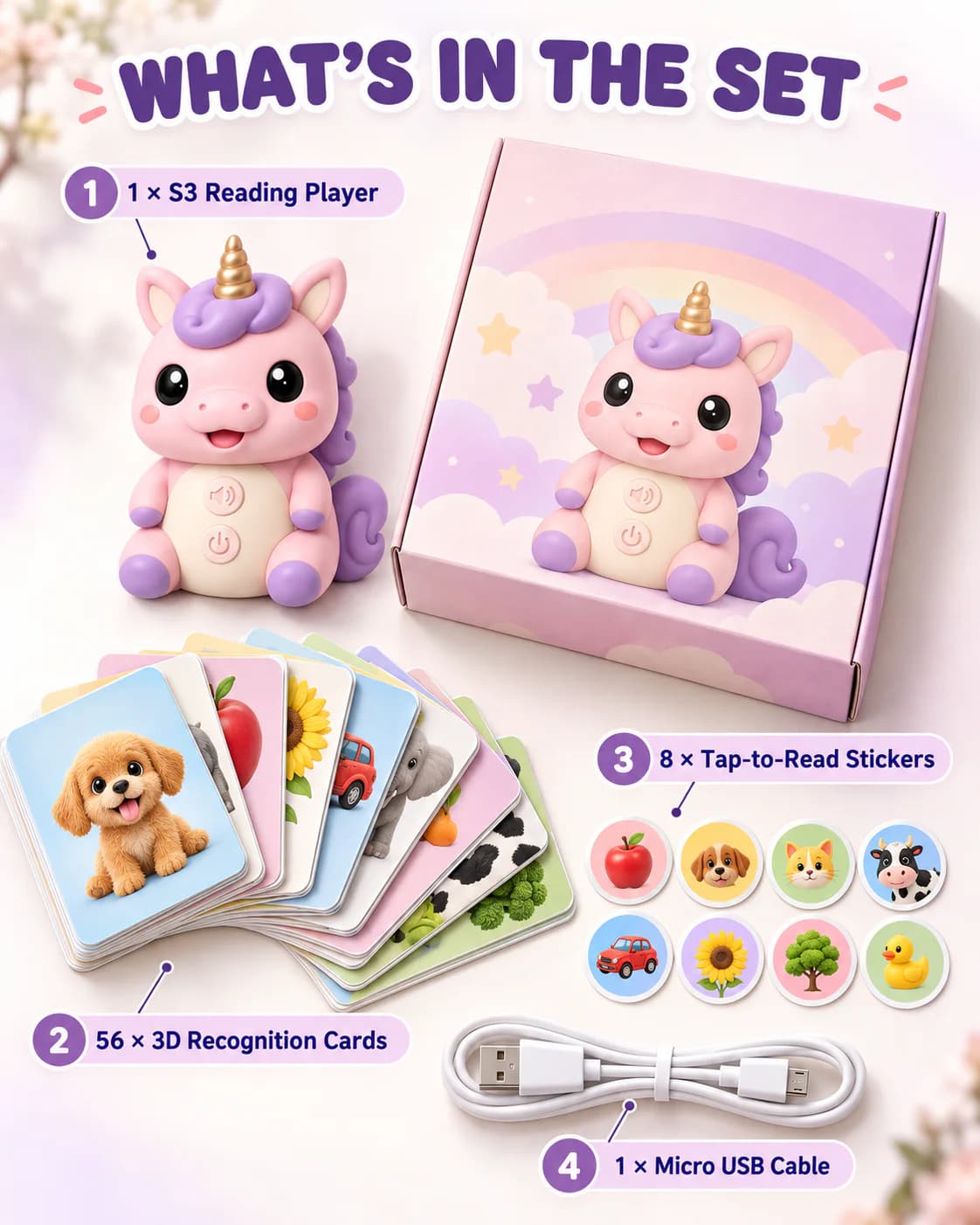
Unicorn character talking reader for coded books, recognition cards, stickers and multilingual preschool audio programs.
View product detailsShare your content format, target age, language, estimated quantity and sales market. We will help define a practical starting configuration for sampling.