
Practical resources for educational product buyers.
Use these guides to prepare clearer requirements, reduce sample loops and ask more specific questions before production.
Resource library
Prepare before requesting a quote.
A useful quotation starts with product, content and market information—not only a target unit price.
Buying guide
Choose the right product platform.
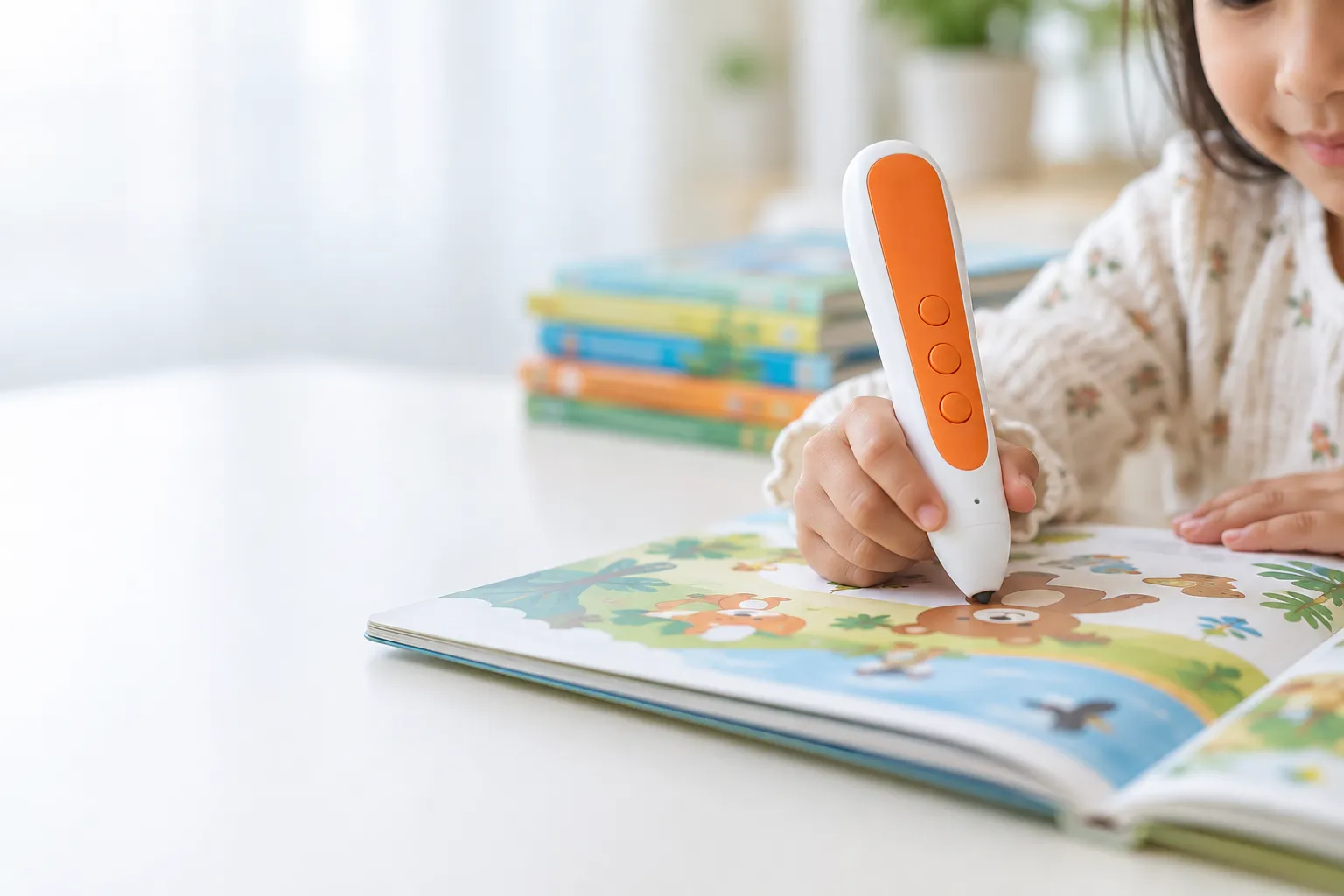
Start with the interaction the learner needs. A reading pen suits mapped print content; a card machine supports fast vocabulary repetition; a logic machine fits structured tasks; a talking toy supports character-led play; and a sound book keeps electronics inside the publication.
Questions to answer
- What should the child touch, insert, press or solve?
- Which content files already exist?
- What age group, language and sales channel are involved?
- Is an existing platform acceptable, or is new industrial design required?
Project checklist
Prepare files for sample development.
Sampling moves faster when artwork, audio and functional notes use a clear naming structure. Final files are ideal, but organized draft files are still more useful than scattered references.
Recommended package
- Editable artwork and page, card or button count
- Audio list, language list and available source files
- A simple map showing what every interaction should trigger
- Logo, color references, packaging direction and target market
Quality guide
Plan inspection before shipment.
Inspection criteria should be agreed before the final cartons are sealed. Use the approved sample and order specification as the reference for function, appearance, content and packing.
Inspection coverage
- Reading, card, button, sensor and firmware functions
- Audio mapping, completeness, volume and speaker output
- Charging, accessories, appearance and assembly
- Labels, manuals, package contents and carton protection
Want these guides applied to your project?
Send your current brief or file list. We can use it to identify the next information needed for product selection and sampling.