
Anonymized project reference
Animal-Head OID Reading Pen for Custom Books and Cards
An anonymized project reference for coordinating an animal-head OID pen with coded books, cards, multilingual-ready audio and production checks.
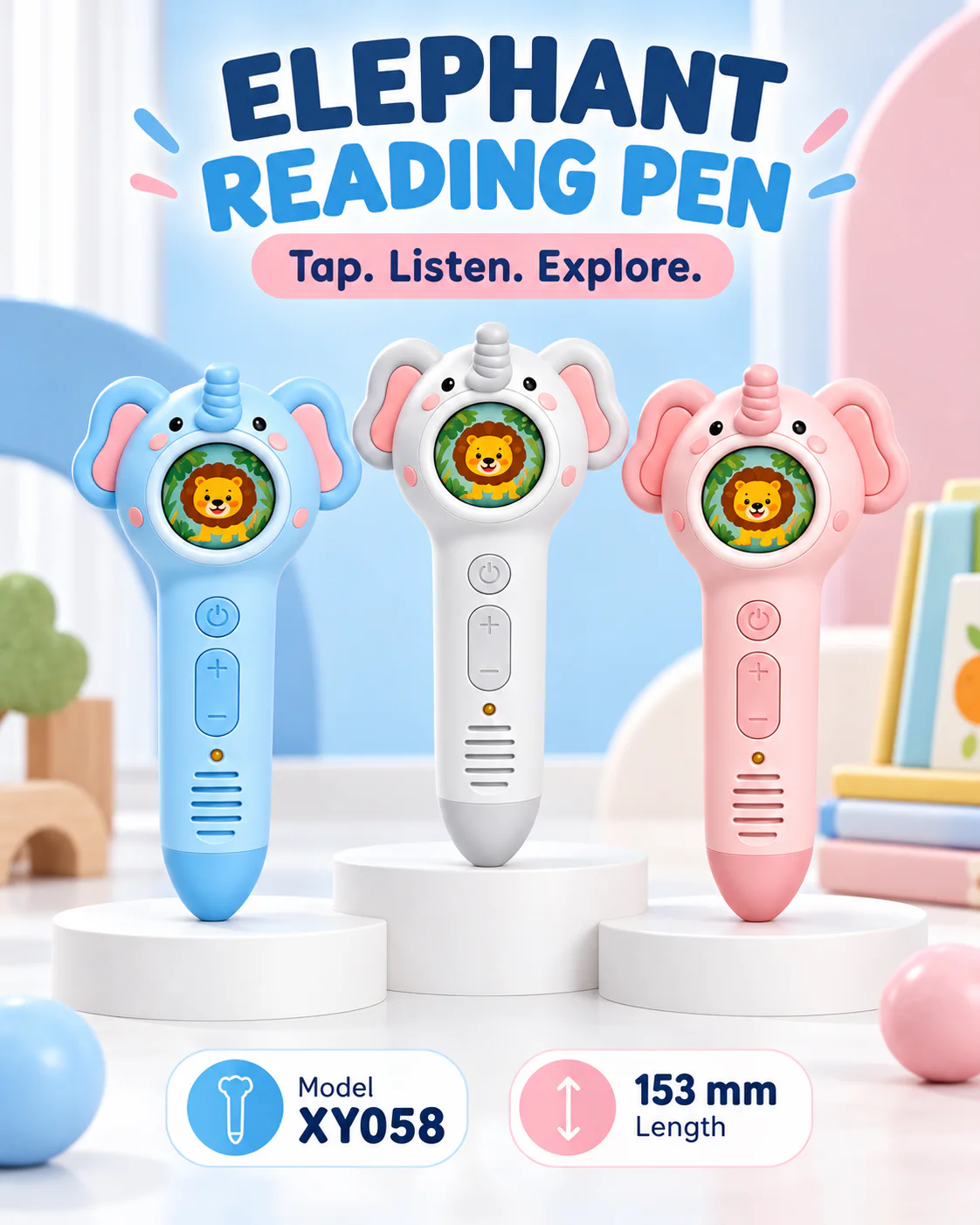
This reference uses an actual GlobalSmartToy OID pen platform and its documented integration workflow. Customer identity, market, quantity, price and commercial performance are not disclosed.
The sourcing challenge
The product had to work as one controlled system.
The hardware was only one part of the project. The critical task was to keep page artwork, invisible OID regions, audio filenames, language versions and firmware behavior aligned through sampling, print proofing and production installation.
Development approach
The content map became the shared handoff between creative files and production.
Interaction planning
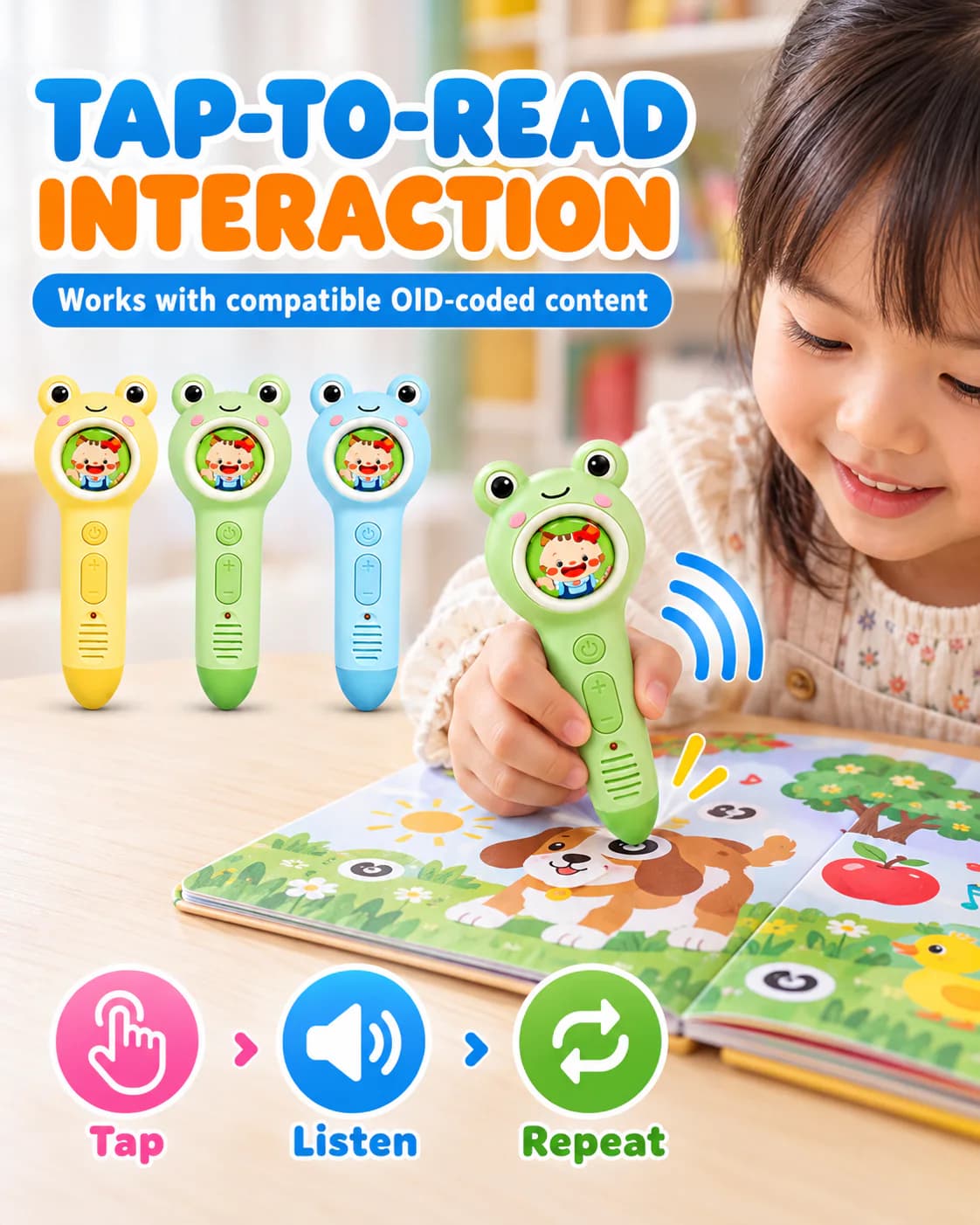
Define what each page, illustration, word or icon should play and how repeat or language behavior should work.
OID and audio mapping
Assign controlled IDs, prepare the coded artwork layer and connect each ID to an approved audio file.
Physical proof testing
Test printed proofs with the target pen to check recognition, neighboring touch areas, silent margins and page usability.
Installation and inspection
Release the correct firmware and audio package for the matching printed edition, then verify packed production units.
Controlled scope
What was connected, and what provided evidence.
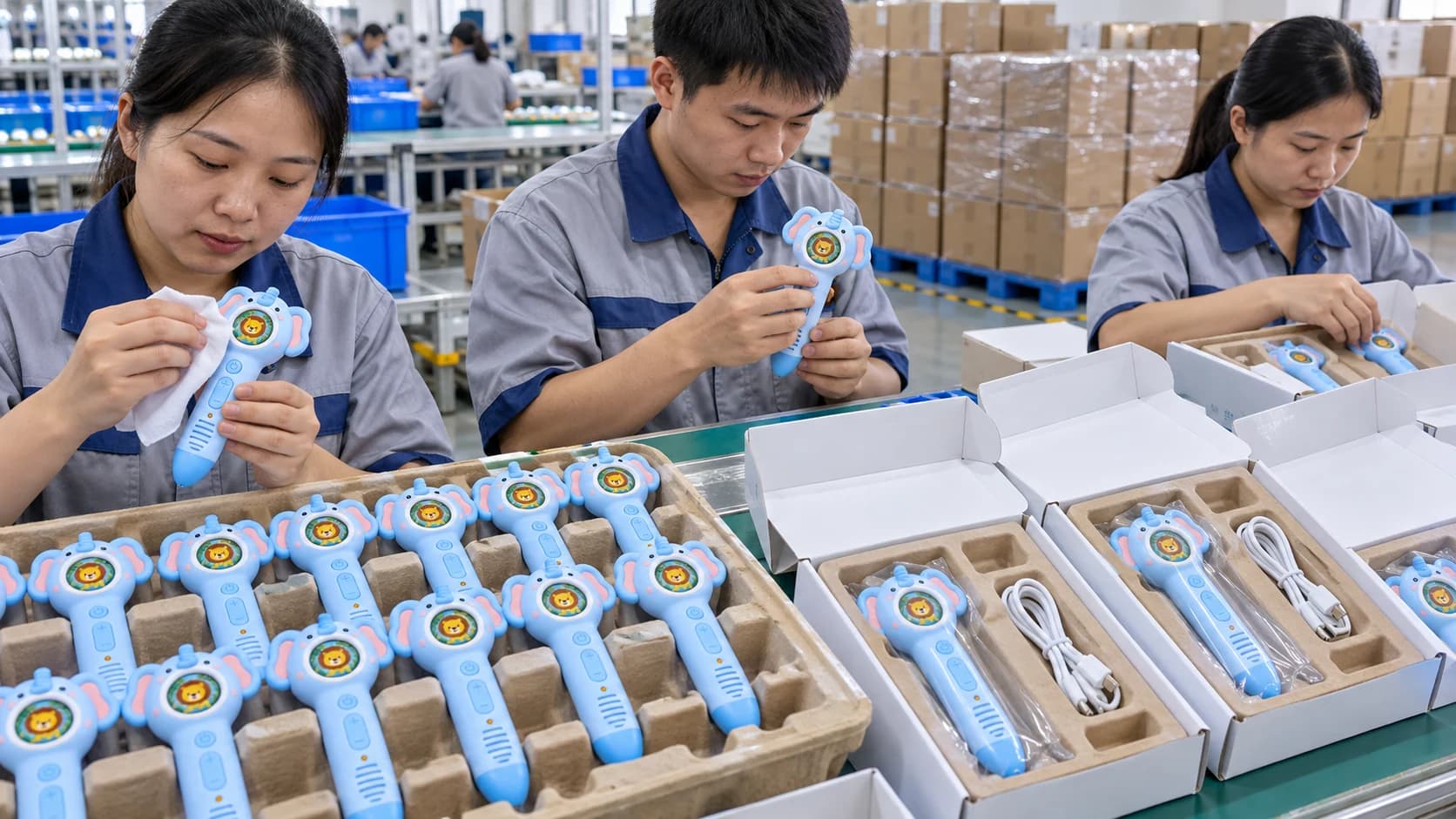
Physical evidence
Samples, testing and pack-out reviews.

Verification plan
Checks tied to the approved product baseline.
- 01
Touch recognition across representative pages, code ranges and edge conditions
- 02
Correct file playback for every sampled ID and approved language configuration
- 03
Button, volume, repeat, charging, startup and power-off behavior
- 04
Print revision and audio/firmware version matching for each production SKU
- 05
Accessories, instructions, labels, package contents and carton identification
Controlled outcome
A traceable print-to-audio release instead of disconnected files.
The controlled output connected the pen configuration, OID artwork, audio manifest, firmware release and pack-out reference. This made sample corrections easier to identify and gave shipment inspection a concrete basis for checking the correct edition.