
Logo application
Review print, label, insert or molded options against surface, durability, quantity and tooling.
Coordinate logo application, brand colors, startup audio, coded books or cards and retail packaging around an established OID pen platform.
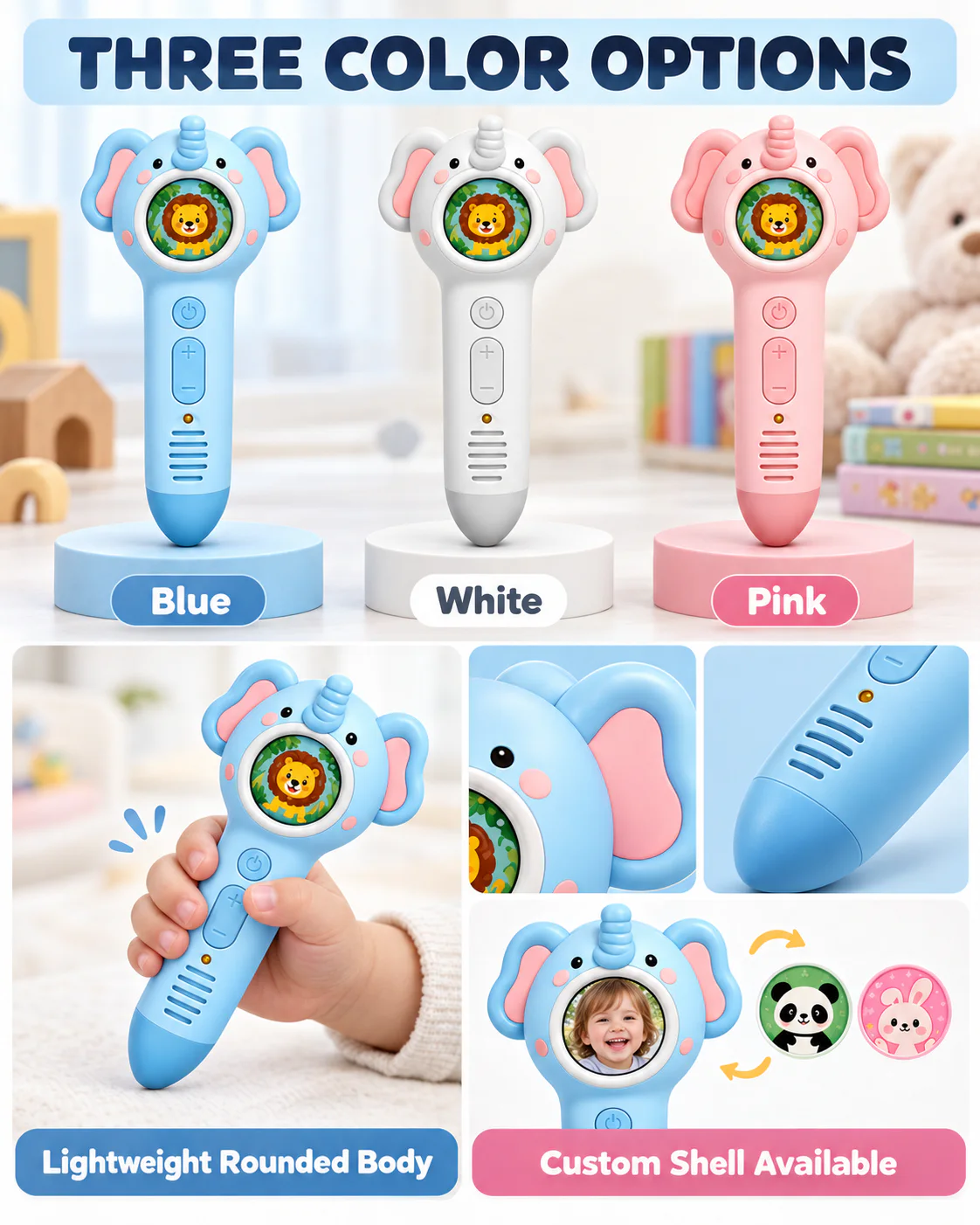
Review print, label, insert or molded options against surface, durability, quantity and tooling.
Align shell color, button graphics, startup audio and language behavior.
Bundle OID-coded books, cards, stickers or posters with approved audio.
Coordinate packaging artwork, accessories, instructions, labels and carton identity.
Use an established OID pen platform when you need a branded consumer set without the time, tooling and validation burden of a new device architecture.
Publisher, language brand, retailer or distributor with approved brand assets and a defined content offer.
Select the pen first, then align logo method, shell color, startup audio, coded content and package.
Logo process, custom color, audio volume, book or card quantity, packaging, testing and order size.
A physical branded set showing actual color, logo placement, audio behavior, content and retail packaging.
A reliable branded set connects the visual identity with the audio, content, instructions and packaging customers actually experience. Each layer is approved separately, then verified as one finished SKU.
Review your requirements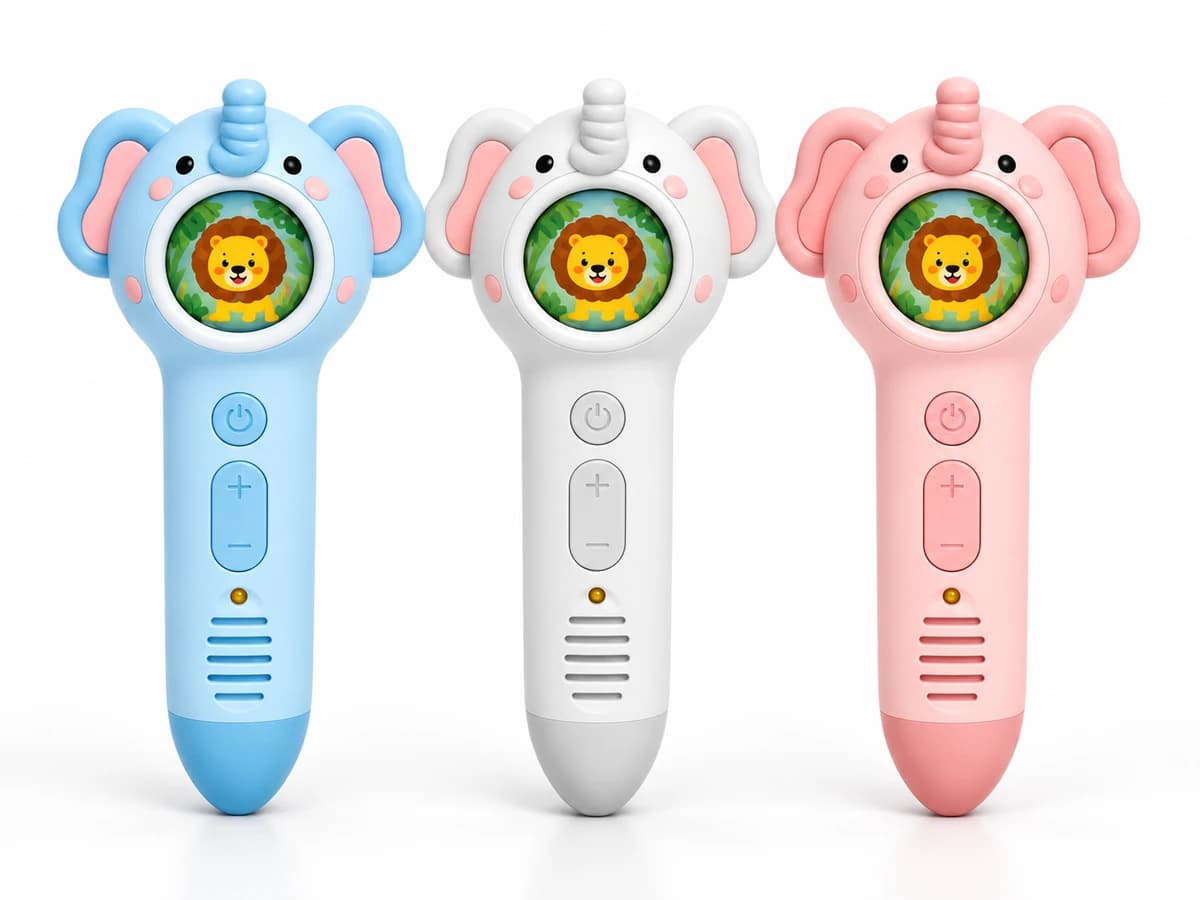
Vector logo, color references, character rights and approved naming.
Shell colors, logo process, button icons, insert artwork and cosmetic limits.
Startup phrase, voice, language modes and approved compressed files.
OID code map, books, cards, touchpoints and file ownership.
Dieline, labels, instructions, barcode, set contents and carton marks.
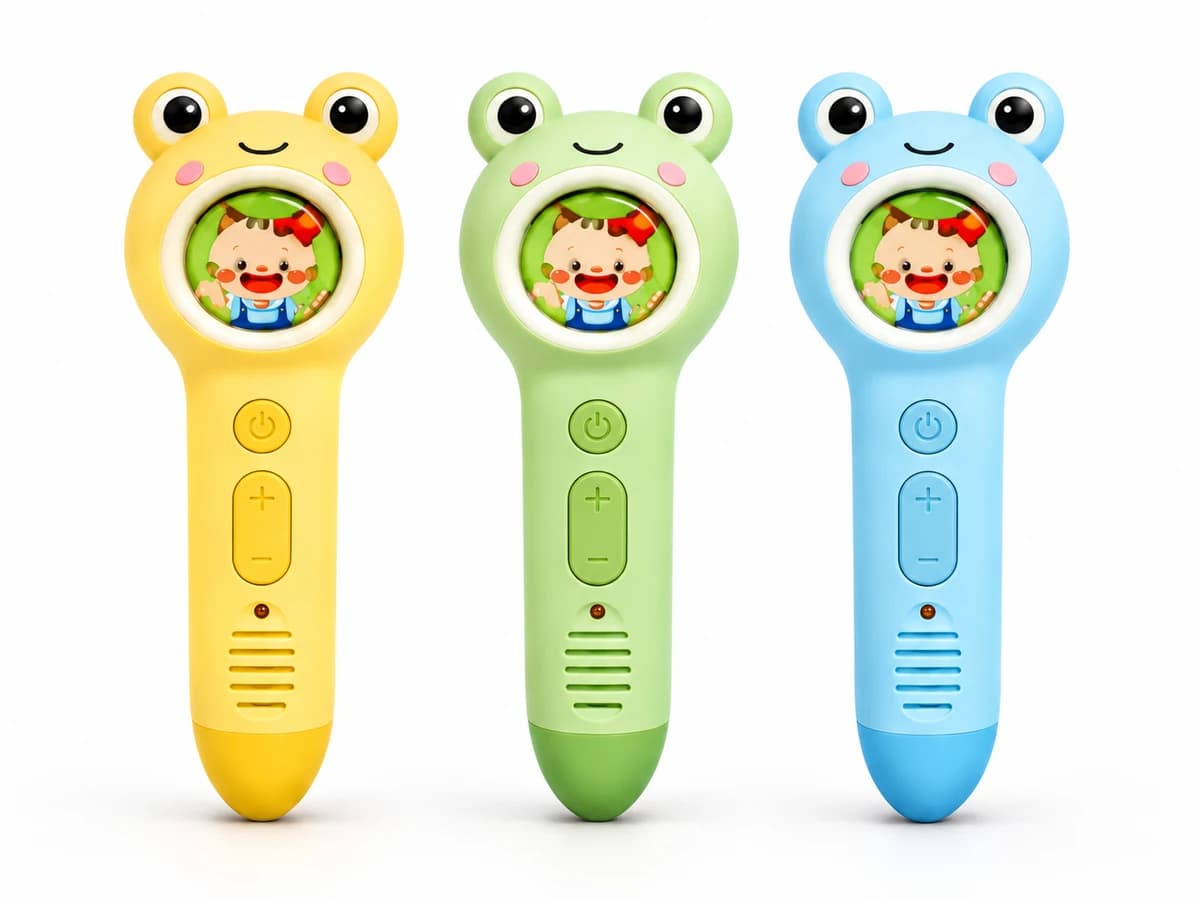
An established pen platform can support meaningful differentiation without forcing a fully custom industrial-design program.
Match the pen brand, audio and packaging with an owned book series.
Create a clear branded SKU from an established hardware platform.
Use branded prompts and controlled language-specific content libraries.
Build a focused device-and-card set with a defined campaign use.
The cheapest application method is not always appropriate for a curved shell, repeated child handling or a premium retail position.
Request a scope review| Decision | What we confirm | Why it changes the quotation |
|---|---|---|
| Logo method | Print, label, insert, engraving or molded feature | Changes appearance, wear performance, setup and tooling. |
| Color control | Standard color, matched resin or applied finish | Changes material minimums, tolerance and sample work. |
| Audio branding | Startup phrase, voice, language and volume | Requires controlled files, firmware compatibility and playback approval. |
| Content bundle | Books, cards, stickers, OID mapping and rights | Changes one-time integration work and recurring print cost. |
| Retail identity | Packaging, manual, labels, barcode and market information | Determines whether the set is ready for the intended channel. |
Each stage has a tangible output so product, content and commercial decisions stay connected.
Confirm rights, logo files, colors, content ownership and market information.
Approve logo method, color, audio, print and packaging on physical references.
Freeze production artwork, audio, firmware and acceptable appearance limits.
Check brand placement, correct language, set contents and pack identity.
Product and production evidence
Select an established platform before defining brand customization.
Physical color and applied artwork require sample approval.
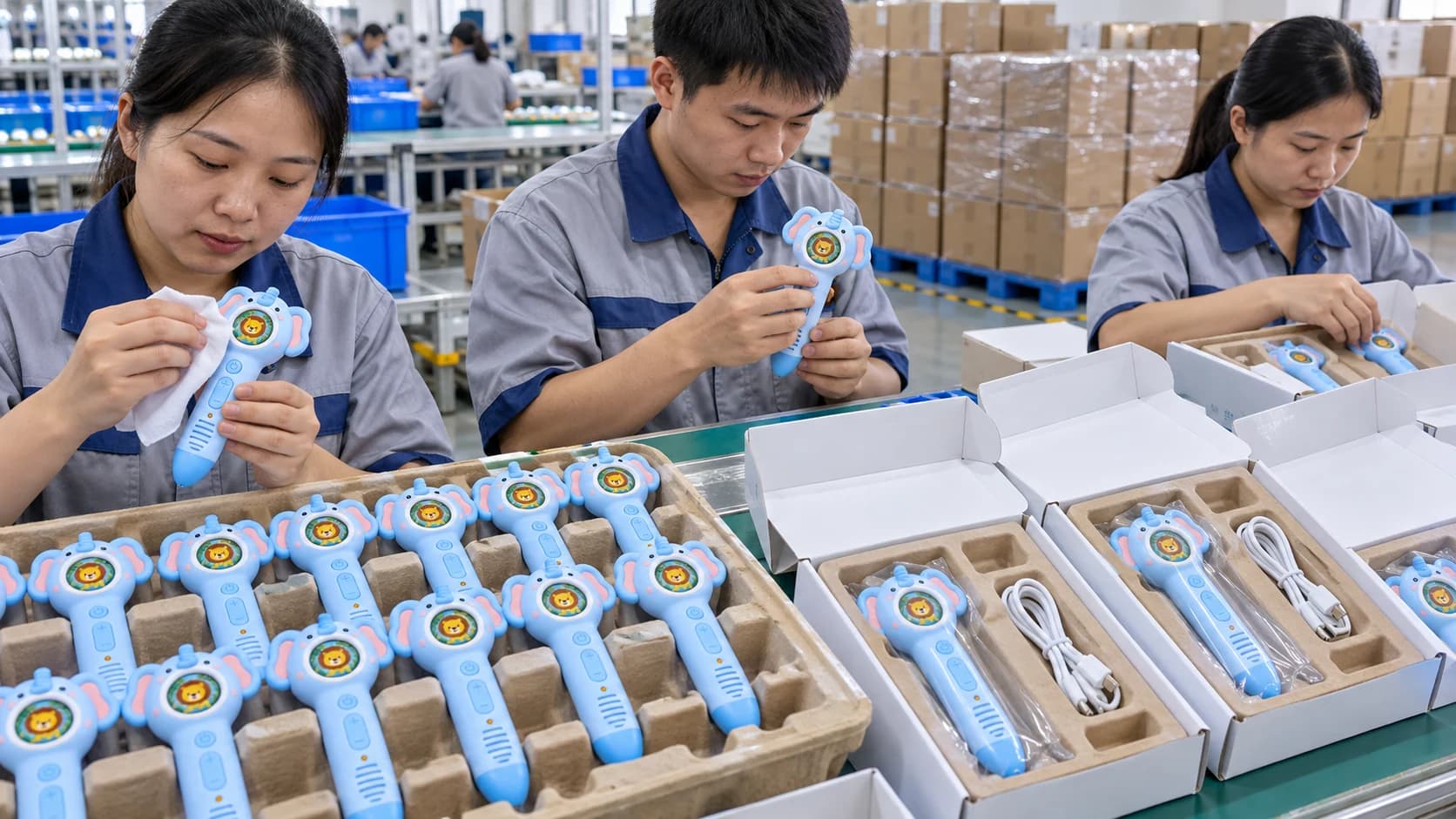
Final product, accessories and packaging checked as one branded set.
Physical color and logo references reduce interpretation, while quantity and market information help select the right application process.
Practical answers for an initial project review. Final commercial and technical terms belong in the written quotation and approved specification.
Usually not for printing, labels or replaceable inserts. Embossed, recessed or structural branding may require a tool change and a wider validation scope.
Compatible firmware can support an approved startup file. The timing, volume, language and behavior should be tested on the final hardware sample.
We can work toward an agreed physical color reference, but plastic, ink and packaging use different materials. Practical tolerances and viewing conditions should be approved with samples.
Yes when the books use compatible OID coding and the audio map is integrated with the released pen content. Representative production print should be tested before mass packing.
The buyer should provide assets it is authorized to use. File ownership, production use, source-file access and future-order rights should be recorded in the commercial agreement.
Send your logo, preferred model and set concept for a focused review of feasible branding methods, sample steps and quotation inputs.