
Educational Toy Packaging Design: Retail Presentation and Shipment Protection
How to package an interactive learning set so the product, content, compliance information and customer experience arrive intact.
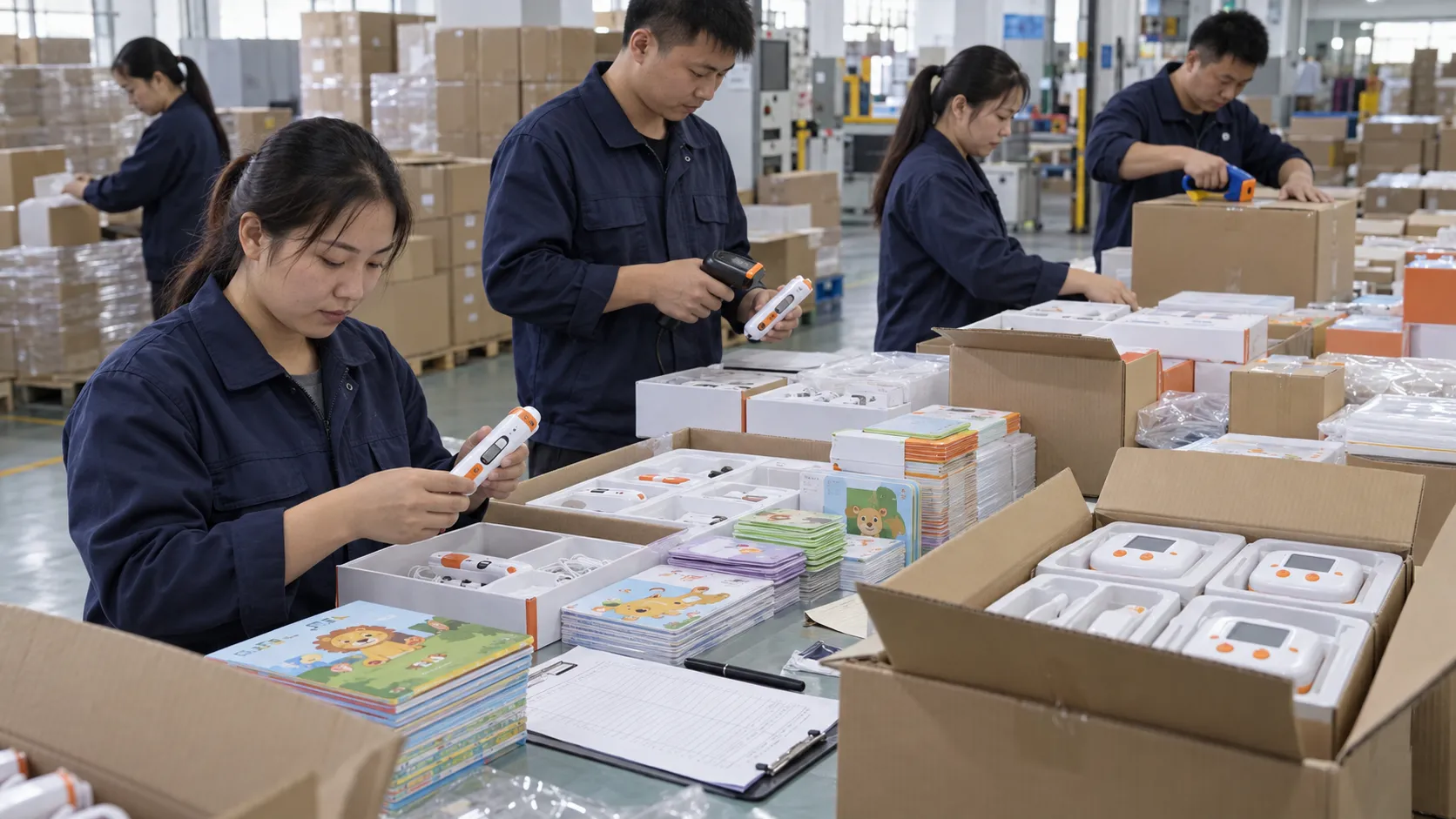
Educational toy packaging must present the learning value, hold several components, carry required information and survive distribution. A talking pen set may include books, cards, cable and manual. A logic machine may include loose answer pieces. A sound book combines a printed item with electronics. These sets need more than an attractive outer box.
Packaging choices affect product damage, freight volume, assembly time, sustainability and the unboxing experience. A rigid gift box may look premium but increase weight and cube. A compact e-commerce box may ship efficiently but offer limited shelf visibility. The design should follow the channel and risk.
This guide explains structure, information, testing and production control. Transit tests should be selected by qualified packaging professionals for the actual distribution system; no single drop sequence represents every journey.
What should educational toy packaging achieve?
Educational toy packaging should protect the device, books, cards and accessories; keep every component organized; communicate the real learning application; display accurate age, model, language, warnings and responsible-business information; fit retail and e-commerce channels; minimize avoidable material and freight; and pass validation appropriate to the product and distribution route.
Begin with a component list and risk map. Identify fragile protrusions, cosmetic surfaces, controls that can be pressed, batteries, page corners, card sets and small accessories. Decide which items need restraint, separation, moisture protection or visible counting.
Use production-intent product dimensions. Early CAD can miss cable bends, page variation or assembly tolerance. Build a white sample, then a printed package, then a packed pilot. Record open differences at each stage.
Packaging is also a production process. The line needs clear order, component presentation, inspection access, sealing and carton marking. A complex insert that looks elegant but is slow or easy to pack incorrectly creates quality risk.
1. Design for the sales and fulfillment channel
Retail shelf packaging needs visible product communication, tamper consideration, hanging or stacking performance and appropriate demonstration. E-commerce packaging needs parcel protection, efficient cube and clear returns handling. Institutional sets may prioritize storage, repeated access and replacement pieces.
Define whether the retail box also serves as the shipping container. A decorative gift box often needs an outer carton or mailer to protect surfaces. Marketplace preparation may add labels or carton rules that the buyer should provide and approve.
Model freight using packed dimensions and carton quantity. A small reduction in depth can materially change container or parcel efficiency, but excessive compression can damage books or press buttons. Optimize after protection requirements are understood.
2. Select box and insert structures for the complete set
Choose folding carton, corrugated box, rigid box, sleeve, tray or hybrid based on product weight, presentation, quantity and budget. Compare paperboard grade, flute, opening method, sealing and assembly. Avoid copying a structure without confirming it supports the new weight and geometry.
Inserts can use molded pulp, paperboard, corrugated, plastic or other materials. They should restrain movement, protect surfaces and make missing components visible. Evaluate sharp edges, bag requirements, recycling direction and the intended market.
Books and cards need special attention. Prevent bent corners, scuffing and loose sets. Provide card storage that customers can reuse. Keep cables and manuals from scratching the product or covering important presentation areas.
3. Coordinate claims, labels, warnings and language
Packaging should describe actual functions and included content. Avoid claims such as guaranteed educational outcomes or unsupported durability. Product photos, card counts, languages and accessories must match the shipped SKU.
Create a market-information checklist covering model or batch identification, responsible business details, age and warnings, instructions, battery or recycling information, barcode and channel labels as applicable. Qualified parties should confirm the requirements for each destination.
Use version control for regional artwork. Similar boxes with different language, barcode or importer details can be mixed. Assign SKU and artwork codes visible to printing, warehouse and pack-out teams.
4. Prototype packing and unboxing before artwork freeze
Build structural samples before final graphics. Pack the actual product, printed content and accessories. Shake, open, repack and observe pressure points. Confirm that the customer can remove items without damage and understand where they return.
Test visual hierarchy on the physical box. Key product type, interaction, age and language should be clear. Fine text must remain legible after printing and finishing. Windows should reveal the intended product rather than internal gaps or accessories.
Record pack-out steps and time. If workers must force parts, bend cables inconsistently or interpret several similar components, revise the insert or instruction. Design errors are cheaper to solve before dielines and artwork are released.
5. Plan transit validation for the real distribution route
Packaging validation may include conditioning, drop, vibration, compression or other tests selected for product and route. Parcel networks, pallet shipment and container distribution create different hazards. Use qualified packaging guidance and document the test sequence, sample configuration and acceptance criteria.
Inspect more than box appearance after testing. Check product function, optical sensor, speaker, buttons, battery, book binding, card edges, accessories, seals and cosmetic surfaces. A carton can look acceptable while the product inside has shifted or controls remained pressed.
Use production-intent materials and packed weight. Hand-made corrugated samples, substitute inserts or empty accessories may not represent final performance. If material grade or supplier changes, review whether revalidation is needed.
| Distribution risk | Possible evaluation | Product evidence |
|---|---|---|
| Drops and impacts | Route-appropriate package drop testing | No functional, structural or cosmetic failure |
| Vibration | Packed-product vibration evaluation | No movement damage, loosening or abrasion |
| Stacking | Carton compression or warehouse review | Cartons and retail boxes retain protection |
| Climate | Conditioning for relevant environment | Materials, adhesives and print remain suitable |
6. Engineer master cartons and pallet or container loading
Select carton count from retail-box dimensions, weight, handling and route. Use dividers or orientation controls where needed. Carton markings should identify SKU, language, quantity, lot and handling information required by the buyer and carrier.
Avoid cartons that exceed practical handling limits or leave excessive void. Confirm gross and net weights, dimensions and count using production samples. Packing lists and shipping documents should match actual configurations.
Plan palletization or floor loading with the logistics provider. Compression, overhang, moisture, strapping and mixed SKUs require consideration. Battery-powered products may also need specific transport documentation and labels depending on configuration and mode.
7. Control packaging production and shipment inspection
Approve print proofs, materials, color, finishes, dielines, barcodes and assembled box samples. At incoming inspection, verify the correct artwork revision and dimensions. Segregate regional or language versions clearly.
Create pack-out instructions with component order, quantities, cable fold, protective materials, seals and carton arrangement. Use a complete visual reference at the line. First-article packing should be approved before volume continues.
Shipment inspection should open cartons across the lot and check retail-box appearance, labels, complete contents, product protection, carton count and marks. Sample product function after unpacking. Record and correct mixed artwork or missing components before release.
Design packaging from the actual distribution path backward
Map every handling stage
Document the route from finished-goods warehouse through pallet or parcel handling, export transport, destination fulfillment and final delivery. Record carton stacking, orientation, humidity, likely drops and whether retail packages ship in master cartons or directly by courier. An e-commerce unit may experience repeated single-parcel impacts that a palletized retail shipment does not.
Identify product vulnerabilities: protruding figurine parts, speaker grilles, switches, card corners, board-book edges, cables and decorative windows. Packaging should restrain movement without loading fragile features or holding a button down. Avoid ties and films that complicate unpacking or create age-inappropriate loose items unless their use has been properly assessed.
Run tests with production-intent materials
Prototype inserts in the specified board, flute, pulp or formed material and use the actual product weight. Print and coatings can change folding and scuff performance. Condition samples when the distribution environment warrants it, then apply the agreed drop, vibration, compression or other sequence. A pristine hand-cut white sample is not evidence for printed mass-production packaging.
Inspect the product function after the sequence, not only the carton. Recheck enclosure gaps, switches, audio, batteries, books, cards and accessories. Classify cosmetic damage against the sales channel's needs. If the package passes only because the product was packed differently from the work instruction, repeat with the controlled pack-out method.
Close the loop with shipment data
Confirm master-carton dimensions, gross weight, unit orientation, quantity and pallet pattern before final freight planning. Small dimensional changes can affect container use and parcel charges. During shipment inspection, verify pack-out, labels, seals, accessories and representative carton condition across sampled cartons.
After launch, classify damage claims by product, location, carrier and failure mode. Photos of the outer carton, inner pack and product are more useful than a generic damaged status. Use the evidence to adjust restraint, cushioning, carton strength or handling marks. Do not add packaging weight blindly; targeted corrections usually protect the product more efficiently.
Revalidate when product weight, accessory count, insert material, carton dimensions, pallet pattern or sales channel changes. Even a small added book can shift the center of mass and change drop behavior. Record the tested configuration and acceptance criteria so a successful result is not applied to a materially different pack without review.
Include packaging assembly in the factory control plan. Incorrect fold direction, missing supports or loose cable placement can defeat an otherwise sound design. Simple visual work instructions and first-piece confirmation help ensure the package tested during development is the package used on the production line.
Record the exact insert and carton revision on the packing instruction so obsolete packaging cannot return unnoticed during a later reorder.
Frequently asked questions
What packaging is best for educational electronic toys?
The best structure depends on product weight, components, channel, presentation, quantity and route. Compare protection, pack-out, freight and customer reuse rather than choosing by appearance alone.
Does a retail box need transit testing?
The complete shipping system should be validated for the intended route. A retail box may be tested inside its mailer or master carton, depending on how the product is distributed.
Can molded pulp replace plastic inserts?
It may suit many products, but geometry, surface protection, tolerance, moisture and presentation need testing with the actual set. Sustainability claims should be accurate and market-appropriate.
What belongs on toy packaging?
Requirements vary by market and product. Common information can include identification, responsible-business details, age, warnings, instructions, contents, language and barcodes. Confirm with qualified parties.
How can packaging reduce freight cost?
Optimize retail dimensions, insert volume, carton count and loading after protection is proven. Reducing empty space can help, but compression must not damage books, controls or finishes.
What should shipment inspection check?
Inspect correct artwork and SKU, print, seals, labels, complete contents, product restraint, retail-box condition, master-carton count and marks, plus product function after unpacking.
Conclusion
Educational toy packaging is a product system that connects retail communication, component organization, market information, factory pack-out and international distribution. The structure should be designed with the actual device, books, cards and accessories.
Prototype early, validate the production-intent package for its route and inspect opened cartons across the shipment. Good packaging protects both the learning experience and the buyer's commercial margin.
Authoritative references
Requirements change and differ by product. Use the current official source and qualified professional advice for the final project.