
How to Choose a Talking Pen Manufacturer: A Practical OEM Evaluation Guide
A buyer-focused framework for publishers, education brands and distributors comparing OID technology, content integration, samples, quality controls and commercial readiness.
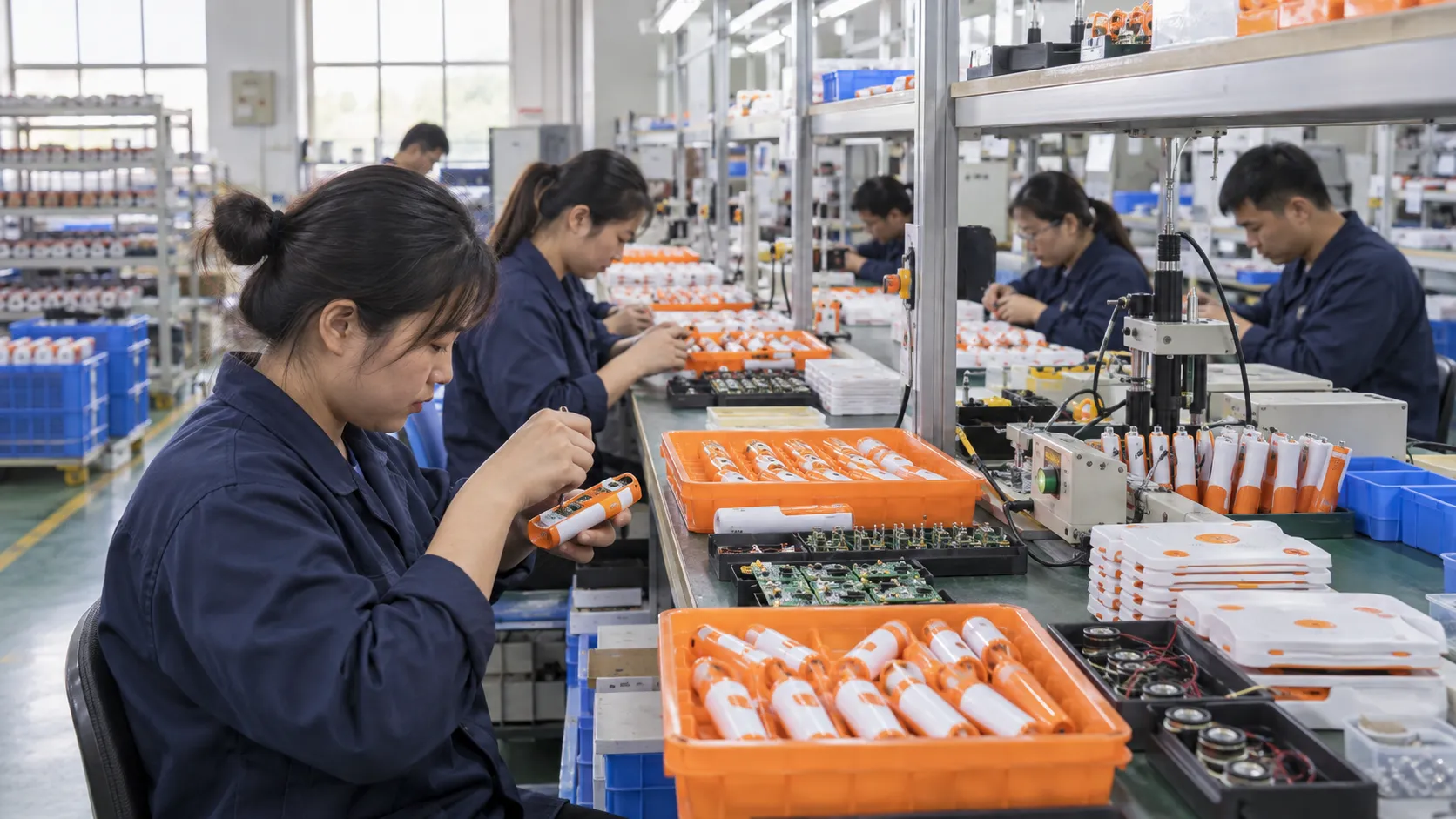
Choosing a talking pen manufacturer is different from buying a standard electronic toy. The pen, optical identification system, printed books or cards, audio library, firmware logic and packaging must work as one product. A supplier can produce an attractive housing and still be the wrong partner if it cannot manage coded artwork, file revisions or repeatable functional testing.
For publishers and education brands, the decision should begin with the learning application rather than a catalogue model. What should happen when the child touches a word, picture or activity icon? How many languages and audio files are planned? Will the buyer, the factory or a separate printer control the book files? These customer requirements determine the appropriate platform and the evidence a supplier should provide.
This guide presents a practical evaluation sequence. It does not assume that the most customized or expensive solution is best. Its purpose is to help a buyer compare manufacturers on the same basis, approve samples with less ambiguity and connect factory testing with the final shipment inspection.
What makes a reliable talking pen manufacturer?
A reliable talking pen manufacturer can manage the complete system: optical reading hardware, OID-coded print, audio mapping, firmware, child-appropriate construction, production testing and configuration-specific documents. Buyers should verify those capabilities with representative samples, controlled files and factory records—not only a catalogue, quotation or generic certificate.
The most useful distinction is between a component supplier and a system partner. A component supplier may provide a working pen. A system partner can explain how the pen will recognize your printed content, how audio files are named and installed, how language or mode changes are controlled, and how those functions are checked during production.
Evidence should be proportional to project risk. For a logo-and-color modification on a validated platform, a buyer may focus on sample comparison, artwork approval and relevant existing reports. For a new housing, new battery, major firmware change or new printing route, the approval plan should be wider because the changes can affect usability, reliability, tooling and compliance.
Do not ask only, “Can you make a talking pen?” Ask the supplier to demonstrate one complete flow from a printed touchpoint to the correct audio response, then show how that same function is controlled in mass production.
1. Define the project before comparing suppliers
Supplier comparisons become unreliable when each factory is quoting a different interpretation. One may price an existing shell with a standard memory configuration; another may include a new mold, bilingual firmware and printed books. A short, consistent project brief makes quotations and technical responses easier to compare.
Begin with the product application. A preschool vocabulary set may use large image touchpoints and short audio clips. A leveled reading program may require page narration, individual word pronunciation, quiz prompts and several book titles. A bilingual classroom product may need a deliberate language-switching method and teacher instructions. These are functional requirements, not marketing descriptions.
Installation preparation should also be defined early. In a talking pen project, this normally means preparing the firmware version, final audio package, file naming convention, code-to-audio map and loading or update method before the approved content is installed on production units. If ownership of those inputs is unclear, a correct physical sample can still carry the wrong audio build.
- Target learner age, supervised or independent use, and expected learning behavior
- Destination countries, sales channel and responsible importer or brand owner
- Book, card, poster or worksheet formats and the approximate number of touchpoints
- Languages, total audio duration, voice status and required operating modes
- Existing platform, modified platform or fully custom industrial design preference
- Estimated order quantity, launch window, packaging and accessory expectations
2. Choose the right OEM or ODM customization model
ODM is usually the lower-risk starting point when a buyer can use an existing validated platform with new branding and content. OEM or custom development is more appropriate when the product needs a unique housing, controls, electronics or user experience. The right choice depends on differentiation, budget, schedule and compliance impact.
The terms OEM and ODM are used inconsistently, so describe the actual scope. A supplier may call a color change “OEM,” while another uses OEM to mean a buyer-owned design. Break the project into housing, electronics, firmware, content, printed materials, accessories and packaging. Then identify what is existing, modified or new in each area.
An existing platform can still support strong brand differentiation through colors, surface graphics, button icons, voice content, book design, card libraries and package architecture. It also gives the team a known reference for sensor response, assembly and factory testing. A fully custom enclosure may create stronger visual ownership, but adds industrial design reviews, tooling decisions, engineering samples and a wider validation burden.
Ask who owns the mold, firmware changes, OID code allocation and source files. Ownership does not need to be identical for every project, but it should be documented. Publishers planning a series of future books should also confirm how new code ranges and audio packages will be added without disrupting earlier titles.
| Project route | Typical scope | Main buyer advantage | Main control point |
|---|---|---|---|
| Existing ODM platform | Branding, colors, audio, books and packaging | Faster technical starting point | Confirm exactly what is already validated |
| Modified platform | Controls, memory, speaker, accessories or firmware changes | More functional differentiation | Re-test every changed element and interaction |
| Full custom development | New housing, electronics, firmware and content system | Strongest product ownership | Manage tooling, engineering gates and configuration freeze |
3. Evaluate OID and content integration capability
Optical identification is the bridge between the printed page and the audio stored in the pen. The exact coding technology and workflow vary by platform, but the project always needs controlled identifiers, correctly prepared artwork and a mapping between each touchpoint and its intended file or function.
Ask the manufacturer to explain the workflow using one of your real pages. Who places or generates the optical code? What artwork format is required? How is a touchpoint named? How are background narration, individual words and activity answers separated? What happens if an audio file changes after the print proof is approved? Clear answers show whether the supplier manages content systematically or relies on informal manual handling.
Physical print proofing matters because recognition depends on the interaction between the sensor and the finished printed code. Page coating, ink density, code placement, artwork changes and printing process can affect the result. A digital file alone cannot prove that every intended point reads reliably on the final material.
Files a capable supplier should help organize
The exact formats depend on the platform, but the buyer should expect a controlled package that connects creative files with functional behavior.
- Editable or print-ready artwork with a clear revision number
- Audio masters and delivery files using an agreed naming convention
- A code-to-audio or touchpoint mapping sheet
- Language, mode and button-behavior instructions
- A sample test sheet recording expected and actual responses
Questions that reveal future scalability
If the project may expand, ask how the code library, file structure and firmware can support additional books. The goal is not to predict every future title, but to avoid a first product that makes the second one unnecessarily difficult.
4. Review hardware and firmware as one platform
Two pens with similar shells may behave differently because of the optical module, processor, memory, speaker, battery, charging circuit and firmware. The supplier should describe the proposed configuration and identify which parts are standard, optional or newly engineered.
Audio quality should be evaluated in the actual enclosure, not only through a source file. Speaker selection, cavity design, compression settings and maximum volume interact. Likewise, battery runtime depends on cell capacity, playback level, usage pattern, indicators and sleep behavior. Avoid accepting a universal runtime statement without a defined test condition.
Firmware review should cover startup, volume limits, repeat behavior, mode switching, language switching, error handling, file updates and low-power states. If the buyer requires a feature that is not already supported, request a written description of the intended behavior and include it in sample acceptance.
| Area | Buyer question | Useful evidence |
|---|---|---|
| Optical reading | Does it recognize real printed samples consistently? | Touchpoint test sheet and approved print proof |
| Audio | Is speech clear at usable volume inside the final shell? | Representative language and music files on a physical sample |
| Power | What charging and low-power behavior is configured? | Defined test condition and sample observations |
| Firmware | Which functions are standard and which are custom? | Version number, function list and revision record |
| Memory | Does the configuration fit current and planned content? | Audio package size and reserved expansion plan |
5. Use a staged sample approval process
A polished golden sample is useful only when the path to that sample is understood. Divide approval into stages so that functional risk is not hidden by attractive packaging. An early engineering unit can confirm sensor, speaker and firmware direction. A content sample can validate real coded pages and audio mapping. A package sample can confirm fit, protection and required components. A pilot batch can test repeatability before full production.
Each approval should state what is approved and what remains open. For example, an early 3D-printed shell may confirm size and button position but not final color, drop performance or surface finish. A hand-loaded audio sample may confirm mapping but not the controlled production installation process. Clear limitations prevent a prototype from being treated as proof of mass-production readiness.
Keep an approved reference set containing the device, printed content, accessories, package, artwork, audio package, firmware version and signed change list. When customer requirements change, update the affected reference and record whether the change requires a new test, a new sample or only a document revision.
A sample is not just an object. It is a controlled definition of the product that the production team and buyer agree to reproduce.
6. Verify factory testing and production controls
Factory testing should reflect the functions that matter to the learner. A power-on check alone does not confirm reading accuracy, audio completeness or correct language installation. The quality plan should identify incoming controls, first-article approval, in-process checks, functional testing, appearance inspection and packing verification.
At incoming inspection, the factory may confirm approved component identity, appearance and supplier documents. During assembly, work instructions should identify the current hardware and firmware configuration. Functional stations should use known test media or coded fixtures. Final inspection should compare units with the approved sample and verify accessories, labels, manuals and packaging.
Ask how nonconforming products are separated, recorded and rechecked after repair. Rework without traceability can reintroduce the same problem. A practical factory review looks for current work instructions, version-controlled files, test fixtures, defect records and an identifiable release decision—not only a clean production line.
- Sensor or optical recognition response using controlled test points
- Correct firmware, language and audio package installation
- Buttons, indicators, speaker, charging and power behavior
- Housing fit, surface appearance, printing and assembly condition
- Book or card completeness, print consistency and mapping checks
- Accessories, labels, manuals, retail box and shipping carton count
7. Check compliance evidence for the actual configuration
Compliance is product- and market-specific. A report for a similar pen does not automatically cover a new shell material, battery, coating, accessory or age grade. Request documents early, but verify their relevance again after the configuration is frozen.
For the United States, the importer or manufacturer should determine the applicable CPSC requirements. The CPSC states that ASTM F963 contains both generally applicable and toy-specific sections, and that children's toys subject to mandatory requirements require a Children's Product Certificate based on relevant evidence. Sound-producing toys, small parts, surface coatings and electrically operated toys may raise different requirements depending on the design and intended age.
For the European Union, confirm the current legal route and the standards used to support conformity for the intended product. Regulation (EU) 2025/2509 was published in December 2025, but most provisions apply from 1 August 2030; the existing Toy Safety Directive remains relevant during the transition. The manufacturer and importer should review the actual product with a qualified laboratory or compliance professional rather than applying a generic checklist.
A credible supplier should be willing to identify which documents it can provide, which new tests may be needed and which responsibilities remain with the buyer or importer. Avoid suppliers that guarantee universal compliance before reviewing the final materials, electronics, age grading and destination market.
8. Compare commercial terms and communication risk
Unit price is meaningful only when the scope is equal. Confirm whether the quote includes tooling, coded artwork work, audio processing, firmware changes, print proofs, books or cards, accessories, packaging, testing and shipment inspection. Separate one-time development costs from recurring unit costs so future orders can be evaluated clearly.
Minimum order quantity is influenced by more than factory preference. Custom plastics, printed books, electronic components, packaging and production setup can each have different economic quantities. Ask the supplier to explain the constraint rather than presenting one unexplained number. Sometimes a simpler package or an existing color creates a better launch quantity without changing the core learning experience.
Finally, evaluate project communication. There should be named owners for commercial decisions, engineering, content files, artwork and quality. Meeting notes should record decisions and open points. When feedback changes firmware, print or packaging, the supplier should confirm the affected files and schedule. This discipline is often more predictive of a stable delivery than a fast first quotation.
Frequently asked questions
What is the difference between a talking pen manufacturer and a general electronics factory?
A talking pen manufacturer should understand optical code recognition, coded print preparation, audio mapping and firmware behavior in addition to electronics assembly. A general electronics factory may assemble the device but lack the content workflow needed for books and learning activities.
Can an existing children's book be converted into a talking pen book?
Often yes, if the buyer has suitable artwork rights and editable or print-ready files. The team must identify touchpoints, prepare audio, add compatible optical coding and test physical print samples with the selected pen platform.
Should a buyer choose OEM or ODM for a first talking pen project?
An existing ODM platform is often a practical first route when the buyer's differentiation comes from content, language, print and packaging. OEM or full custom development is more suitable when unique housing, controls or electronics are essential to the brand proposition.
What should be tested on a talking pen sample?
Test optical recognition on representative printed pages, code-to-audio accuracy, speech clarity, buttons, language and mode logic, charging, sleep behavior, accessories and packaging. Record the firmware, audio and artwork versions used for the sample.
How should talking pen quality be checked before shipment?
Use the approved reference and written specification to inspect function, content, appearance, accessories, labels and packing. The shipment inspection should also confirm that production units carry the approved firmware and audio package.
Which certificates does a talking pen need?
There is no universal certificate list. Requirements depend on intended age, materials, power source, functions and destination market. Confirm the applicable route with the responsible importer and qualified laboratory after the product configuration is defined.
Conclusion
The best talking pen manufacturer is the one that reduces uncertainty across the entire learning system. It should be able to connect customer requirements with hardware, coded print, audio, firmware, samples, factory testing and shipment inspection in a process that both teams can verify.
Compare suppliers using the same brief, request evidence from real content and document every approval. That approach does not eliminate normal product-development work, but it gives publishers and education brands a much stronger basis for selecting a partner and scaling future titles.
Authoritative references
Requirements change and differ by product. Use the current official source and qualified professional advice for the final project.