
OEM vs ODM Educational Toys: How to Choose the Right Development Model
A practical comparison for brands, publishers and distributors deciding how much hardware, content and tooling should be new, modified or standard.
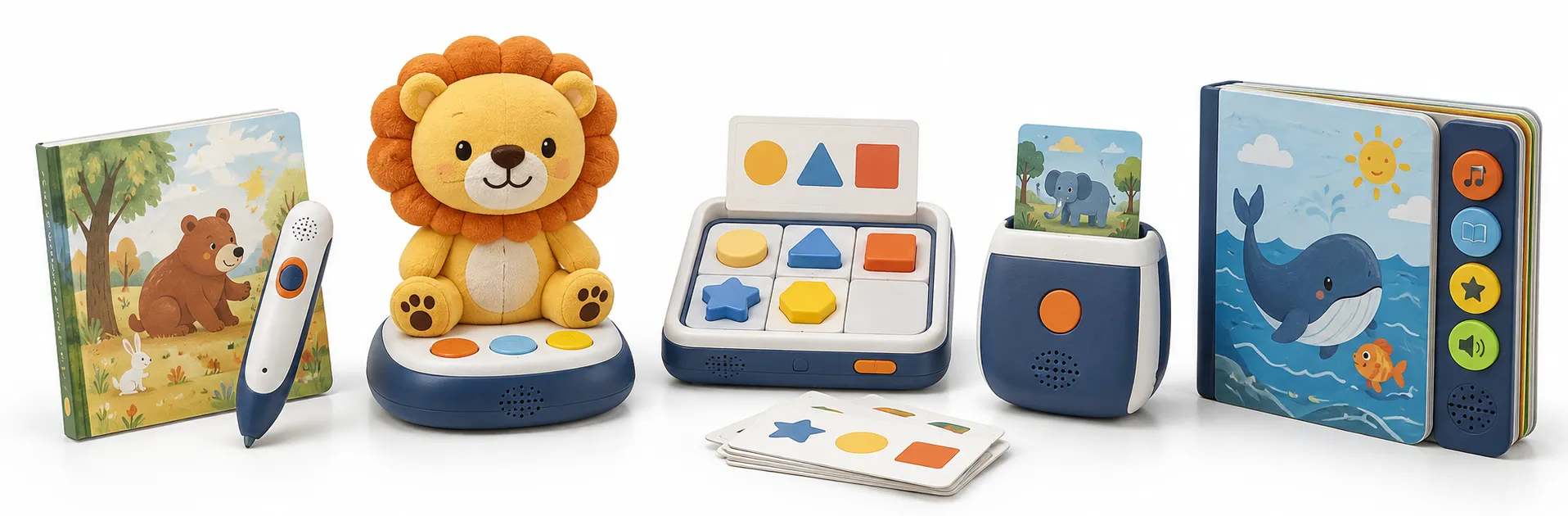
OEM and ODM are widely used terms in educational toy sourcing, but suppliers and buyers often define them differently. One factory may call a logo and package change OEM. Another may use OEM only for buyer-owned engineering. A productive discussion avoids arguing about labels and describes which parts of the product are existing, modified or new.
Educational products combine more workstreams than the plastic device alone. Housing, electronics, firmware, audio, learning content, books or cards, accessories and packaging can follow different development routes. A brand might use an existing reading pen while creating entirely original books and voice content. That is a meaningful custom product even though the electronic platform is ODM-based.
This guide compares the routes through commercial and operational decisions: differentiation, non-recurring engineering, sample stages, ownership, compliance evidence, quality control and expansion. The best route is the one that supports the customer requirements with acceptable risk—not automatically the route with the most new design.
What is the difference between OEM and ODM educational toys?
ODM educational toys usually adapt a manufacturer's existing platform through branding, color, content and packaging. OEM or full-custom projects add buyer-defined housing, electronics, firmware or tooling. Private label is the lightest route, using a largely standard product. The correct model depends on differentiation, volume, ownership, schedule, budget and compliance impact.
The boundaries are not standardized. A safer method is a scope matrix listing each product element and marking it as standard, modified or new. This exposes the real engineering work and prevents a quotation from using a familiar label to hide assumptions.
Content can carry more brand value than hardware. For a talking pen, the books, audio and learning sequence may be fully owned by the buyer while the pen uses validated tooling. For a character toy, unique shape and voice may be central, making new industrial design more important. Product strategy should determine the custom layer.
The development route can change by phase. A brand may validate demand with a private-label pilot, launch original content on an ODM platform, then fund new tooling after volume and user feedback justify it. Plan ownership and compatibility so the early route does not block the later one.
1. Compare private label, ODM modification and full OEM
Private-label programs retain the supplier's standard hardware, firmware and often content, adding buyer branding and market packaging. They can reduce technical work, but differentiation and exclusivity are limited. Verify that the standard content may legally be used in the target territory and that reports apply to the ordered configuration.
ODM modification starts from an existing platform and changes selected elements. Housing color, surface graphics, buttons, memory, audio, printed materials, accessories and package can create a distinct offer. Each change should be classified because a cosmetic revision, firmware revision and battery change do not carry the same validation burden.
Full OEM development creates a new product architecture or substantial proprietary design. It may include industrial design, mechanical engineering, PCB changes, firmware, tooling and a dedicated test plan. This route offers stronger visual ownership and functional control, but it requires clear requirements, larger development investment and disciplined approvals.
| Route | Best fit | Main advantage | Main risk |
|---|---|---|---|
| Private label | Market test or standard assortment | Fastest technical starting point | Limited differentiation and content ownership questions |
| Modified ODM | Original content on proven hardware | Balanced speed and brand control | Changes may be underestimated or poorly documented |
| Full OEM | Unique interaction or strategic product platform | Maximum design and ownership potential | Higher tooling, schedule and validation exposure |
2. Let customer value decide what to customize
List the product promises that influence purchase and learning. If customers value a trusted character, the visual form and voice need priority. If the product supports a curriculum, content mapping and expansion may matter more than a unique shell. If retail shelf impact is essential, package and accessory architecture may create value without redesigning electronics.
Separate must-have requirements from preferences. A new button layout may be essential to the activity sequence, while a different internal component may not be visible or valuable to the user. Every custom feature consumes engineering attention, sample time and change-control effort. Spend that effort where it creates a defensible benefit.
Consider the channel. Educational publishers may need long-term content compatibility. Distributors may prioritize market-specific language and packaging. E-commerce brands may need compact shipping cartons and clear product demonstration. Institutional buyers may emphasize durability, replaceable components and classroom volume. One development model does not fit all channels.
3. Compare total development economics, not only unit cost
Private-label and ODM projects generally have lower non-recurring engineering because major hardware and tooling already exist. Full OEM adds design, prototype, mold, fixture and testing costs. However, a standard platform may carry features or materials the buyer does not need, while an optimized custom design can reduce recurring cost at sufficient volume.
Model the first order and future orders separately. First-order cost includes samples, tooling, content preparation, reports and launch packaging. Reorder cost should identify recurring unit components, print, quality and any license or service fees. Include buyer-side work such as translation, voice recording, design and regulatory review.
Do not justify tooling only by dividing its price across the first order. Evaluate expected lifecycle volume, maintenance, repair, ownership, storage and risk of design change. A mold is valuable when the product strategy can use it long enough and the agreement gives the buyer practical control.
4. Build a schedule that matches the development route
A private-label sample can move quickly when the standard model, content and package are ready, but translations, market artwork and testing can still set the timeline. An ODM content project may need code mapping, audio processing and print proofing even if hardware is available. A full OEM schedule adds industrial design, engineering prototypes, mold trials and pilot validation.
Use gates: requirements freeze, concept approval, engineering sample, content proof, tooling release, pilot approval and production release. Define what evidence closes each gate. Running tooling before button behavior or battery architecture is stable may save days initially and lose weeks in rework.
Identify work that can overlap safely. Voice recording and book layout may begin while housing color is reviewed, but final mapping should not precede stable content IDs. Packaging structure can start from confirmed dimensions, while mandatory market text waits for compliance review. A dependency map is more reliable than one promised completion date.
5. Define ownership, access and future expansion
Record ownership and permitted use of industrial design, molds, PCB files, firmware modifications, audio, artwork, code libraries and package files. Ownership can differ by item. A supplier may retain its standard platform while the buyer owns original content and custom tooling. Ambiguity becomes expensive when the buyer changes supplier or adds a new title.
Access matters as much as legal ownership. Identify the files and records the buyer receives, the format, the release timing and any dependencies on supplier software. A contract that says the buyer owns a mold is incomplete if storage, maintenance, transfer, insurance and unauthorized use are not addressed.
Plan product-family growth. Ask whether a second language, new book, accessory or housing color can use the original hardware and approvals. Preserve stable identifiers and revision history. A good first project produces assets that support the next project rather than a collection of undocumented final files.
6. Match testing and quality controls to what changed
An existing platform is not automatically low risk after modification. New paint, battery, charger, memory, speaker or firmware can affect safety, function and reports. New content introduces mapping and language risk. New packaging can affect warnings, protection and carton performance. Create a change-impact review before assuming existing evidence remains applicable.
The approved sample should represent the release configuration or clearly list open differences. Pilot production is especially important after new tooling or assembly changes because a hand-built engineering sample does not prove production repeatability. Inspect incoming materials, first articles, in-process controls, final function and pack-out against current documents.
Compliance responsibility remains market-specific. The manufacturer can support documents and testing, while the importer or brand may hold legal duties. Confirm the actual configuration with qualified laboratories or advisers. Avoid promises that every standard platform is universally certified for any branding or accessory change.
7. Use a practical development-model decision framework
Choose private label when speed and market validation outweigh product exclusivity, and the standard content and configuration fit the channel. Choose modified ODM when original learning content and branding create the main value but proven hardware is acceptable. Choose full OEM when unique physical interaction, strategic design ownership or high lifecycle volume justifies the added work.
Document why the route was selected and which assumptions would change the decision. If volume falls, tooling economics may no longer work. If a licensed character requires a unique silhouette, standard housing may fail the brief. If launch timing moves forward, a staged ODM route may be more credible than compressed new tooling.
Ask suppliers to quote alternative routes using the same requirement baseline. A good partner will explain trade-offs and identify which changes require new proof, tooling or testing. The goal is not to push every buyer toward the factory's easiest model; it is to find a controllable path to the intended product.
Run an OEM-versus-ODM decision workshop before requesting quotations
Classify what is truly distinctive
List every product layer: industrial design, electronics, firmware, interaction logic, audio, curriculum, accessories, packaging and compliance configuration. Mark each layer as proprietary, customizable or standard. Many projects do not need a binary choice. A proven hardware platform can support proprietary books, voice and packaging while avoiding a new electronic design.
Then identify what the customer will actually value and what competitors can copy. If the learning content and sales channel create differentiation, spending heavily on a unique PCB may not improve the offer. If the physical interaction is central to the brand, a stock enclosure may be too limiting. The decision should follow the product strategy, not the attractiveness of a low sample price.
Compare total commitment and control
Build a comparison using non-recurring engineering, tooling, content work, sample rounds, minimum quantities, unit cost, approval lead time and expected reorder volume. Include ownership of molds, source files, firmware branches, recordings and test fixtures. A lower first-order cost can become restrictive if future updates require the original supplier's undocumented process.
Ask what changes invalidate existing tests or create new certification work. A color and packaging change may be relatively contained, while a new battery, radio function, material or age claim can change the review scope. Record the base configuration and every requested departure so quotation and compliance assumptions remain aligned.
Select a staged route
A cautious brand may validate demand with a controlled ODM configuration, then invest in dedicated tooling after sales evidence. Another may begin with a proprietary form but retain an existing internal electronic platform. Define the trigger for the next stage—forecast, customer commitment, margin or feature requirement—so the temporary solution does not become an accidental long-term constraint.
Whichever route is selected, use a written development agreement and release checklist. Confirm deliverables, approval authority, change pricing, intellectual-property boundaries, production location, quality plan, market responsibilities and end-of-project data return. That governance matters more than the label OEM or ODM, which suppliers sometimes use differently.
Frequently asked questions
Is OEM always more customized than ODM?
Not consistently, because suppliers use the terms differently. Define housing, electronics, firmware, content, print and packaging as standard, modified or new instead of relying on the label.
Is ODM suitable for an original educational brand?
Yes. A brand can create proprietary curriculum, audio, books, cards and packaging on a proven hardware platform. The important questions are differentiation, ownership and long-term compatibility.
When is a new toy mold worth the investment?
New tooling is justified when unique form creates meaningful value, expected lifecycle volume supports the cost and the buyer can manage engineering, validation, ownership and maintenance.
Can a private-label product use existing safety reports?
Possibly, if the ordered configuration and required market scope match the evidence. Branding, materials, battery, accessories, firmware or packaging changes may still require review.
What files should the buyer receive after development?
Agree on deliverables such as approved specifications, artwork, audio masters, mapping data, firmware records, test reports, package files and tooling records. Source-file access depends on the commercial agreement.
Can a project start with ODM and move to OEM later?
Yes. Plan content, identifiers, brand assets and agreements so they can migrate. Validate demand first, then redesign hardware when the business case and customer feedback support it.
Conclusion
OEM, ODM and private label are not rankings of product quality. They are development routes with different balances of control, speed, investment and risk. The best route customizes the elements that create customer value while using proven solutions where novelty adds little.
Describe the real scope, compare total economics and document ownership and change impact. That makes supplier quotations clearer and gives the product team a credible path from first sample to a scalable educational product family.
Authoritative references
Requirements change and differ by product. Use the current official source and qualified professional advice for the final project.