
EXW vs FOB vs DDP: Choosing Incoterms for Educational Toy Orders
A sourcing guide to understanding delivery responsibilities without confusing Incoterms with ownership, payment or compliance.
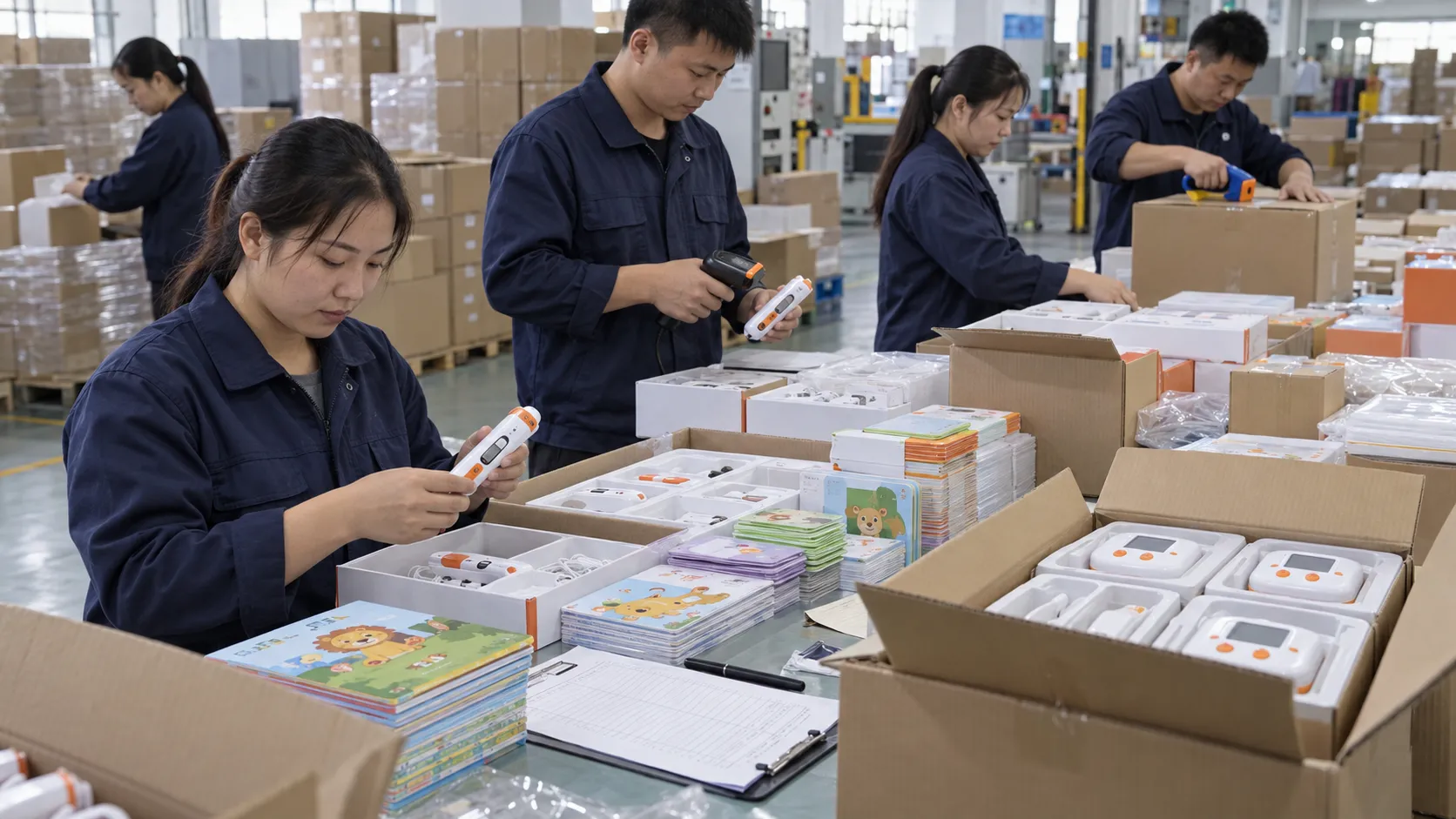
An EXW price, an FOB price and a DDP price cannot be ranked as unit-cost offers until their named places and excluded services are understood. Overseas buyers often receive a confident yes and a unit price before the configuration, responsibilities and evidence are sufficiently defined. That sequence makes quotations difficult to compare and transfers unresolved decisions into samples, tooling or mass production.
This guide is written for educational toy importers, start-up buyers and procurement teams arranging international shipments. It answers the purchasing question behind EXW vs FOB vs DDP toys and shows how to turn it into a comparable supplier brief, a staged approval plan and a traceable shipment decision. The objective is not to prescribe one universal solution but to expose the variables that change cost, schedule and risk.
The examples reflect normal OEM work such as customer requirements review, engineering samples, factory testing, installation preparation, print or content handoff, pilot production and shipment inspection. Numerical targets and compliance scope must still be confirmed for the actual age, market, construction and claim.
Should toy buyers choose EXW, FOB or DDP?
Choose the rule and named place that match your logistics capability, customs roles, visibility and risk tolerance. EXW gives the buyer broad pickup and export responsibilities; FOB applies to goods delivered on board a named vessel port and is often misused for container movements; DDP places broad delivery and import obligations on the seller. Use current ICC rules plus qualified freight, customs, tax and legal advice for the actual route.
Incoterms allocate specified delivery, risk and cost duties, but they do not by themselves define title, payment, product compliance, inspection or every tax consequence. Put the decision in the request for quotation before comparing prices. If suppliers are free to assume different materials, files, tests, accessories, packaging or delivery terms, their numbers describe different products even when the catalogue photograph looks identical.
Treat Incoterm missing a named place, FOB used for an unsuitable transport handoff, seller unable to act as importer, and destination charges omitted as commercial as well as technical risks. Each can create a second sample round, retooling, reprinting, sorting, air freight, listing delay or customer return. A useful sourcing decision makes the risk visible and assigns evidence before money or schedule is committed.
1. Establish one RFQ baseline before contacting suppliers
Define origin factory, named place or port, transport mode, container model, exporter and importer of record, customs capability, destination delivery, insurance, taxes, inspection timing and shipment documents. Describe the finished retail or classroom set, not only the main device. Include printed content, audio or firmware, batteries and cables, accessories, instructions, packaging, languages, labels and the target market. State what is supplied by the buyer and what the factory must create.
Separate launch requirements, negotiable preferences and future roadmap ideas. Ask suppliers to identify assumptions and exclusions against the same list. An unanswered point should remain an open decision with an owner and target date; it should not quietly become the cheapest factory interpretation.
Give quotation quantities by SKU, destination, desired Incoterm, sample timing and target shipment window. Indicate whether the quantity is a market test, normal reorder or peak-season launch. This context affects tooling, material commitments, production allocation, inspection and payment terms.
2. Compare options by trade-off, not by headline feature
Factory pickup, export clearance, origin handling, main carriage, insurance, import clearance, duty and tax, destination handling and final delivery form one responsibility chain. The lowest initial cost may shift work or exposure to the buyer. Conversely, the most customized option may add cost and schedule without improving the customer requirement. Use the decisions below to compare what changes in ownership, validation, repeatability and future flexibility.
Ask each supplier to label what is standard, configurable and newly engineered. A standard platform can reduce development risk only when its tested configuration is relevant to the new content, package and market. A new cosmetic shape can still alter audio, sensors, battery access, durability and tooling maintenance.
EXW or origin pickup
Assess whether the buyer or forwarder can collect, manage origin procedures and obtain necessary export evidence from the named point.
For this option, define the approval condition as “Incoterm version and precise named place stated.” Ask for purchase order with rule and named place before accepting the claim, and explicitly challenge Incoterm missing a named place during the sample review.
FOB and ocean shipment
Use ICC guidance for the transport and loading arrangement, and review whether a containerized shipment is better served by another rule.
For this option, define the approval condition as “Transport mode compatible with selected rule.” Ask for responsibility and charge matrix before accepting the claim, and explicitly challenge FOB used for an unsuitable transport handoff during the sample review.
DDP or delivered service
Verify the seller can legally and practically manage import, duty, tax and destination delivery in the buyer’s country.
For this option, define the approval condition as “Exporter and importer roles feasible.” Ask for freight and customs quotation before accepting the claim, and explicitly challenge seller unable to act as importer during the sample review.
3. Compare total quotation scope and landed consequences
A sourcing comparison should separate product unit cost from non-recurring engineering, tooling, fixtures, samples, artwork or content work, laboratory testing, inspection, packaging, inland logistics, export handling and freight. Clarify taxes, duties and destination services with qualified logistics and customs providers instead of assuming that a convenient shipping label covers every responsibility.
Ask suppliers to state the Incoterm 2020 rule, exact named place and itemized exclusions; reject vague phrases such as FOB factory or DDP taxes maybe included. Request the same breakdown and validity period from every bidder. Confirm currency, quantity tier, scrap or overrun policy, payment milestones, tooling ownership, included sample rounds and what events reopen the price.
Model at least the first order and one realistic reorder. The first order may carry development and tooling; the reorder exposes component stability, file ownership, minimum material buys and whether the price depended on a temporary subsidy or shared stock.
| Cost or decision area | Confirm before award | Typical hidden exposure |
|---|---|---|
| Origin | Pickup, clearance and handling | Unexpected local charges |
| Main/destination | Freight, insurance and delivery | Risk or service gap |
| Import | Importer, duty, tax and compliance | Legal or tax problem |
4. Evaluate supplier evidence and execution ownership
A supplier audit should follow the proposed product route. Identify who controls electronics, molding, printing, audio or content, assembly, testing and packing. When critical work is subcontracted, document technical handoff, incoming verification and change notification rather than assuming one sales contact controls every process.
Ask for recent, product-relevant evidence with sensitive customer information removed: process flow, work instructions, fixture concept, yield summary, traceability example and corrective-action record. A generic certificate may indicate a management system, but it does not prove the requested configuration or available capacity.
Communication quality is part of supplier capability. Strong teams identify uncertainty, record revisions and explain how they will verify an answer. Repeated promises without versioned samples or evidence are a schedule warning even when the quoted price is attractive.
| Approval requirement | Evidence requested | Failure mode addressed |
|---|---|---|
| Incoterm version and precise named place stated | purchase order with rule and named place | Incoterm missing a named place |
| Transport mode compatible with selected rule | responsibility and charge matrix | FOB used for an unsuitable transport handoff |
| Exporter and importer roles feasible | freight and customs quotation | seller unable to act as importer |
| Included and excluded local charges listed | exporter-importer role confirmation | destination charges omitted |
| Inspection and risk-transfer timing aligned | inspection and booking timeline | risk transfer not aligned with inspection |
| Customs, tax and compliance responsibilities separately confirmed | shipment-document checklist | DDP quote hiding unclear tax treatment |
5. Use sample gates that answer the expensive questions first
Use realistic packed dimensions and weight when requesting logistics quotes. A sample courier cost does not predict pallet or container delivery. An engineering sample may use temporary color or packaging if it is intended to resolve architecture, fit, sensing, power, audio or content risk. Mark every temporary element and simulated function so the buyer does not approve a presentation sample as though it were production-ready.
The integrated sample should use production-intent critical components, files, printed materials, firmware and set contents. Review it against a dated checklist and record exact symptoms, not comments such as improve quality. Each correction should name the affected revision and the checks that must be repeated.
Before the first order, run a document and handoff simulation with factory, forwarder, customs representative and buyer finance or tax owners. The approval plan should include Validate named place and transport mode, Confirm exporter and importer arrangements, List charges through final delivery, and Align inspection, payment and handoff timing. Record sample quantity, starting condition, equipment or reference media, repetitions and acceptance result. When testing reveals a failure, preserve the unit and context for investigation instead of replacing it silently.
Freeze the golden sample only after the buildable configuration is understood. Its record should identify model, hardware, software or content release, artwork, accessories, packaging and approved deviations. A physical sample cannot by itself reveal every internal component or digital file.
- Validate named place and transport mode
- Confirm exporter and importer arrangements
- List charges through final delivery
- Align inspection, payment and handoff timing
- Check required commercial and shipping documents
- Model delay, damage and customs scenarios
6. Carry the purchased configuration into mass production
Factories should finalize carton data, marks, packing list and readiness date early enough for booking and inspection. Changes need to reach the logistics parties. The control plan should make final carton dimension and weight record, shipping-mark and packing-list check, inspection before agreed handoff, and booking and cutoff confirmation visible at the appropriate operations. Incoming inspection confirms critical parts and materials; first-off approval confirms setup; in-process checks prevent continued output after drift; final tests screen completed units; shipment inspection confirms the packed lot.
Control reference files, firmware, test media and fixtures like physical components. Identify versions at the workstation and challenge fixtures with a known reference. A stable but incorrect fixture can approve the same defect throughout a complete production lot.
During pilot and early mass production, track first-pass yield, defect codes, rework and output by time. A final pass rate after repeated repair can hide an unstable process. Require root-cause action when failures repeat rather than accepting indefinite sorting as the production system.
Shipment inspection should select cartons across production periods and pallet positions. Verify product identity, critical user functions, appearance, complete accessories, correct language, tracking information and package integrity together. Release decisions should refer to the same defect classification and approved references agreed before production.
- final carton dimension and weight record
- shipping-mark and packing-list check
- inspection before agreed handoff
- booking and cutoff confirmation
- commercial document review
- delivery and claim evidence retention
7. Put responsibilities, changes and delivery assumptions in writing
The purchase agreement or order package should identify the specification, approved sample, files, price basis, delivery rule, payment milestones, inspection rights, change-notification duty, defect disposition, tooling or content ownership, confidentiality and applicable compliance responsibilities. Qualified legal, tax, customs and product-safety advisers should review matters within their scope.
Review terms when shipment mode, country, importer entity, quantity or tax rules change. Keep actual cost data for better reorder comparisons. Define what happens when a component becomes unavailable, a buyer edits content, a laboratory identifies a gap, a shipment fails inspection or the delivery date changes. Written escalation and approval routes reduce rushed decisions made through informal messages.
Do not use a supplier warranty as a replacement for product definition or inspection. A remedy after failure may not recover a missed retail season, platform listing interruption or reputational loss. Prevention, evidence and practical commercial remedies should work together.
For reorders, compare the current bill of material, suppliers, files, tooling status, test methods, labels and market assumptions with the archived release. Approve substitutions according to impact and retain the decision with the affected lot.
Shipment evidence pack
Index the purchase specification, approved configuration, component and file identities, first-off record, key production results, inspection report, traceability codes and accepted deviations. Retrieval should not depend on one employee or one email account.
Reconcile ordered, produced, rejected, reworked and shipped quantities. This supports commercial settlement, inventory accuracy and a faster response if field feedback identifies a pattern.
Reorder review
Require the supplier to declare changes before material commitment. Even a part described as equivalent can affect sound, battery life, recognition, color, chemical evidence or firmware compatibility.
Use retained samples and previous records as comparison evidence, but confirm current market rules and product claims. A past shipment approval does not automatically validate a changed product or destination.
8. Send a decision-ready request to shortlisted suppliers
Ask a qualified forwarder to map the full route and compare supplier offers at the same delivered point before issuing the order. Use a shared open-issues register with requirement, supplier response, evidence, owner and due date. Review it at quotation, sample, pilot and shipment gates. This prevents unresolved items from disappearing when sales, engineering and quality teams change participants.
Ask each shortlisted supplier the same questions and score evidence separately from presentation quality. A slower, qualified answer that identifies dependencies may be more valuable than an immediate price based on optimistic assumptions.
Before award, confirm that the commercial quotation and technical release describe the same product. Before shipment, confirm that production records and inspection identify that released configuration. This simple continuity is the foundation of reliable international sourcing.
Frequently asked questions
Does FOB include ocean freight?
Generally the buyer arranges main carriage after delivery on board under FOB. Confirm the ICC rule and named port.
Is DDP always easiest for a new importer?
It may appear convenient, but verify lawful importer, tax, customs, visibility and compliance arrangements in the destination.
Can EXW be used for export shipments?
It can be quoted, but ICC guidance notes practical export-clearance issues. Review a more suitable rule with advisers.
Do Incoterms decide who owns the goods?
No. Title and payment need separate contract terms.
Who inspects the toys under FOB?
Inspection responsibility is separately agreed. Schedule it before the relevant handoff and payment milestone.
Which rule gives the buyer most freight control?
Several rules can preserve buyer control depending on mode and handoff. Choose with a forwarder based on the actual route.
Conclusion
The best delivery term is the one that matches real capabilities and a precise named point. ICC terminology plus a full route-cost map prevents price and responsibility gaps.
A sound EXW vs FOB vs DDP toys decision combines comparable scope, relevant supplier evidence, staged approval, factory testing and written shipment responsibilities. Send GlobalSmartToy your target market, quantity, product configuration, content status and launch date for a focused OEM review.
Authoritative references
Requirements change and differ by product. Use the current official source and qualified professional advice for the final project.