
AQL Inspection for Electronic Toys: How to Plan a Pre-Shipment Check
A practical framework for lot definition, sample selection, defect severity, functional testing, packaging and release decisions.
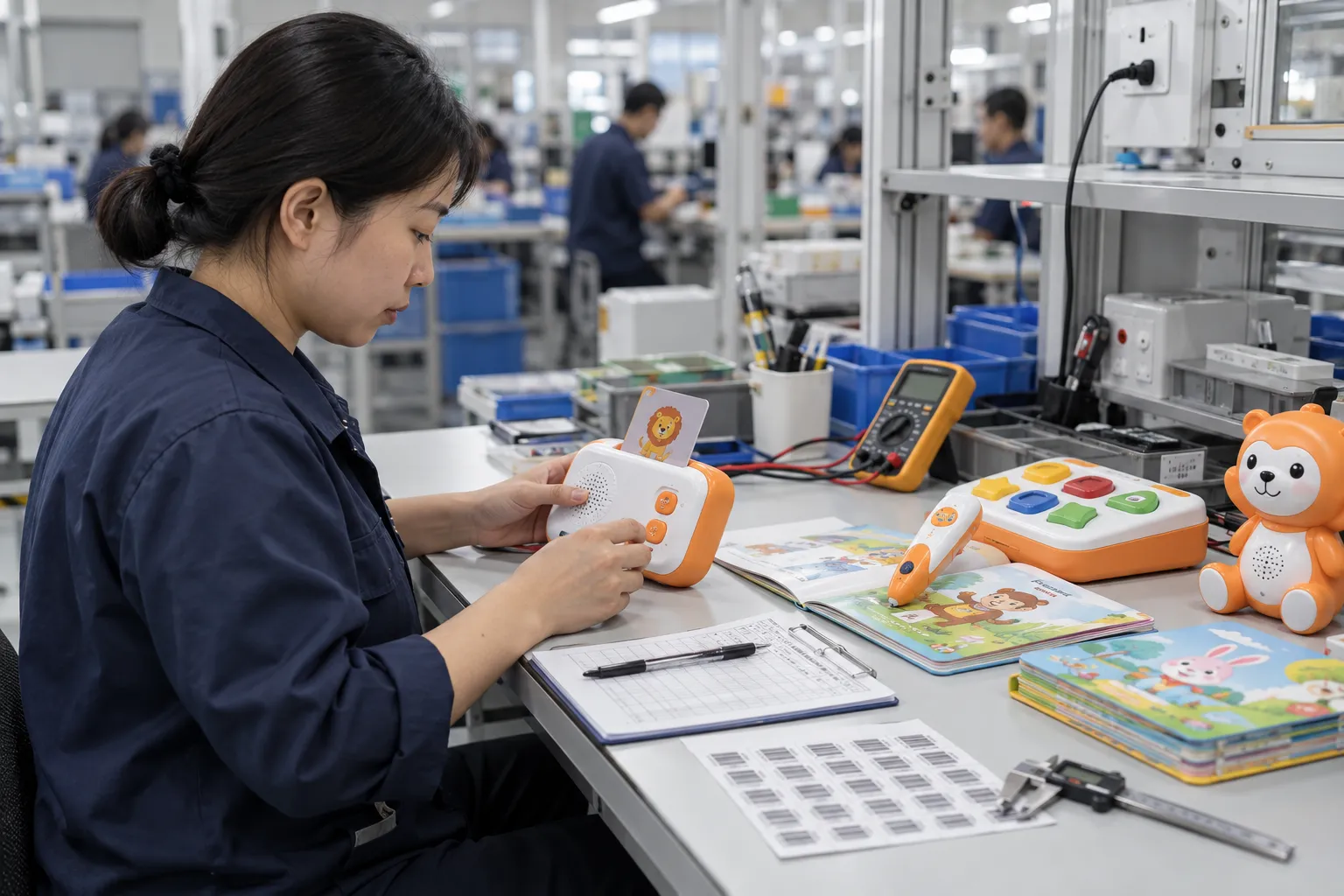
AQL is often treated as a complete quality standard, but it is a parameter used within acceptance-sampling procedures. It helps determine sample size and acceptance or rejection numbers for a defined lot and inspection plan. It does not decide which defects matter, prove product safety or guarantee that every unit is good.
Electronic educational toys require a product-specific checklist. A reading pen can look perfect but contain the wrong audio package. A flash card reader can power on but misread cards. A sound book can play every button while missing pages or using the wrong language box. The inspection must connect the approved configuration with real customer use.
ISO published ISO 2859-1:2026 for lot-by-lot inspection indexed by acceptance quality limit. Buyers and inspection professionals should use the current licensed standard or qualified service procedures and agree the plan contractually. This guide explains preparation rather than reproducing standard tables.
How does AQL inspection work for electronic toys?
AQL toy inspection defines a production lot, selects samples using an agreed sampling plan, checks those units against a product-specific specification, classifies findings as critical, major or minor under pre-agreed definitions, and compares defect counts with acceptance and rejection numbers. Safety, compliance and known systemic defects require separate decisions beyond the statistical result.
The lot must be substantially complete and packed to support random sampling. If inspectors can access only selected cartons or early production, the sample may not represent the shipment. State completion threshold, carton distribution and sampling access in the booking.
AQL values and inspection levels are commercial decisions informed by product risk, history, channel and contract. Children’s products deserve careful critical-defect definitions, but there is no single universal combination that replaces professional judgment.
The result belongs to the inspected lot and plan. A pass does not certify compliance or eliminate defects. A fail does not automatically define rework; the buyer and supplier should investigate cause, scope and corrective evidence.
1. Prepare the lot, references and inspection booking
Provide purchase order, quantity by SKU, carton list, specification, approved sample, artwork, firmware and content versions, package requirements and known deviations. The inspector needs the same released information as the factory.
Define the lot and sampling plan with a qualified quality professional. Separate materially different models, languages or production conditions where appropriate. A combined sample can hide a problem concentrated in a small SKU.
Book the inspection with enough time for correction before shipment. Confirm product completion, packing status, location, contact and equipment. If batteries require charging or special test media is needed, prepare them without compromising random selection.
2. Define critical, major and minor defects with examples
Critical defects involve potential safety, legal or severe user risk and often require zero-tolerance handling under the buyer's plan. Major defects can make the product unusable, incorrect or likely to be returned. Minor defects reduce appearance or workmanship without materially impairing intended use. Final definitions should be product-specific.
For a talking pen, wrong language, widespread missed reading, exposed wiring or an insecure battery door are not equivalent to a small cosmetic mark. For a sound book, missing pages, wrong audio mapping and light print variation need different classifications. Include pictures and thresholds where possible.
Classify the defect, not the emotional reaction. The same root cause may create several observed failures; inspectors should record affected units and patterns. Known safety or regulatory discrepancies should be escalated independently of AQL totals.
| Severity | General meaning | Educational toy example |
|---|---|---|
| Critical | Potential safety or unlawful condition | Accessible hazardous component or serious battery issue |
| Major | Core function or saleability materially impaired | Wrong language, failed recognition or missing main accessory |
| Minor | Limited workmanship issue | Small cosmetic variation outside key viewing area |
3. Verify quantity, identity and production traceability
Count finished units and cartons by SKU, language, color and title. Compare carton marks, barcodes and packing list. Mixed language boxes or incorrect carton quantities can create import and fulfillment problems even when every device functions.
Record production dates, batch codes, firmware or content version evidence and key package artwork codes. Sample across carton positions and pallets or production periods. Avoid letting the factory provide convenient units from one open carton.
Check that models and business information match purchase and compliance records. A product carrying an obsolete model number can disconnect the shipment from test reports, certificate or technical file.
4. Test real product functions and content
Define startup, controls, volume, audio, sensors, reading or card recognition, charging, indicators, sleep and language checks. Use controlled books, cards or fixtures and also sample packed content. Record expected and actual result.
Verify installed firmware and content package where the platform provides a method. Sample representative audio across languages and modes. Power-on audio alone cannot detect incomplete content or wrong mapping.
Use test duration appropriate to risk and sample size. Wider tests may be performed on a subset within the inspected samples, but the plan should be agreed. Destructive or reliability tests require separate sample and disposition rules.
5. Inspect construction, appearance and accessories
Compare housing, gaps, fasteners, buttons, printing, speaker openings, connector, battery door and finish with the approved sample and tolerances. Check for sharp or damaged areas and loose parts under the agreed inspection scope, while recognizing that formal safety testing is separate.
Measure dimensions or weight that identify wrong parts or configuration. Inspect books, cards and pieces for count, print, cut, binding, language and recognition. Accessories and manuals must match the SKU.
Use controlled lighting and practical viewing conditions for cosmetic assessment. Define zones and limits before inspection. Unwritten expectations lead to inconsistent classifications and disputes.
6. Open cartons and inspect complete pack-out
Review retail box artwork, barcode, warnings, seals, inserts and protection. Open samples across the lot, not only displayed golden cartons. Confirm every component, cable, book, card, piece and manual.
Inspect master cartons for dimensions, gross weight, count, marks, sealing and damage. Review pallet or loading condition where included in the scope. Packaging should prevent movement and button activation during transport.
Simple carton or product drop checks may be included only under an agreed method and scope. Formal transit validation should be planned separately with production-intent packaging. Do not invent an unvalidated test at the inspection table.
7. Interpret results and manage failed inspection
The report should show sample size, inspected cartons, defect counts, classifications, photos, function results, quantity and conclusion under the agreed plan. Review patterns and systemic findings, not only the pass/fail line.
When inspection fails, contain the shipment and investigate. The corrective plan may involve sorting, rework, replacement or wider testing. Define scope, instructions, supervision and retest. Reinspection should sample the corrected lot appropriately, not only the units already repaired.
A buyer may reject or hold a shipment for known critical or compliance issues even if general workmanship counts appear acceptable, according to contract and applicable obligations. Conversely, commercial disposition of non-safety deviations should be documented rather than hidden by reclassification.
Design a pre-shipment inspection that reflects product and order risk
Create defect definitions before the inspector arrives
Build a checklist from the purchase specification, approved sample, packaging files and known product risks. Define critical, major and minor examples with photographs or measurable limits where useful. Wrong firmware, exposed hazardous part or failed battery protection is not equivalent to a small cosmetic mark. Clear classification reduces negotiation after defects are already found.
List fixed functional tests for every sampled unit and deeper tests for a smaller subset if appropriate. For talking products, include startup, controls, volume, speaker, reading or card recognition, representative content, charging or battery behavior and language identity. Pack-out checks should cover accessories, instructions, labels, barcode and carton marks.
Select samples across the finished lot
The lot should be complete enough and packed for random sampling under the agreed rule. Select cartons across pallet positions, production dates, lines or shifts where practical. Record lot size, sample size, acceptance numbers and the sampling plan used. A supplier-prepared group of best-looking units is not a random shipment inspection.
AQL is an acceptance-sampling method, not a promise that the lot contains exactly that defect percentage. Buyers should set levels and classification based on risk and commercial tolerance, with stricter treatment for critical issues. Some requirements may be zero tolerance or require separate testing rather than routine AQL counting.
Use findings to make a documented shipment decision
The report should include product and lot identity, sample selection, photographs, counts, functional results, measurements, carton information and observed conditions. When a defect appears, record enough detail to identify pattern and likely scope. Do not rely on a summary pass if critical checks, quantities or versions are missing from the evidence.
If the result fails, define containment, sorting or rework and require root-cause and corrective-action evidence proportionate to the issue. Reinspection should use corrected packed goods and verify both the original failure and potential rework damage. Shipment release belongs to the buyer or authorized party under the agreed process; the inspection company supplies evidence, not business risk ownership.
Trend inspection findings across orders. Repeated minor defects may show a fixture, material or training problem even when each individual lot passes. Compare incoming complaints with inspection evidence and revise checkpoints when an important field failure was not observable in the existing plan. Inspection should learn with the product instead of remaining a static template.
When timing is tight, do not allow a late inspection to become ceremonial. Define booking notice, production-completion threshold, report turnaround and release authority in the purchase schedule. If goods must be opened, tested and repacked, allow time for the factory to correct genuine findings without pressuring the inspector to simplify the scope.
Frequently asked questions
What does AQL mean in toy inspection?
Acceptance Quality Limit is an index used in sampling schemes for lot-by-lot inspection. The agreed standard and plan determine sample and acceptance or rejection numbers.
What AQL should be used for toys?
There is no universal value for every toy or buyer. Select inspection level, AQL and defect definitions with qualified quality professionals based on risk, history, channel and contract.
Does AQL allow critical defects?
Critical safety or legal defects usually require separate zero-tolerance treatment under buyer plans, but exact contractual definitions and disposition should be established professionally.
Can pre-shipment inspection replace laboratory testing?
No. Inspection evaluates a production lot against specifications. Laboratory testing and conformity assessment address applicable safety and regulatory requirements.
Should every audio file be checked during AQL inspection?
The plan may use representative functional sampling supported by factory content-verification controls. Full database validation should occur during development and production release.
What happens after a failed inspection?
Hold shipment, investigate cause and scope, document sorting or rework, verify corrective action and perform appropriate reinspection before release.
Conclusion
AQL makes pre-shipment inspection statistically manageable, but only a strong specification and defect checklist make it relevant. Electronic educational toys need checks for content, language, recognition, power and complete pack-out in addition to appearance.
Agree the plan before production, sample finished cartons independently and treat safety or compliance concerns separately. A clear report and controlled correction process protect both buyer decisions and supplier accountability.
Authoritative references
Requirements change and differ by product. Use the current official source and qualified professional advice for the final project.