
Publisher-owned content
Build around your approved stories, artwork and learning structure.
Connect owned artwork and stories with OID reading pens, integrated sound modules, controlled audio and production-ready book construction.
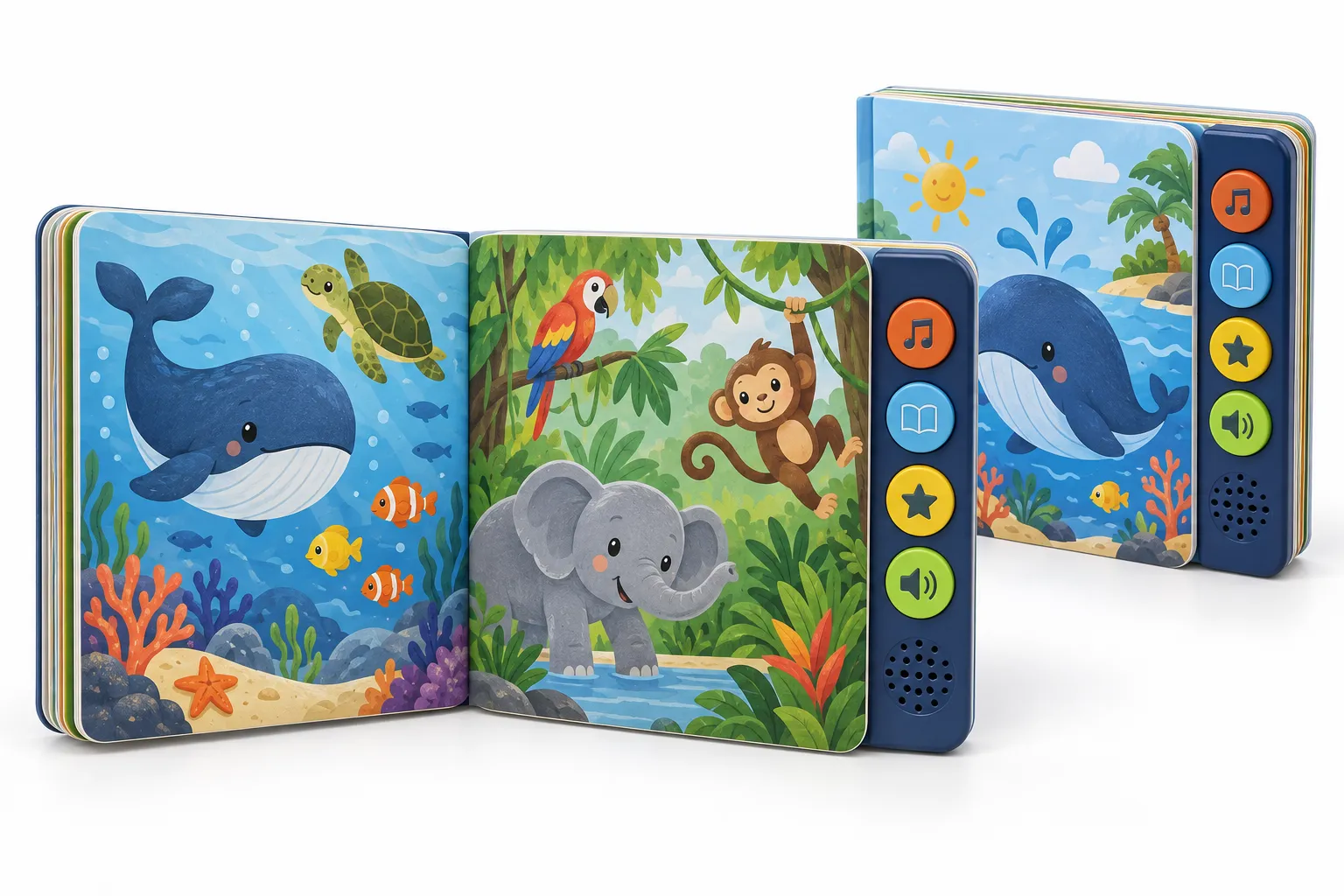
Build around your approved stories, artwork and learning structure.
Compare OID talking books with integrated sound-book construction.
Control scripts, narration, music, effects and language versions.
Review print, electronics, mapping and book construction together.
OID pens support large content libraries and multiple titles; integrated sound books keep the electronics inside each book and use defined buttons or pressure points.
Fit multi-title programs, dense touchpoints and reusable reading-pen ecosystems.
Fit focused stories, music or vocabulary with a visible side-button panel.
Fit hidden touch areas when construction and activation force are carefully validated.
Use different interactions across age bands while controlling artwork and audio assets centrally.
Artwork, scripts, audio, print construction and electronics are reviewed through one approval path so the finished product matches the title's intended interaction.
Review your requirements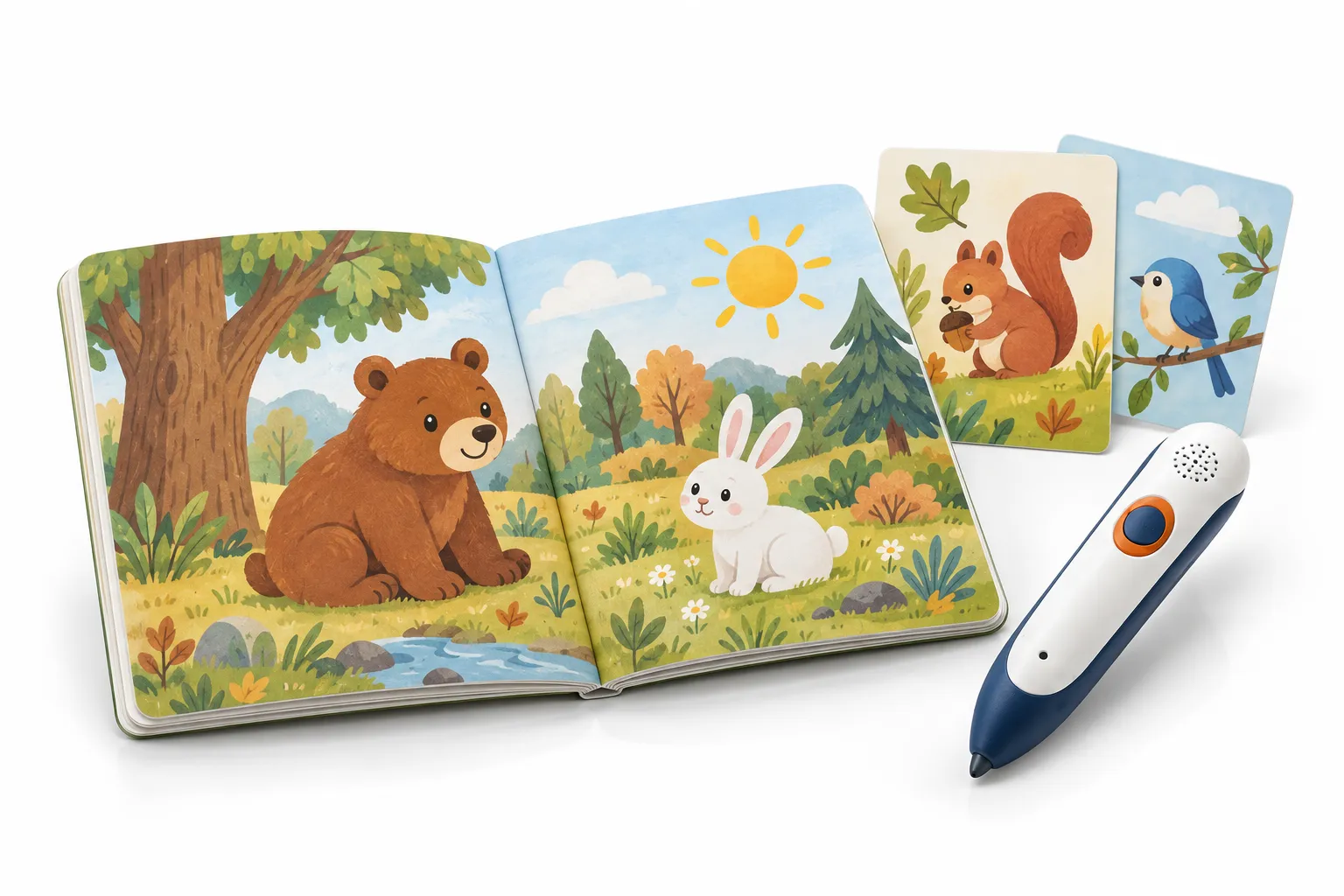
Approved artwork, text, scripts, music and usage responsibilities.
Page, button or touchpoint linked to the correct response.
Narration, pronunciation, music, effects, filename and version control.
Size, page count, board structure, binding, panel and component space.
Physical proof, labels, inserts, packaging and shipment inspection.
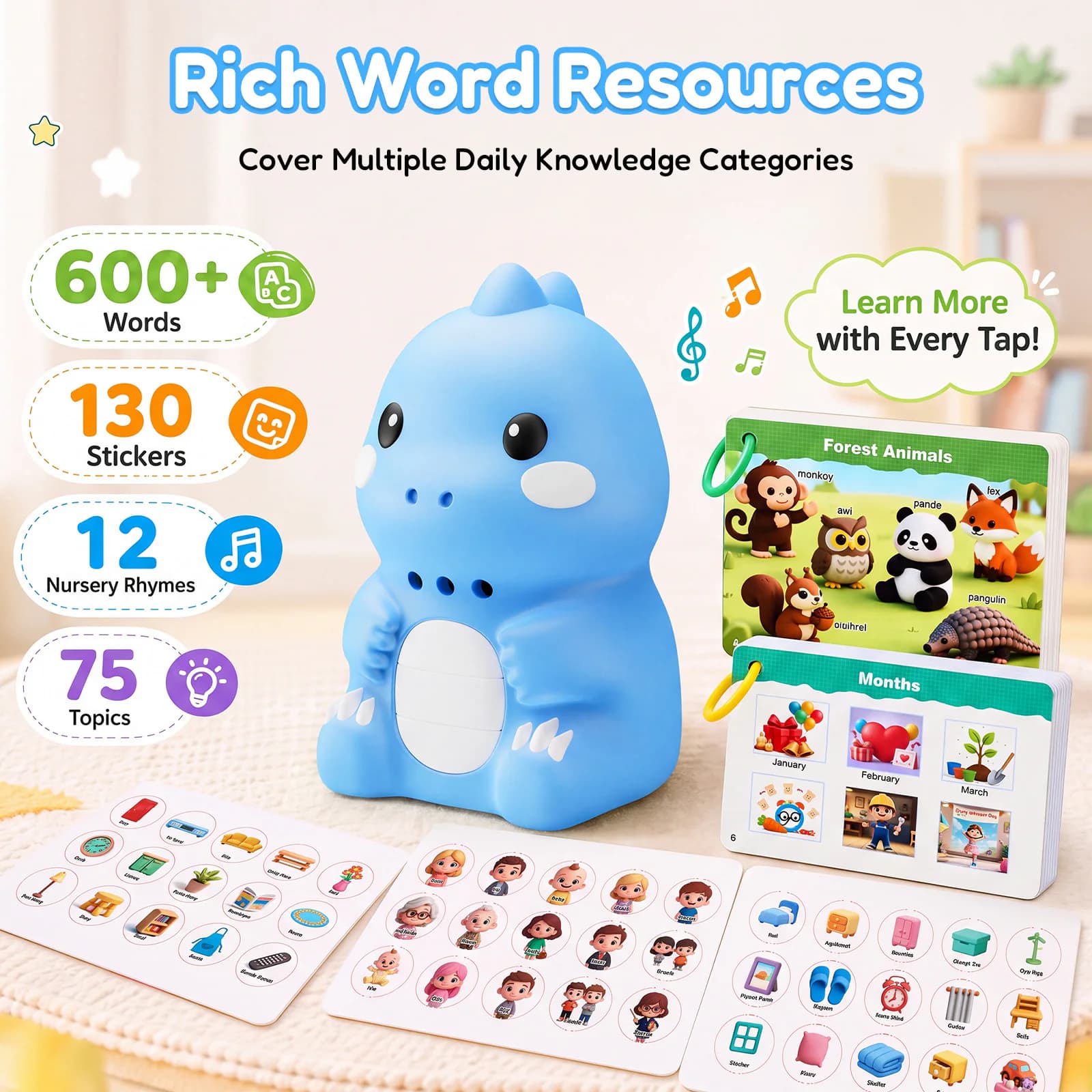
The production route should match whether the publisher is launching one gift title or building a reusable learning ecosystem.
Reuse a compatible pen across multiple coded titles and language editions.
Coordinate clear pronunciation, page mapping and progressive content levels.
Plan button count, audio duration, speaker output and book construction together.
Combine books, cards, stickers, devices, inserts and organized packaging.
The quotation should identify who supplies, approves and owns every artwork, translation and audio asset.
Request a scope review| Decision | What we confirm | Why it changes the quotation |
|---|---|---|
| Source content | Artwork, text, scripts and rights | Defines production preparation and approval ownership. |
| Book construction | Dimensions, pages, binding and finish | Changes print, tooling, assembly and freight. |
| Audio scope | Recording, editing, music and languages | Changes content workload and memory. |
| Electronic format | OID pen, button panel or press-page module | Changes hardware, mapping and testing. |
| Edition plan | Title count, languages, quantities and packaging | Changes SKU control and commercial minimums. |
Each stage has a tangible output so product, content and commercial decisions stay connected.
Assess representative pages, rights, interaction goals and edition plan.
Choose the electronic format and prepare the controlled response map.
Produce a physical book-and-audio sample for publisher approval.
Control final files, language versions, packaging and production inspection.
Product and production evidence
Integrated print and electronics reviewed as one title.
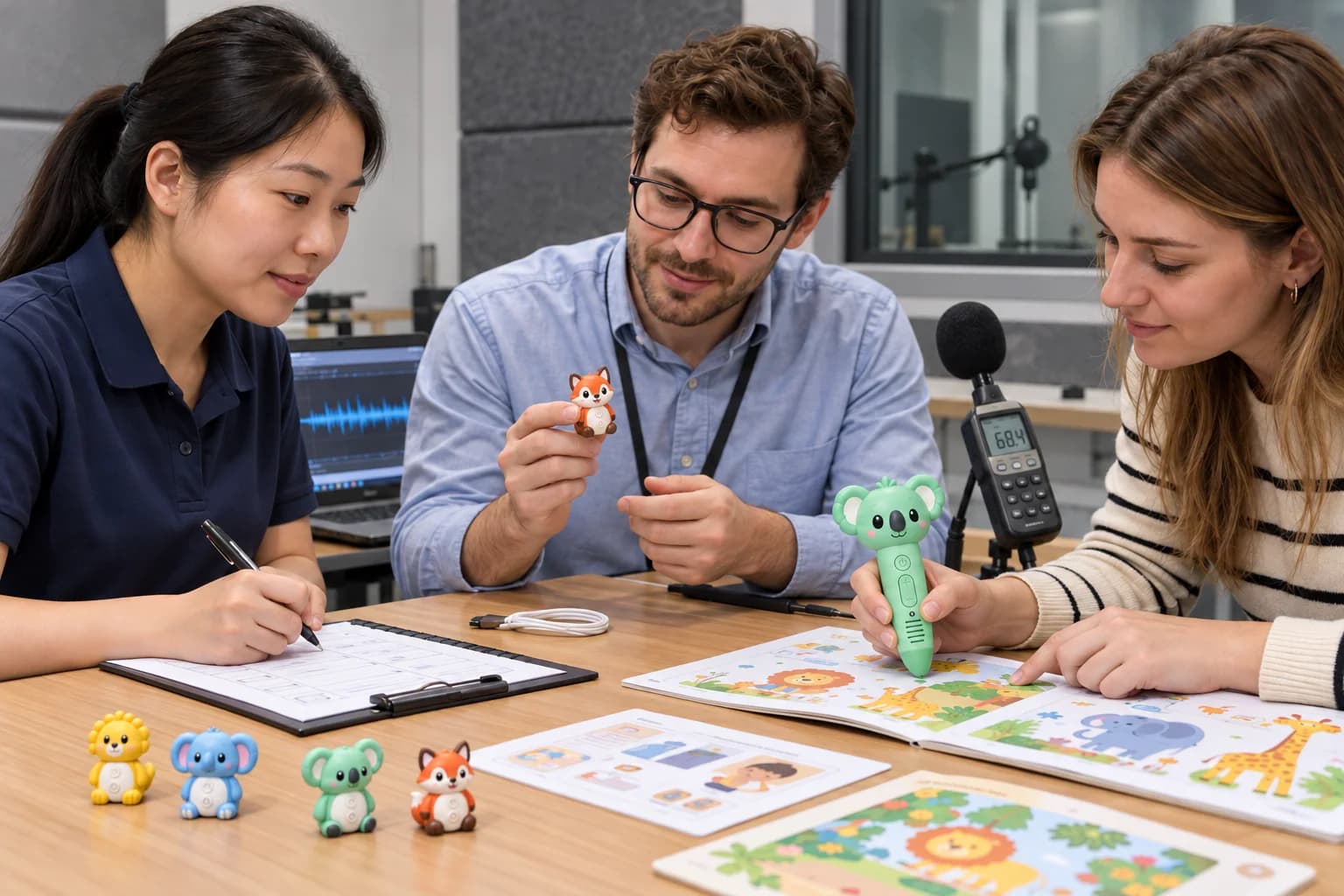
Physical proof review before production release.
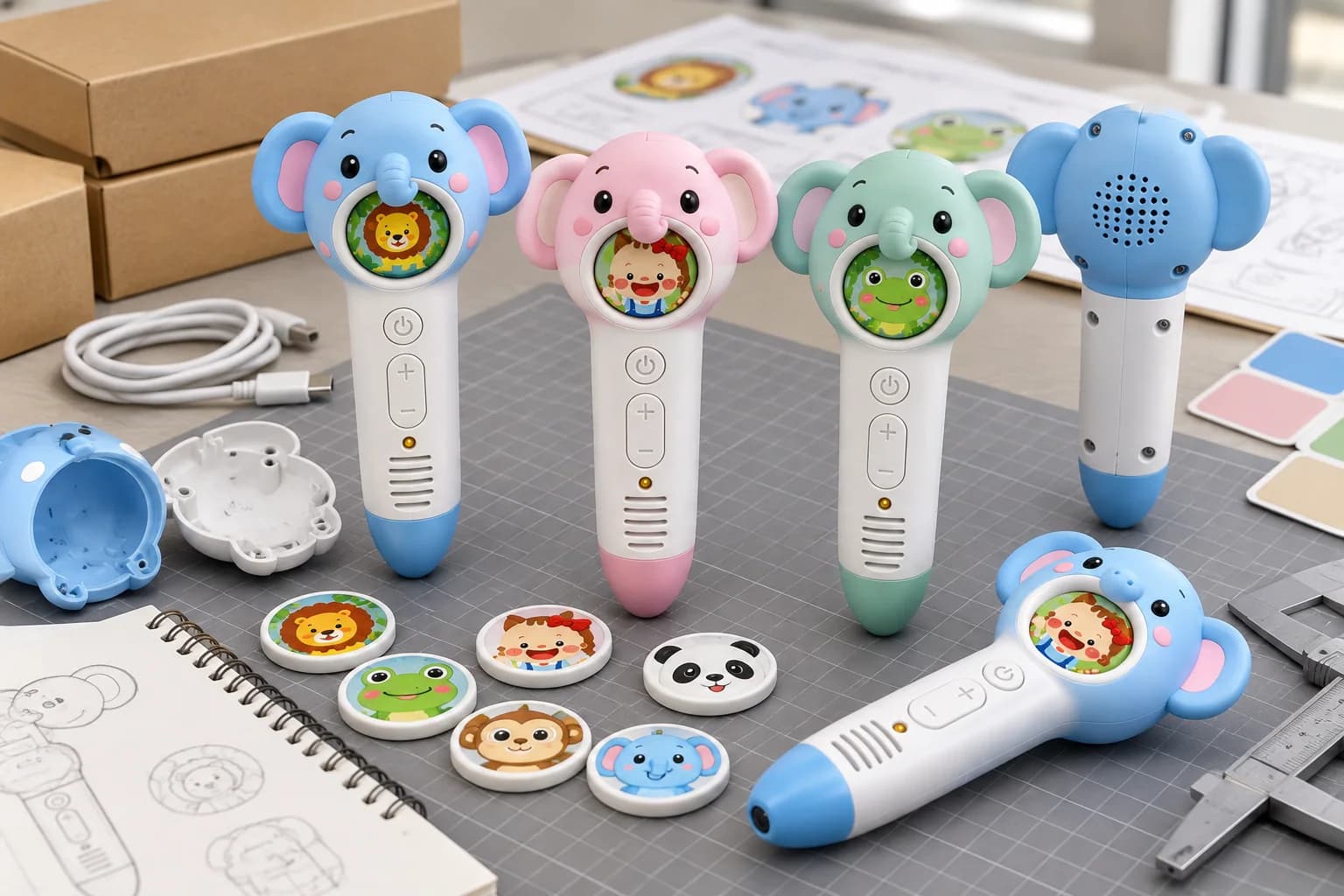
Brand, content and retail set coordinated for the intended channel.
The first discussion can identify format risks before the full title is converted or recorded.
Practical answers for an initial project review. Final commercial and technical terms belong in the written quotation and approved specification.
OID systems fit reusable pens and larger content libraries; integrated sound books fit self-contained titles with fewer defined triggers. The best route depends on title strategy, age, interaction and quantity.
Editable artwork can often be adapted, but space, touch zones, binding, electronics and safety-related construction may require controlled changes.
Yes. Each edition needs stable scripts, approved audio, file naming, artwork and SKU control so languages do not mix during production.
Yes, provided the files meet the agreed naming, format, duration and approval requirements and the publisher confirms usage rights.
The proof should represent print, construction, electronic interaction, audio mapping and the intended device or module closely enough to support release decisions.
Send representative pages and your edition plan for a focused recommendation on OID, sound-book or kit development.